

HVAC Online Courses
Here's every CFD online course related to HVAC category.
Price: $24
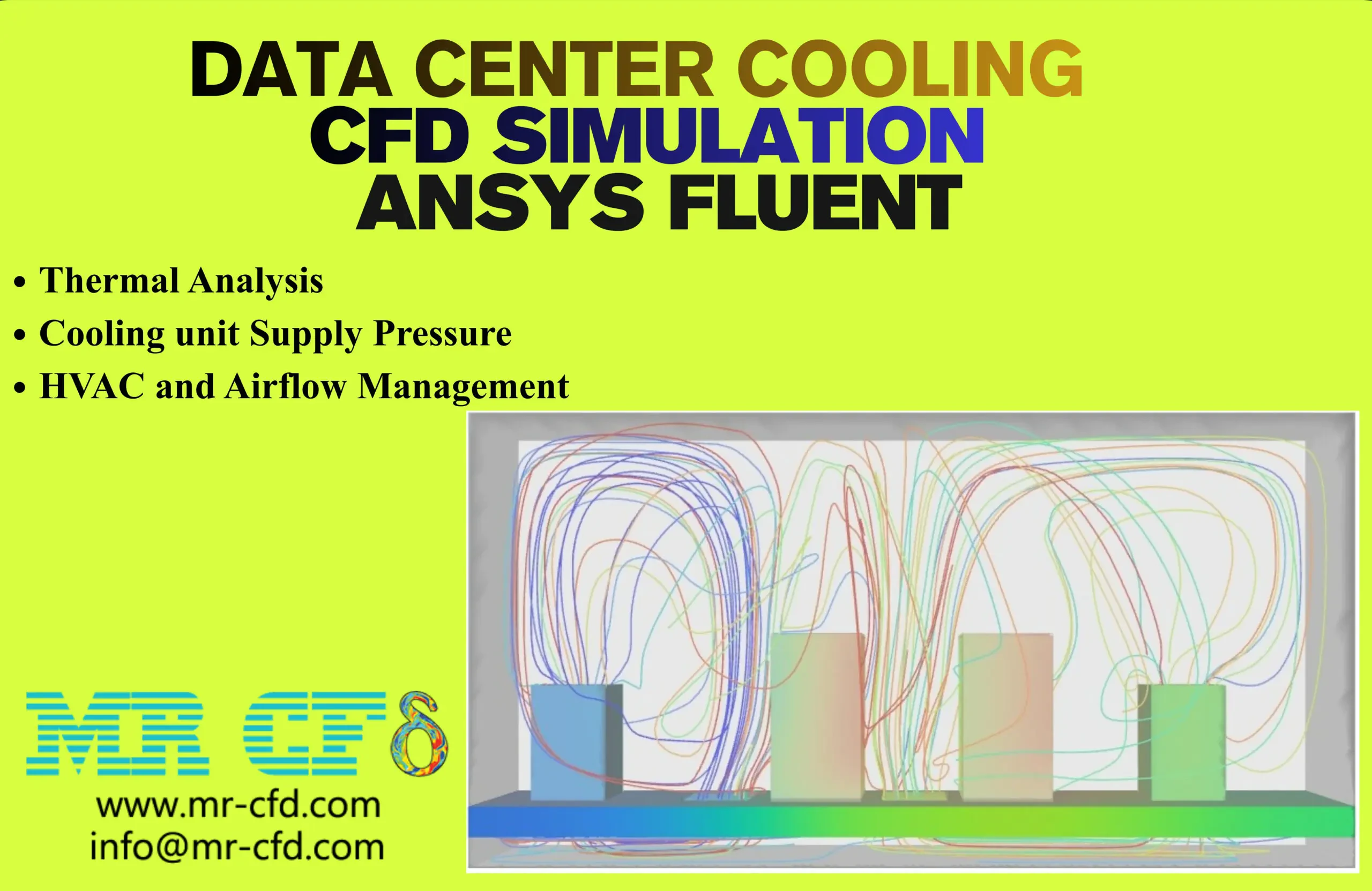
Data center cooling simulation and thermal analysis in ANSYS Fluent, focused on rack inlet conditions. Evaluating the impact of cooling-unit supply pressure on cold-air penetration into racks and overall cooling effectiveness. Delivering practical layout and airflow-management insights to improve cooling performance and reduce energy waste.
HVAC GOLDEN Training Package
Beginner, Intermediate, Advanced
Price: $2,229
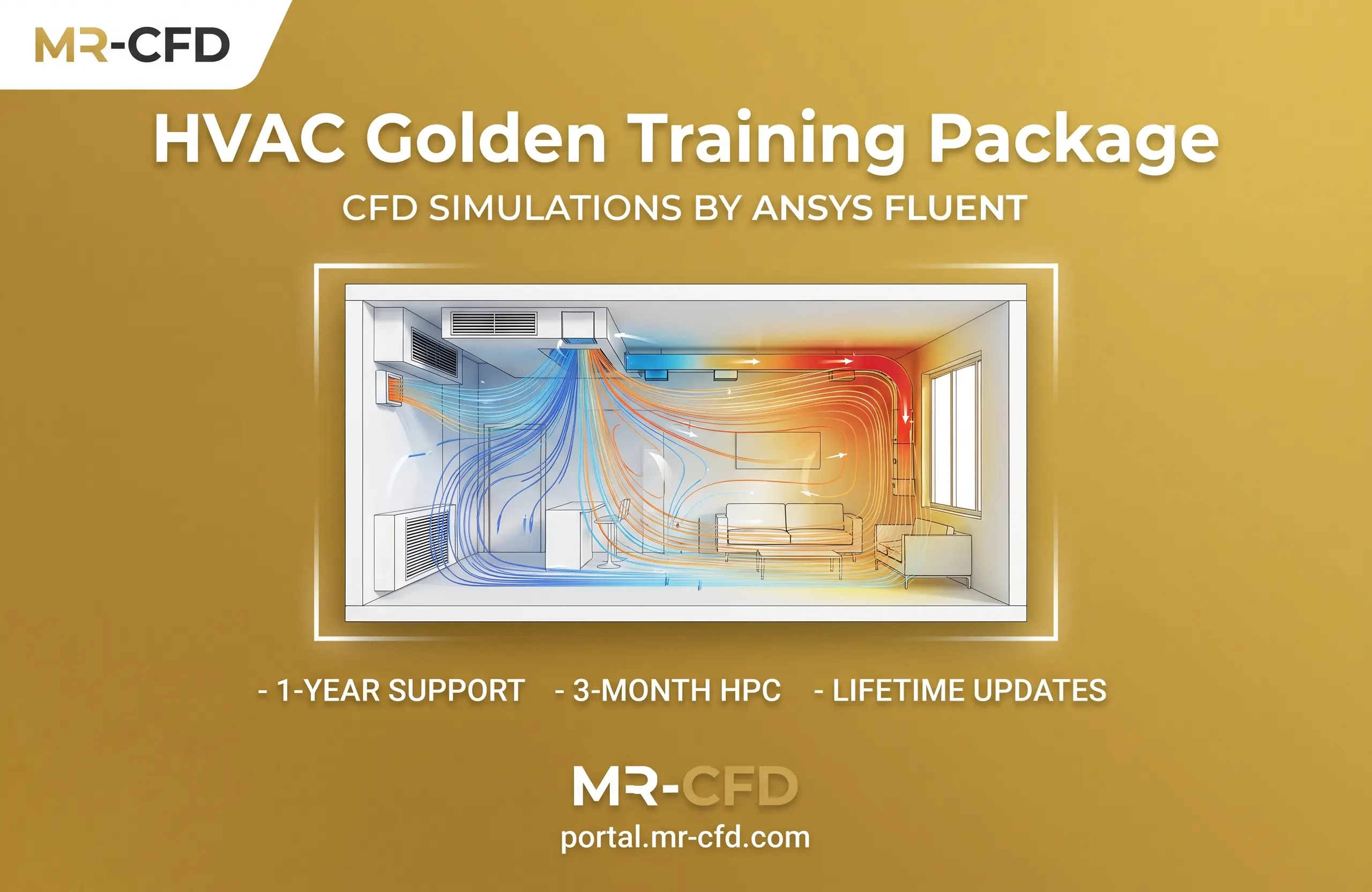
HVAC Engineering CFD Simulation GOLDEN Training Package by MR CFD is a premium, all-in-one learning solution that transforms beginners and intermediates into confident HVAC simulation experts using ANSYS Fluent. Designed for universities, institutes, and engineering companies, it bundles 100+ real industrial projects in areas such as virus dispersion, hospital ventilation, radiant and underfloor heating, passive/active ventilation, and PCM-based energy saving into a single structured program. With step-by-step tutorials, one year of expert technical support, three months of HPC access, and content distilled from 15 years of consulting experience, it enables fast onboarding, consistent training, and immediate deployment of high-quality HVAC CFD simulations across your team.
Virus dispersion in classrooms: CFD simulation comparing AC and chilled beam ventilation
Intermediate, Advanced
Price: $240
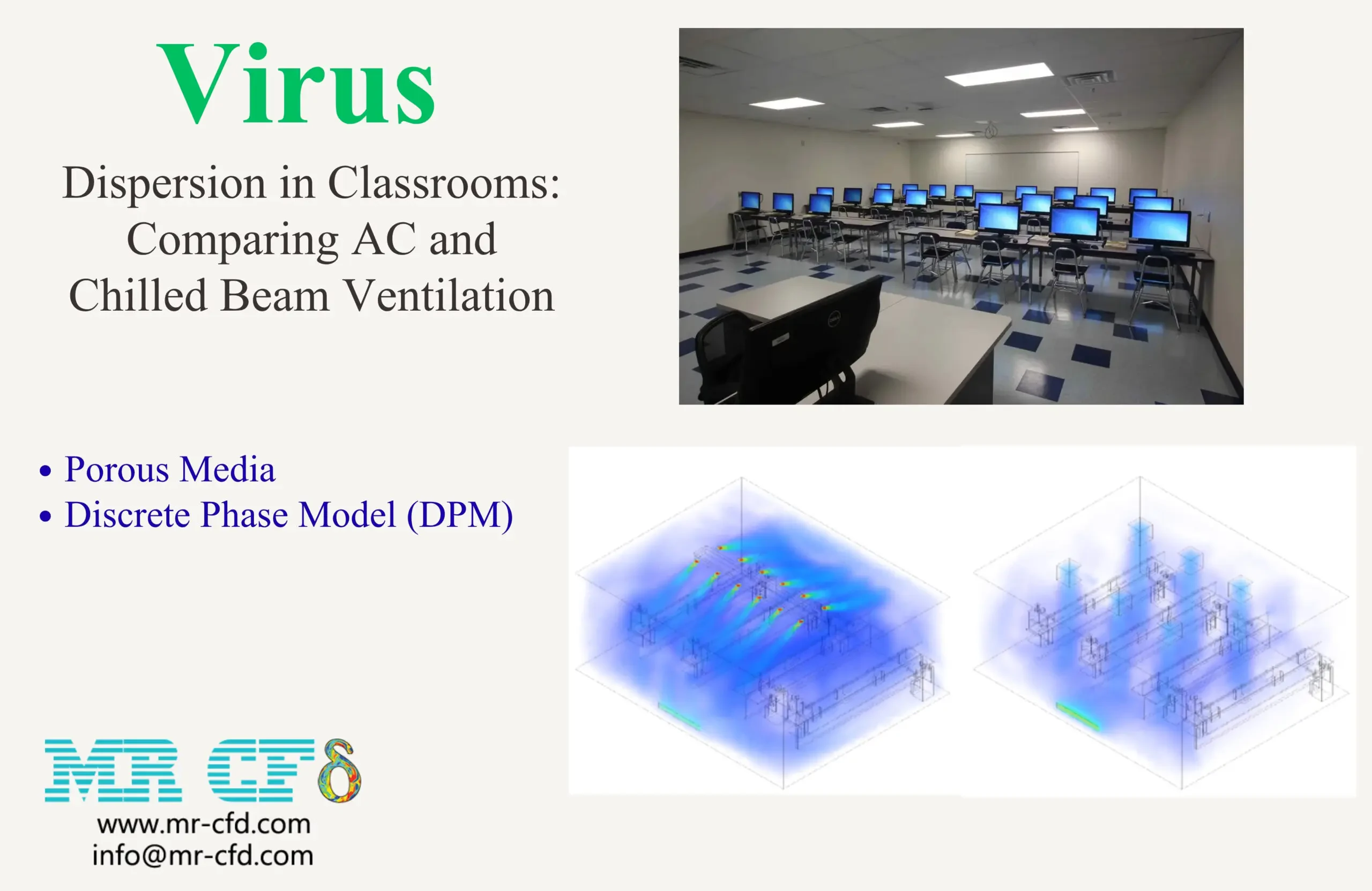
ANSYS CFD study of virus transport and comfort in a 10×8 m classroom comparing AC and chilled beam ventilation. Room with desks, eight occupants, AC louvers vs. chilled-beam inlets; unstructured mesh refined near jets, walls, and bodies. Steady pressure-based RANS (realizable k-ε), energy on with buoyancy; virus tracked via DPM; appropriate velocity-inlet and pressure-outlet BCs. AC removes particles faster but shows uneven temperatures, while chilled beams improve thermal uniformity with broader mixing that disperses particles more widely.

Price: $240
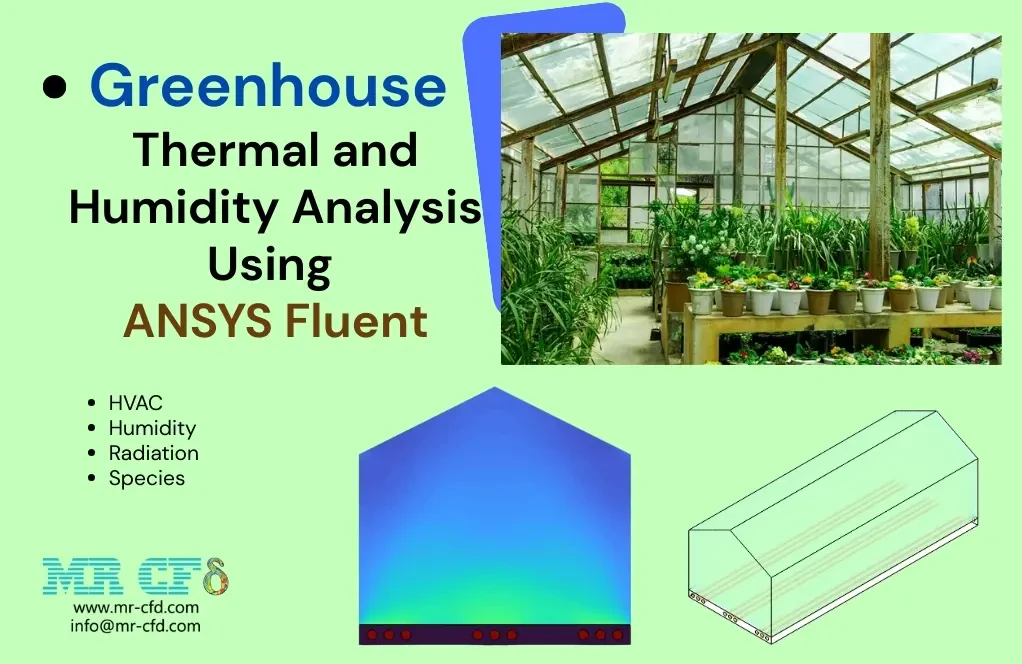
In this project, we have simulated the thermal and airflow performance of a greenhouse with and without a heating system using ANSYS Fluent software. Three-dimensional modeling was done using Design Modeler software. The meshing of the model has been done using ANSYS Meshing software, with approximately 1,860,000 cells for the base case and 3,110,000 cells for the heated case. The energy equation, species transport, and solar ray tracing using the Discrete Ordinates (DO) radiation model are enabled for accurate representation of heat transfer and humidity. The standard K-epsilon model is selected for turbulence characteristics of fluid flow.
Greenhouse Thermal and Humidity Analysis Using ANSYS Fluent
Intermediate, Advanced
Price: $72
The problem numerically simulates airflow, heat transfer, solar radiation, and humidity inside a greenhouse using ANSYS Fluent software. We perform this simulation as steady-state. The study incorporates the Discrete Ordinates radiation model with solar ray tracing and species transport for air–water vapor mixture analysis.

Radiant Solar Collector Applying PCM: Numerical Analysis and Heat Transfer CFD Simulation by ANSYS Fluent
Intermediate, Advanced
Price: $120
In this project, the numerical investigation of a radiant solar collector is conducted utilizing ANSYS SpaceClaim software, inspired by advanced modeling techniques. The 3D geometry is meticulously crafted and meshed with 647,500 elements, emphasizing an unstructured grid and refinement near the tubes to enhance simulation accuracy. The RNG K-epsilon turbulence model serves as the foundation for simulating the flow field, while the solidification and melting module addresses the PCM zone characteristics. Momentum, turbulence, and energy equations are tackled using the SIMPLE algorithm with second-order upwind discretization for precision. The simulation focuses on fluid dynamics and heat transfer, crucial for understanding the collector's performance under variable environmental conditions, despite the exclusion of radiation effects.
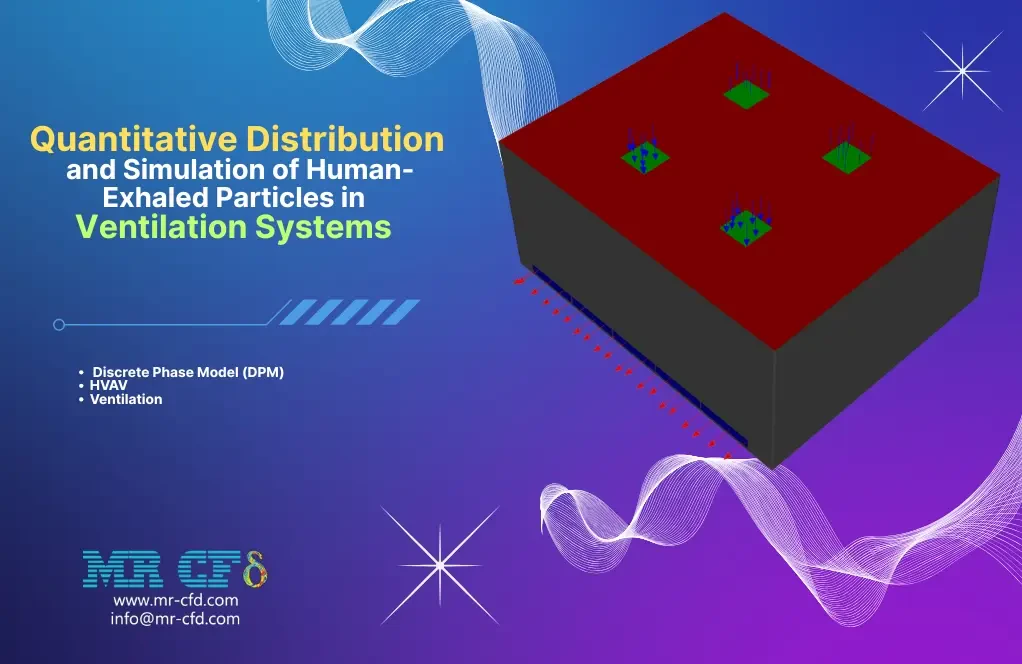
Quantitative Distribution and CFD Simulation of Human-Exhaled Particles in Ventilation Systems
Intermediate, Advanced
Price: $120
In this project, the quantitative distribution of human exhaled particles in a ventilated room is simulated using ANSYS Fluent software, based on the methodology from Zhijian Liu’s study. The 3-D geometry and mesh were created with user-provided files and consist of 547,820 elements. The simulation accounts for steady-state flow conditions and transitions to solve energy and DPM equations transiently. Airflow dynamics and heat transfer are analyzed using the ideal gas equation to address density variations due to temperature changes. The fan’s operation is modeled through a polynomial pressure jump function.

Hospital Airflow Dynamics: A CFD Study on Ventilation Efficiency and Pathogen Dispersion
Intermediate
Price: $240
The project aims to evaluate and enhance hospital room ventilation systems to effectively control aerosol dispersion, a crucial aspect of maintaining a safe environment within healthcare facilities. Three scenarios are analyzed: sneezing, coughing, and breathing, each with varying particle injection velocities and mass flow rates, to observe their effects on airflow patterns and particle trajectories. The simulation highlights that current ventilation setups exhibit limitations, as particles often become trapped or follow circular paths, indicating areas for improvement in ventilation strategy. Results suggest optimizing airflow by adjusting inlet and outlet conditions and improving flow patterns to enhance particle escape and overall air quality, ensuring safety and comfort in hospital settings.
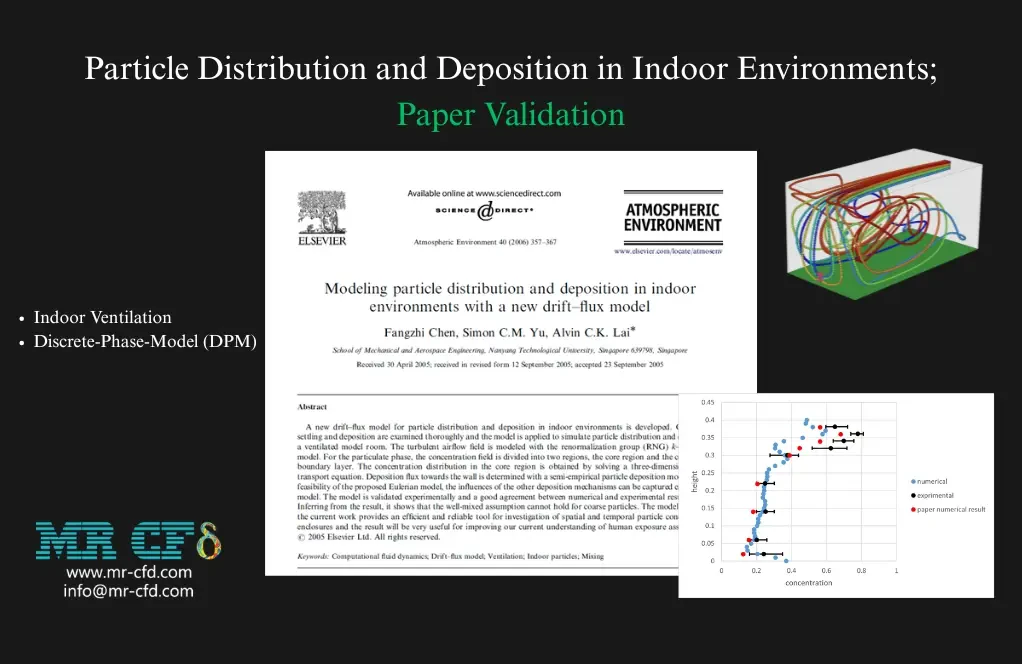
Particle Distribution and Deposition in Indoor Environments; Paper Validation
Intermediate, Advanced
Price: $210
The current CFD analysis numerically validates the paper “Modeling particle distribution and deposition in indoor environments with a new drift–flux model” using ANSYS Fluent software. We designed and meshed the room geometry in Design Modeler and ANSYS Meshing, generating 128,000 cells. A pressure-based solver with k-ε RNG turbulence modeling is employed, and particle dynamics are simulated using the DPM model.