

Species Transport Online Courses
Here's every CFD online course related to Species Transport category.
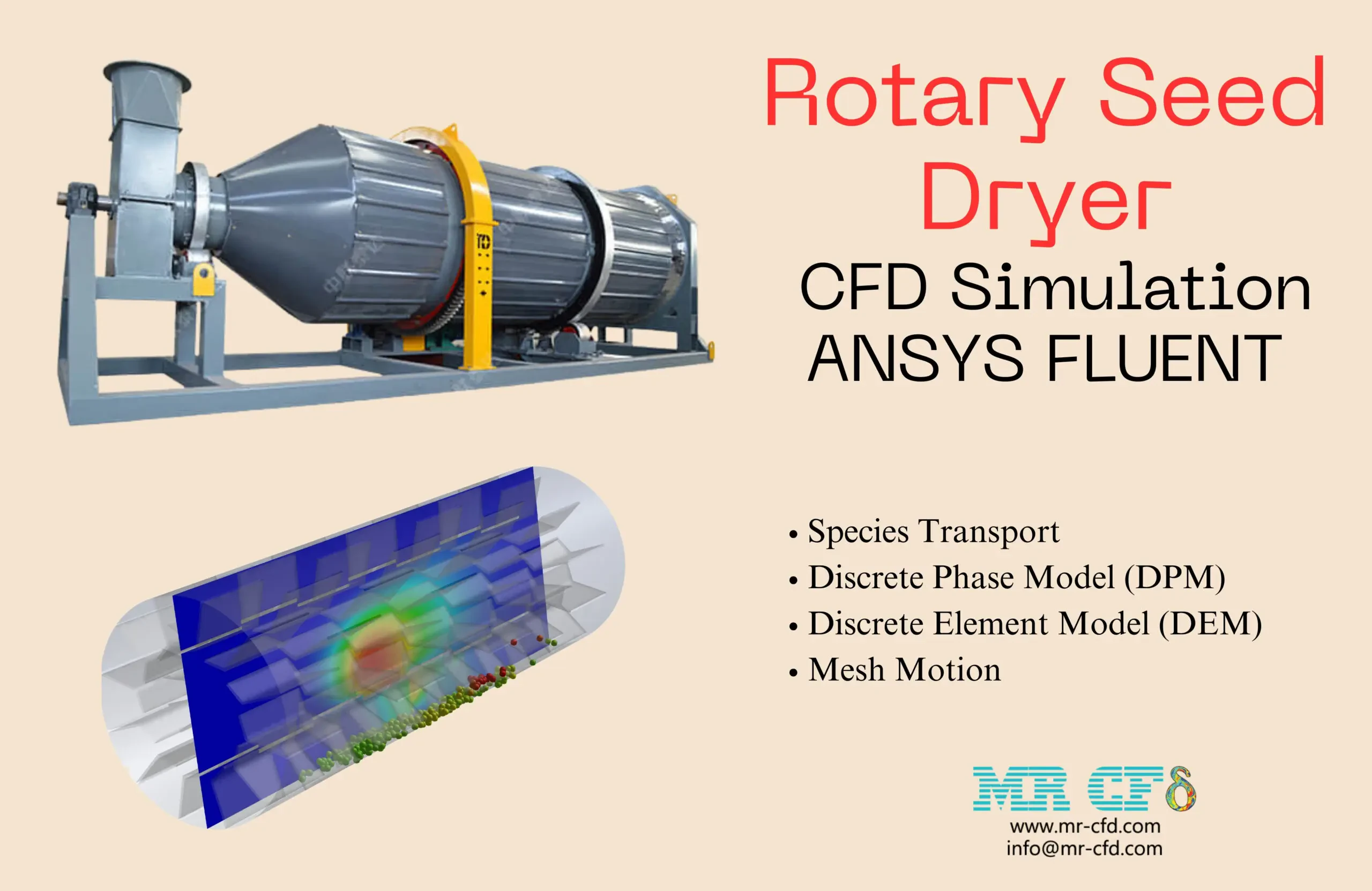
Rotary Seed Dryer CFD Simulation, Using DPM and Moving Mesh, by ANSYS FLUENT
Intermediate, Advanced
Price: $220
This work presents a CFD–DEM simulation of a rotary seed dryer. Hot air flows through the inclined drum at 350 K while the drum rotates at 20 RPM. Seeds are modeled with the Discrete Phase Model (DPM) coupled with evaporation into H₂O vapor. The Discrete Element Method (DEM) accounts for particle–particle and particle–wall collisions, improving realism of seed motion. Contours of H₂O mass fraction reveal zones of strong evaporation, reaching values up to 0.0026. The combined CFD–DPM–DEM approach shows how airflow, fin mixing, and collisions enhance drying efficiency.
Price: $480
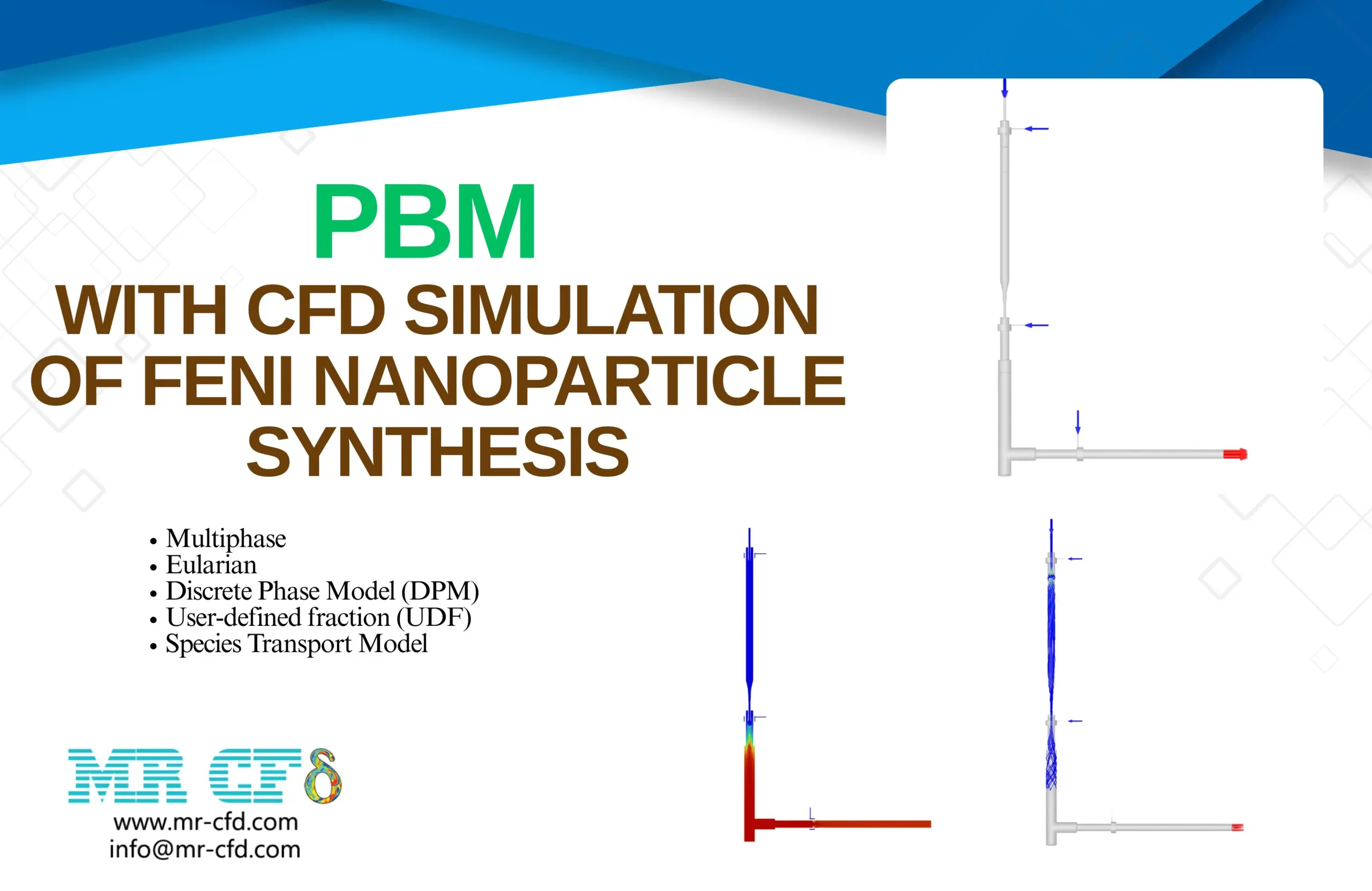
PBM with CFD Simulation of FeNi Nanoparticle Synthesis is performed using ANSYS Fluent . A Multiphase Eulerian approach is applied with FeNi alloy represented in the secondary phase. Powder precursors (FeCl₂ and NiCl₂) are injected into the domain using the Discrete Phase Model (DPM). The Species Transport Model with finite-rate Arrhenius kinetics is used to simulate the reduction reactions. User-Defined Functions (UDFs) implement nucleation, growth, and agglomeration phenomena for nanoparticle prediction.
Price: $510
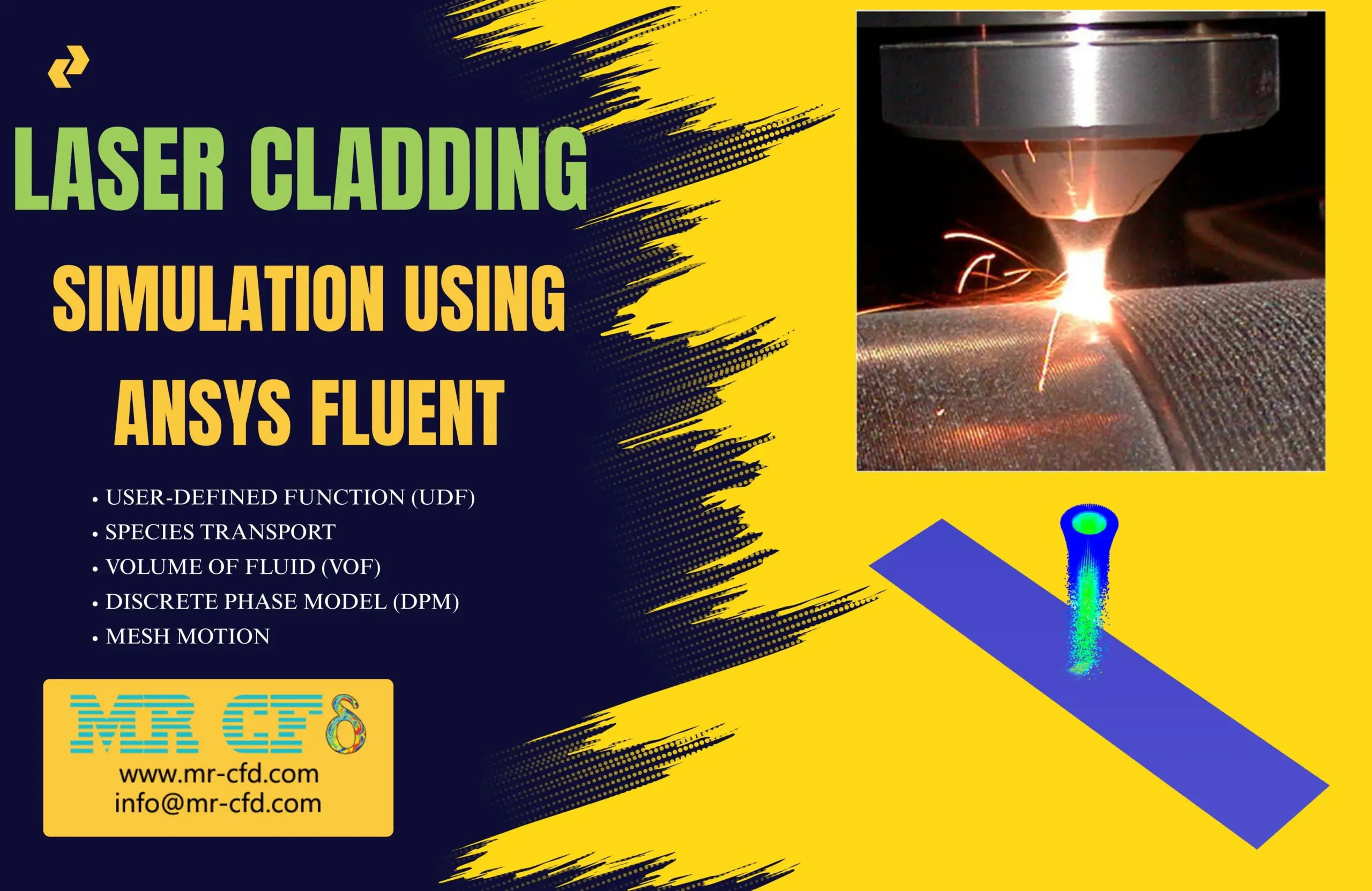
In the Laser Cladding project, we simulated the deposition of nickel droplets under an argon gas stream using ANSYS Fluent software. The three-dimensional geometry was created in Design Modeler with a computational domain of 0.05 × 0.01 × 0.025 m. A structured non-conformal mesh was generated in ANSYS Meshing, consisting of approximately 798,400 computational cells with refined regions near the deposition zone. The transient simulation employed the VOF multiphase model, coupled with species transport and energy equations, while turbulence was modeled using the Realizable k-ε model. A User-Defined Function (UDF) implemented the moving Gaussian laser heat source, enabling realistic simulation of droplet injection, spreading, and weld layer formation.

Price: $240
In this project, we have simulated the thermal and airflow performance of a greenhouse with and without a heating system using ANSYS Fluent software. Three-dimensional modeling was done using Design Modeler software. The meshing of the model has been done using ANSYS Meshing software, with approximately 1,860,000 cells for the base case and 3,110,000 cells for the heated case. The energy equation, species transport, and solar ray tracing using the Discrete Ordinates (DO) radiation model are enabled for accurate representation of heat transfer and humidity. The standard K-epsilon model is selected for turbulence characteristics of fluid flow.
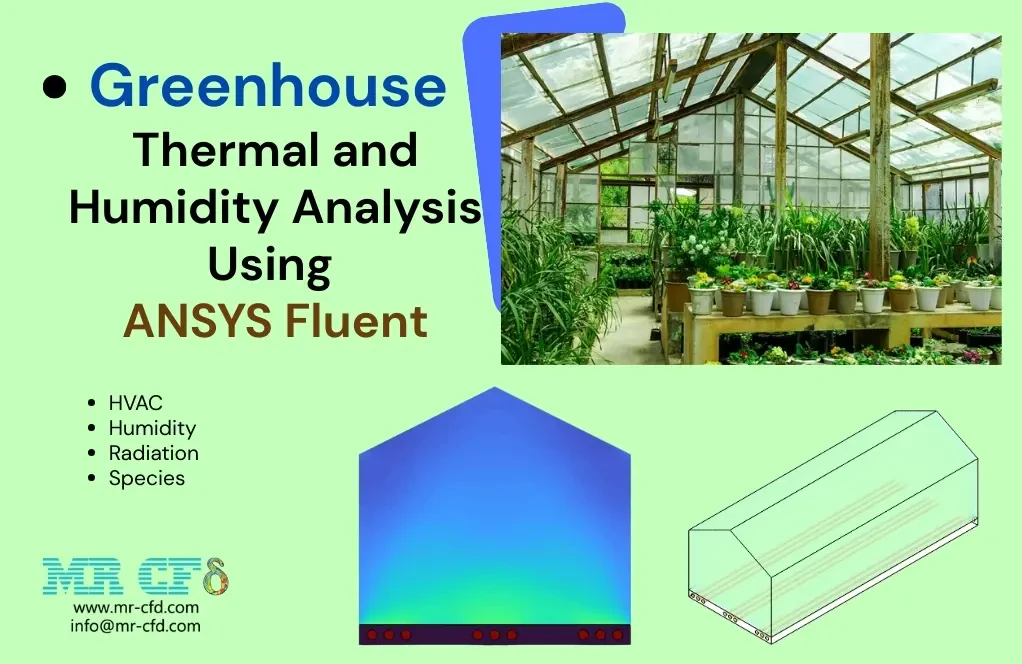
Greenhouse Thermal and Humidity Analysis Using ANSYS Fluent
Intermediate, Advanced
Price: $72
The problem numerically simulates airflow, heat transfer, solar radiation, and humidity inside a greenhouse using ANSYS Fluent software. We perform this simulation as steady-state. The study incorporates the Discrete Ordinates radiation model with solar ray tracing and species transport for air–water vapor mixture analysis.
Price: $24
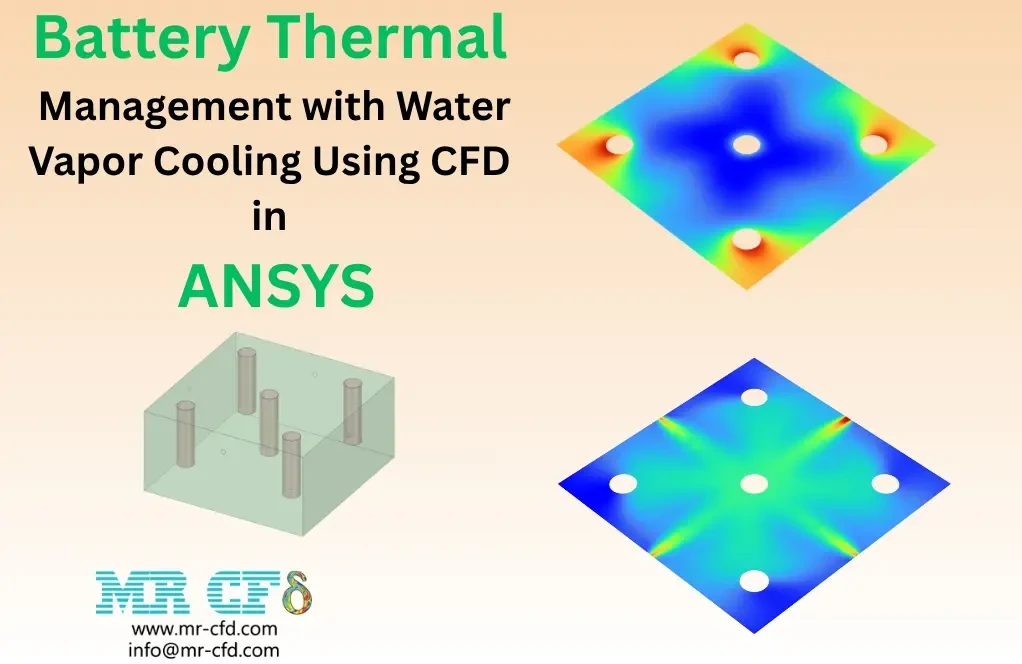
In Battery Thermal Management project simulates battery thermal management using water vapor injection cooling in ANSYS Fluent. A five-cell vertical battery pack is modeled in SpaceClaim, with unstructured mesh and wall boundary layers applied for accuracy. Air and water vapor at 18°C are injected from side nozzles at 0.5 m/s to reduce battery temperatures. The model runs species transport in pseudo-transient mode, includes a grid independence study, and analyzes the effectiveness of vapor cooling on temperature reduction.
Price: $420
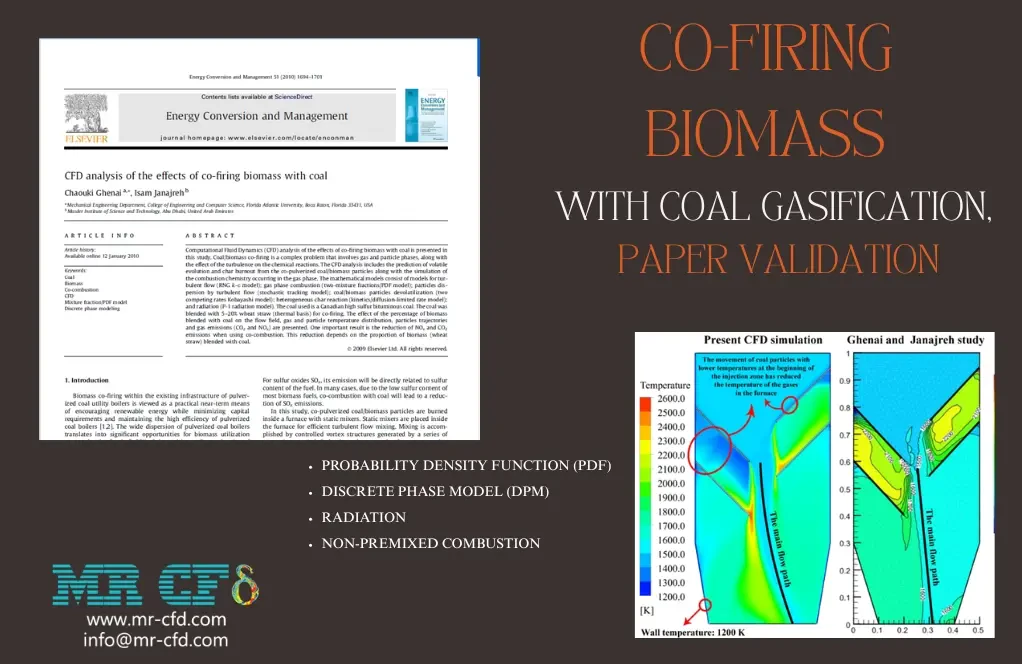
Co-firing Biomass with Coal Gasification. This project involves the simulation of coal and biomass co-firing in a furnace using CFD techniques. The primary objectives are to examine the combustion characteristics and validate the simulation results against the study by Ghenai and Janajreh. The furnace is defined with specific boundary conditions, and simulations are performed using an unsteady, incompressible flow model. The turbulent flow within the furnace is modeled using the k-e RNG turbulent model, thermal radiation is simulated with the P1 model, and combustion is analyzed with a PDF model. The simulation incorporates the kinetics/diffusion-limited rate model for particle combustion and the two competing rates Kobayashi model for devolatilization. Results are compared in terms of temperature contours and particle trajectories, confirming the simulation’s accuracy with a maximum error of approximately 5% in particle temperature ranges.
Price: $220
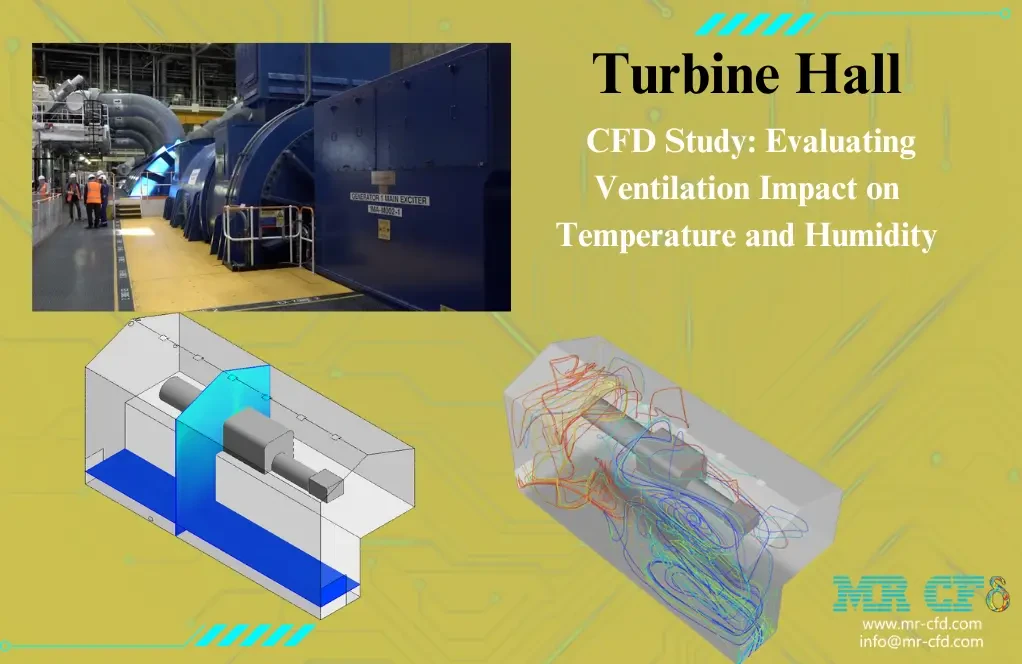
This project involves the simulation and analysis of the ventilation system within a turbine hall located in Hong Kong. Using a pressure-based CFD solver, the study examines the thermal conditions, including temperature variations and relative humidity during summer. The fluid domain, modeled as a mixture of nitrogen, water vapor, and oxygen, includes six exhaust fans strategically placed on the roof. The study explores four scenarios to assess different ventilation strategies, highlighting the importance of open doors during unit onloading to maintain a safer working environment. The findings contribute to optimizing the thermal management strategies and ensuring worker safety by maintaining acceptable temperature and humidity levels.
Syngas Fuel Combustion in Gas Turbine Can Combustor: CFD simulation
Intermediate, Advanced
Price: $300
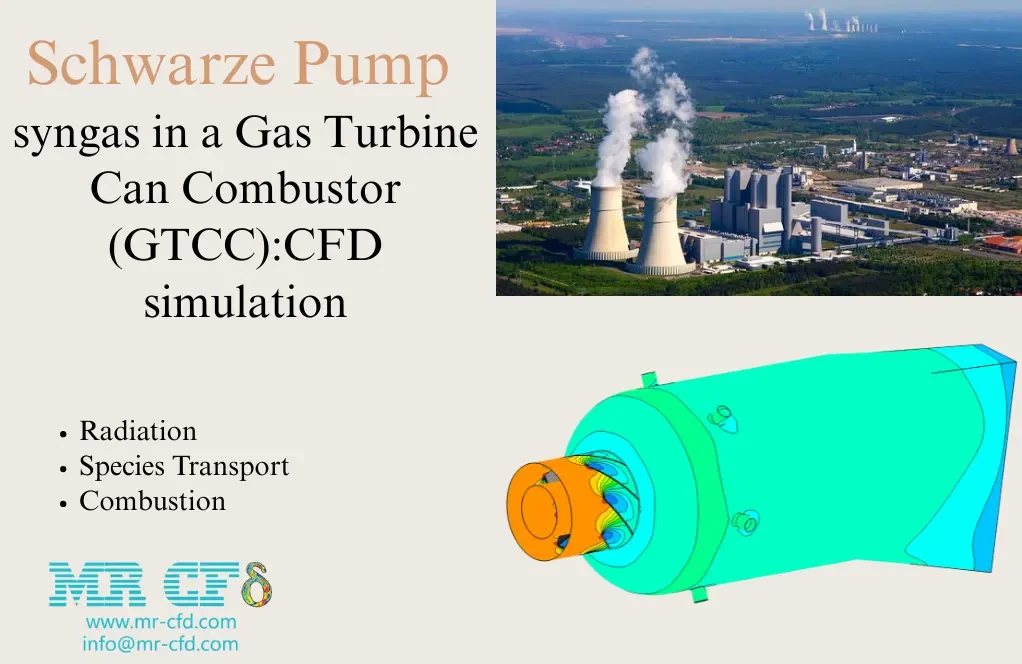
The report details a simulation of a Gas Turbine Can Combustor (GTCC) using Computational Fluid Dynamics (CFD) to analyze the combustion and emission characteristics of Schwarze Pumpe syngas. The setup includes a combustion system with six fuel injectors, a primary air inlet, and six secondary air inlets. The analysis uses a sophisticated mesh and applies the standard k-ε turbulence model and the P1 radiation model for accurate simulations. Key findings show that the combustor design effectively facilitates mixing and combustion, achieving a maximum inner flame temperature of approximately 1900 K. The study also successfully models pollutant formation, such as NOx, providing insights into emission control. Overall, the simulation demonstrates high combustion efficiency, supported by detailed species volume fraction contours, confirming complete fuel combustion at the outlet and the viability of the GTCC in optimizing syngas combustion processes.