

Electronic Cooling Golden Training Package
Price:
$8,784
$1,789
The Electronic Cooling GOLDEN Training Package delivers over 50 ANSYS Fluent tutorials, transforming teams into experts with instant project readiness. Tailored for professors, CEOs, and firms, it covers heat sinks and chip cooling, IGBT modules, microchannel heat sinks, nanofluids, porous media and aluminum foam, immersion cooling, heat pipes and thermosyphons, battery thermal management with PCM, cold plates, and cooling channels, data centers, server and computer rooms, miner rooms, generator, transformer, and machinery room ventilation, DOE optimization, and paper-validated cases. Includes step-by-step exercises, 1-year support, 3-month HPC, lifetime updates, and 15 years of MR CFD expertise for stress-free onboarding and competitive edge.
Price: $439
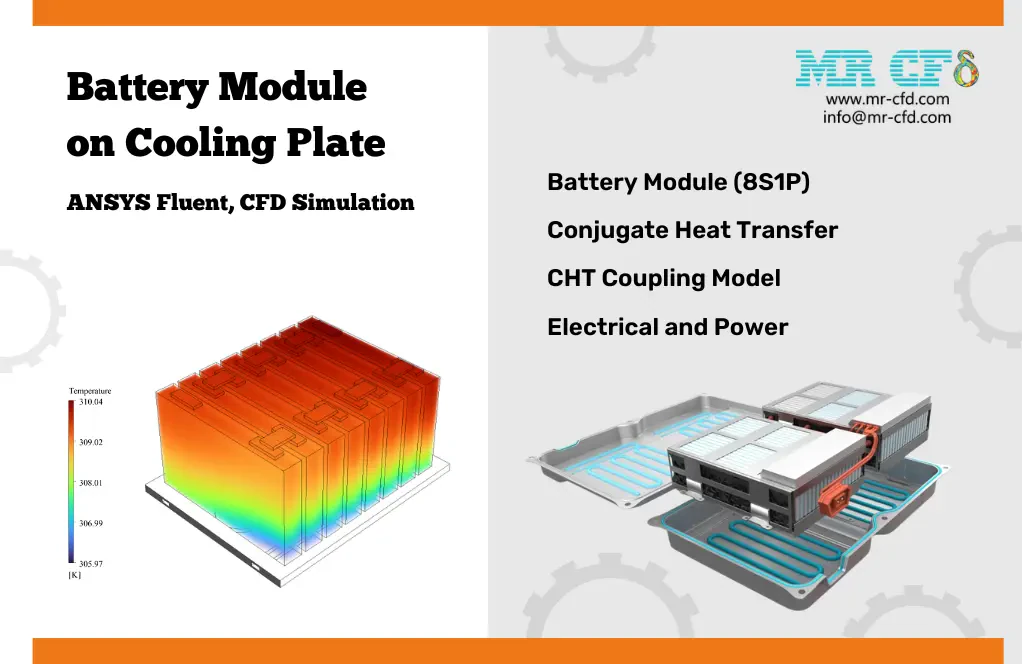
This product numerically simulates a Battery Module using ANSYS Fluent software. We design the 3-D models with the Design Modeler software. We mesh the models with ANSYS Meshing software. This product is implemented in Two steps: Battery with or without Cooling Plate. We use the CHT coupling model to define the heat sources. The run calculation is in an unsteady-state (transient).
Price: $439
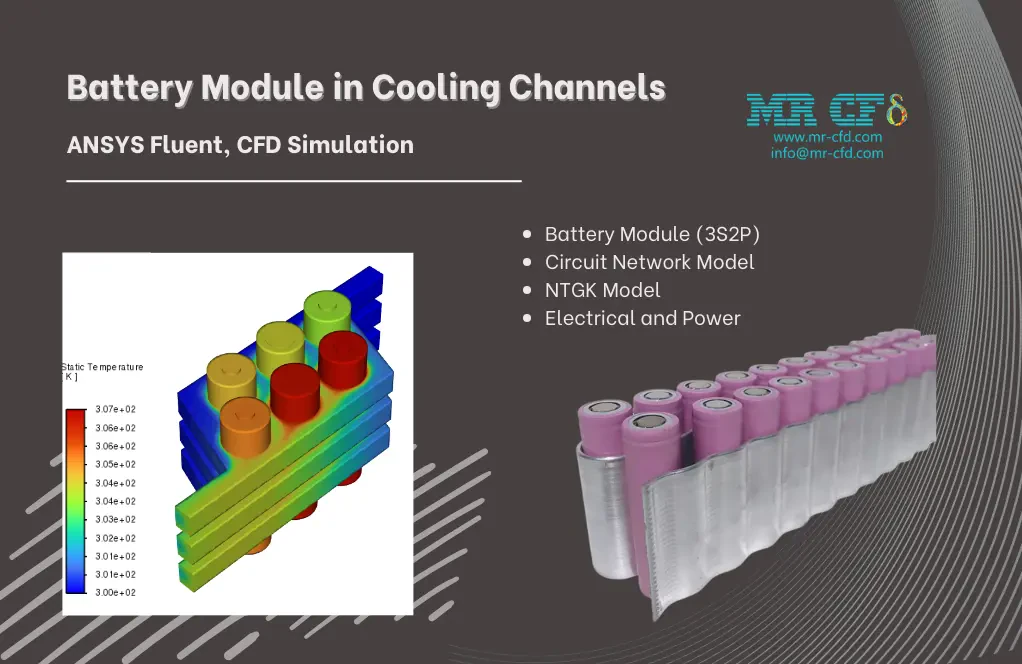
This product numerically simulates a Battery Module using ANSYS Fluent software. We design the 3D model with the Design Modeler software. We mesh the model with ANSYS Meshing software. We use the Circuit Network model to define the battery discharge. We use the NTGK sub-model to determine the electrochemical computations. We use a Virtual Connection to define a battery module connection. The run calculation is in an unsteady state (transient).
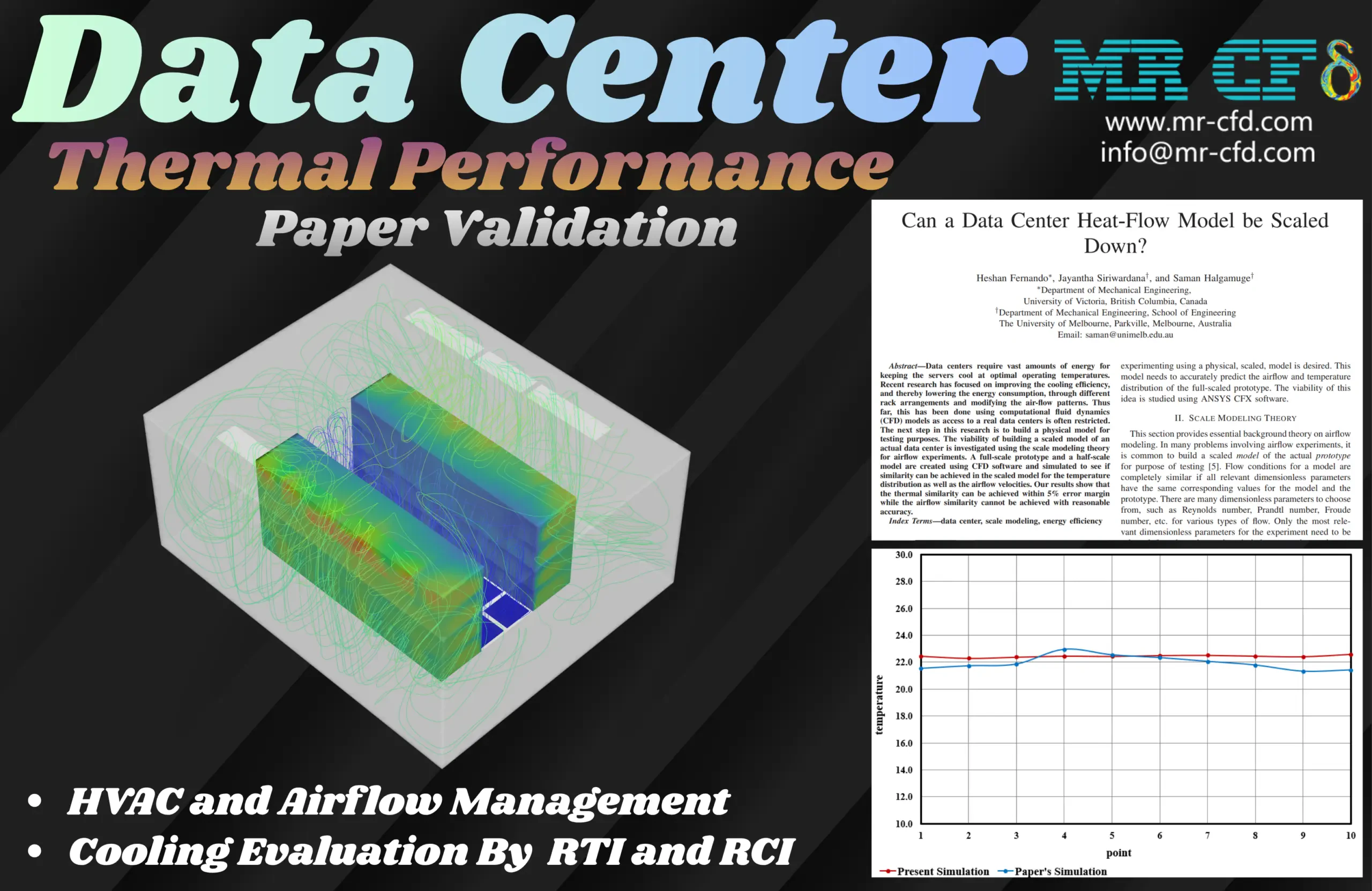
Data Center Thermal Performance CFD Simulation: Paper Validation
Intermediate, Advanced
Price: $225
Data Center CFD Simulation. HVAC and Airflow Management. Paper Validation.
Price: $120
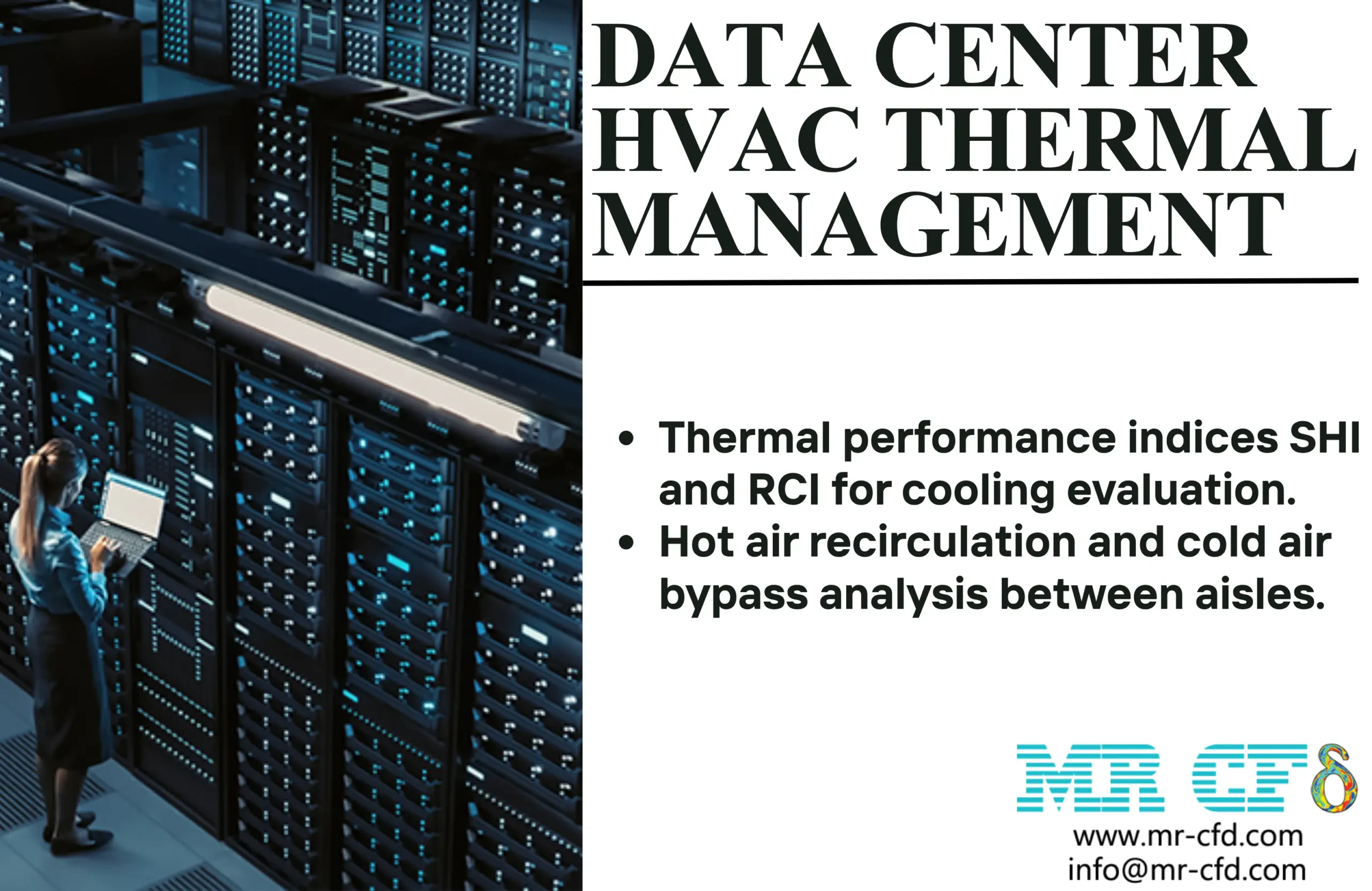
HVAC thermal management of a Data Center using ANSYS Fluent CFD. Thermal performance indices SHI and RCI for cooling evaluation. Hot-air recirculation and cold-air bypass analysis between aisles.
Price: $24
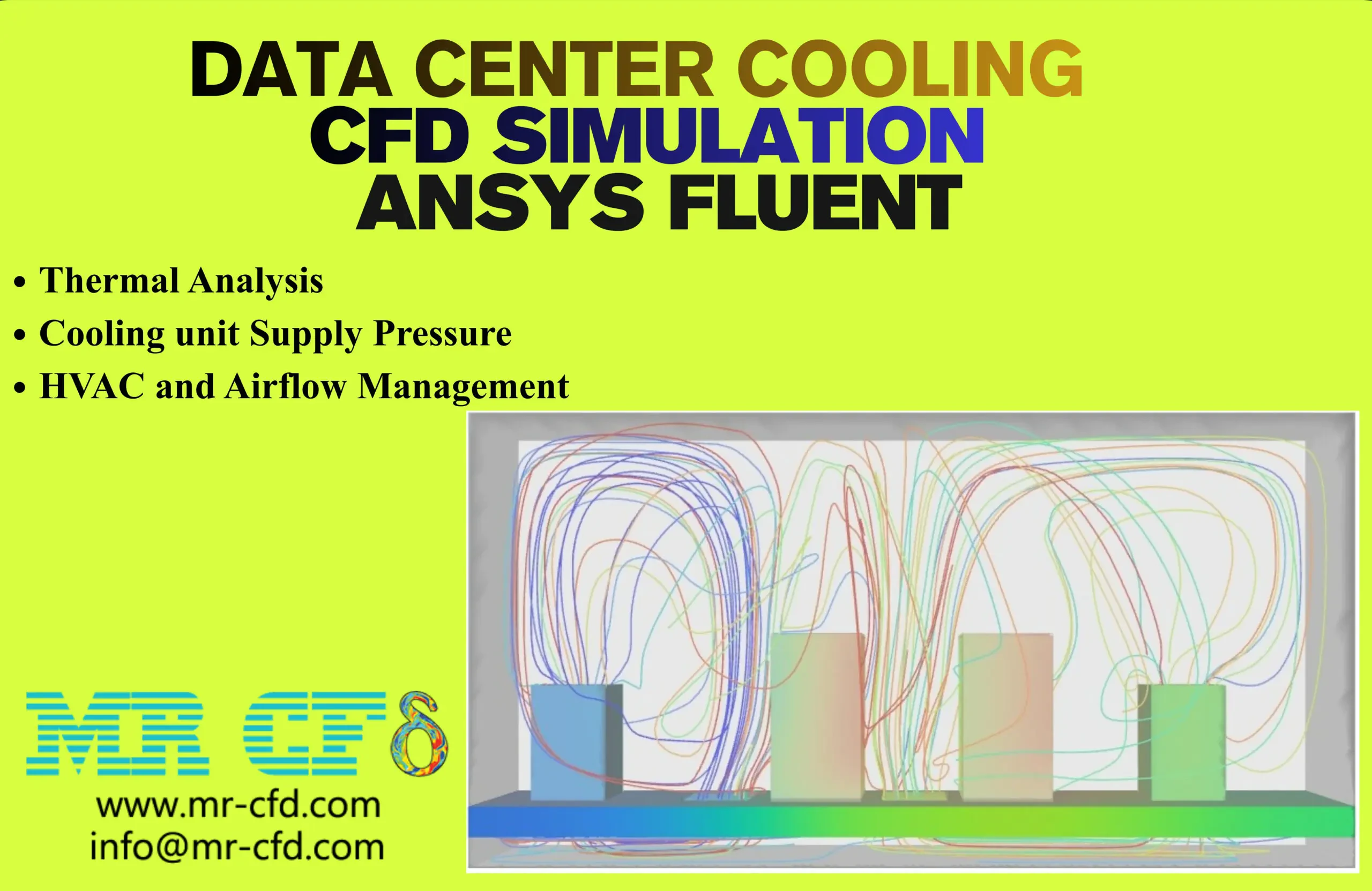
Data center cooling simulation and thermal analysis in ANSYS Fluent, focused on rack inlet conditions. Evaluating the impact of cooling-unit supply pressure on cold-air penetration into racks and overall cooling effectiveness. Delivering practical layout and airflow-management insights to improve cooling performance and reduce energy waste.
Price: $499
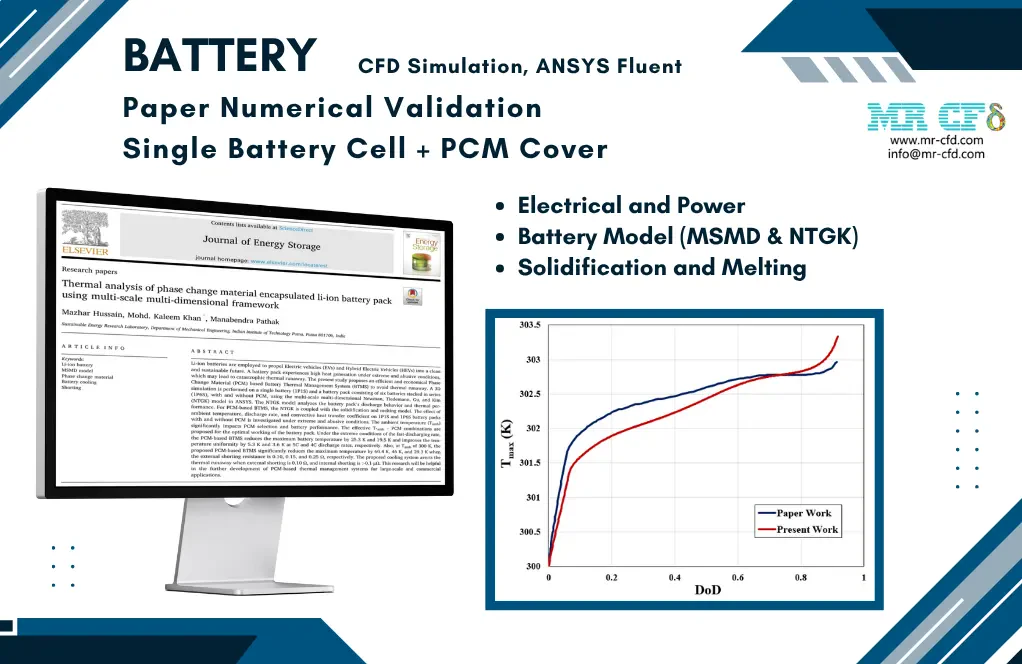
This product numerically simulates the Battery with PCM cover using ANSYS Fluent software. We design the 3-D model with the Design Modeler software. We mesh the model with ANSYS Meshing software. We use the Battery Model to define the discharge process of a battery. We use the Multi-Scale Multi-Domain (MSMD) solution method and the NTGK electrochemistry model. We used the Solidification and Melting Model to define phase change material (PCM). The present CFD work is Validated with a reference Article.
Price: $270
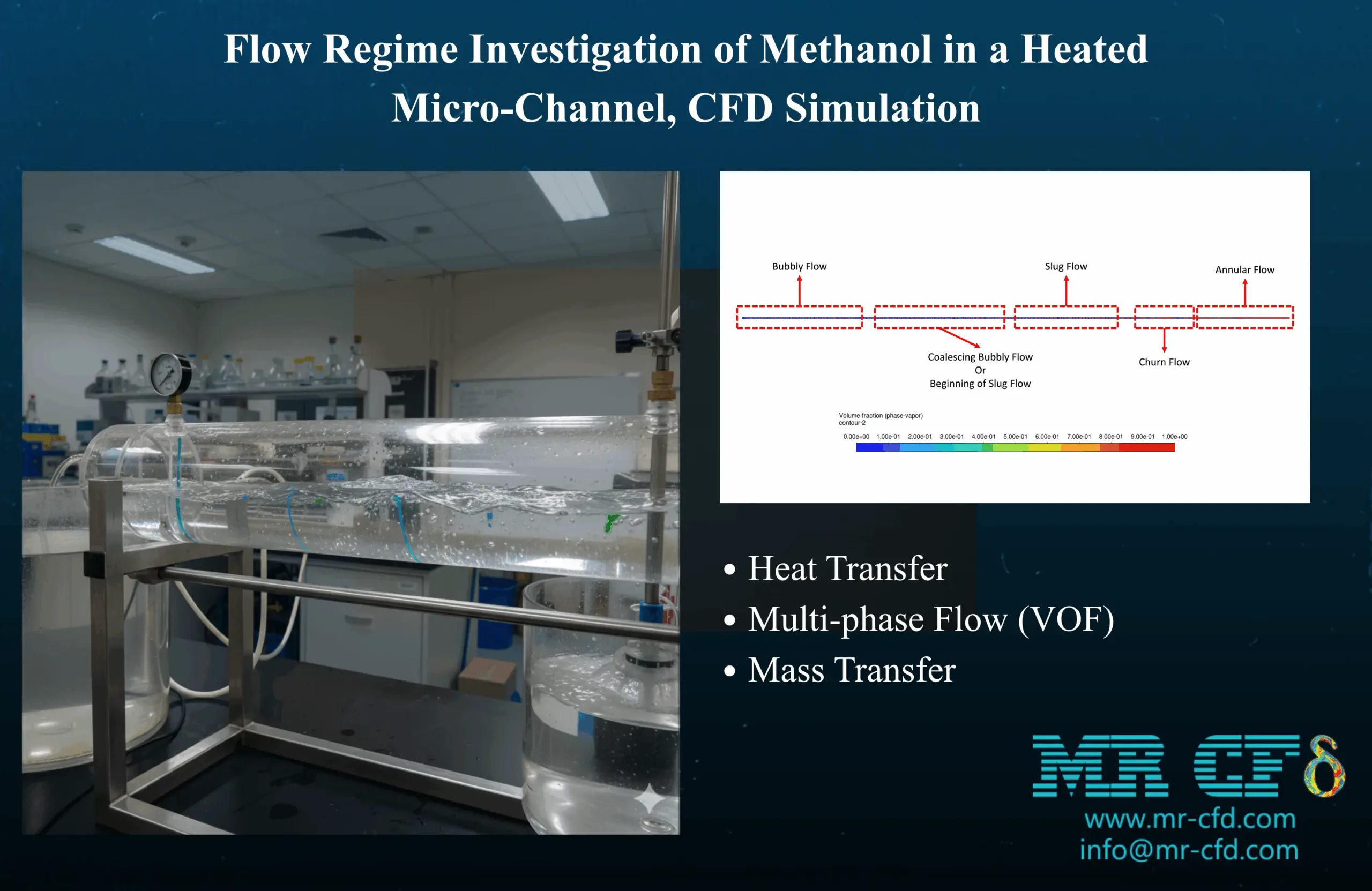
This report presents a simulation that investigates the two-phase flow boiling of methanol in a heated horizontal micro-channel. The development and transition of different flow regimes (bubbly, slug, churn, and annular) along the channel were analyzed. The 2D geometry of the micro-channel was created using ANSYS SpaceClaim software. A high-quality structured mesh was generated using ANSYS Meshing software. Appropriate multiphase model settings and boundary conditions were applied to correctly simulate the evaporation process and the resulting flow patterns.
Heat Pipe Evaporation and Condensation CFD Simulation Using ANSYS Fluent
Intermediate, Advanced
Price: $24
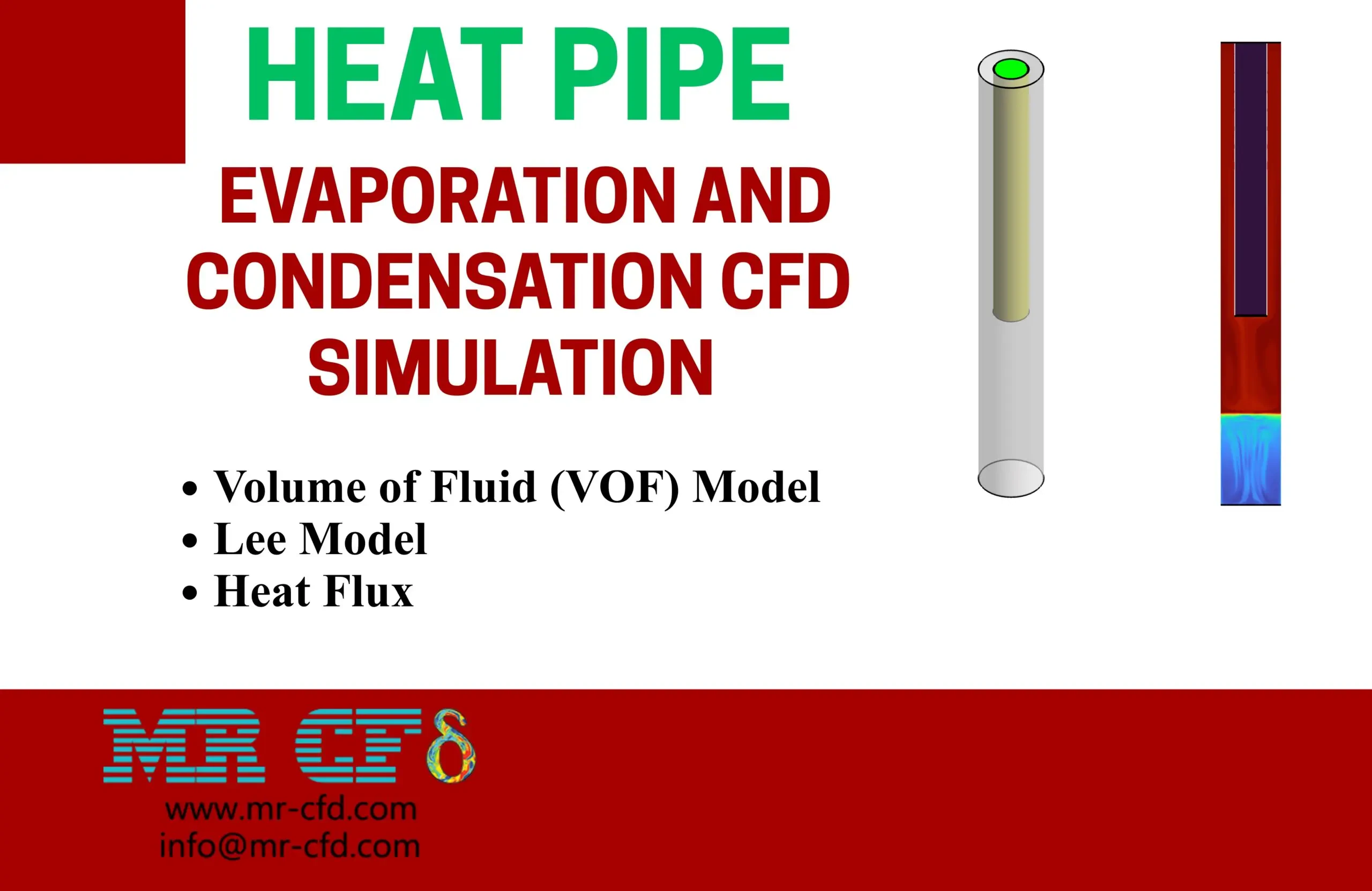
This transient 3D simulation models evaporation and condensation of water in a thermosyphon heat pipe using the VOF and k‑ε models. The domain, meshed with 3,900,000 elements, includes heated and cooled sections defined by heat‑flux and temperature boundaries. At t = 1.655 s, liquid accumulates in the evaporator, vapor rises to the condenser, and condensation occurs at cooler surfaces. Contours of mass transfer, liquid fraction, temperature, and velocity confirm stable phase circulation and efficient heat transport.
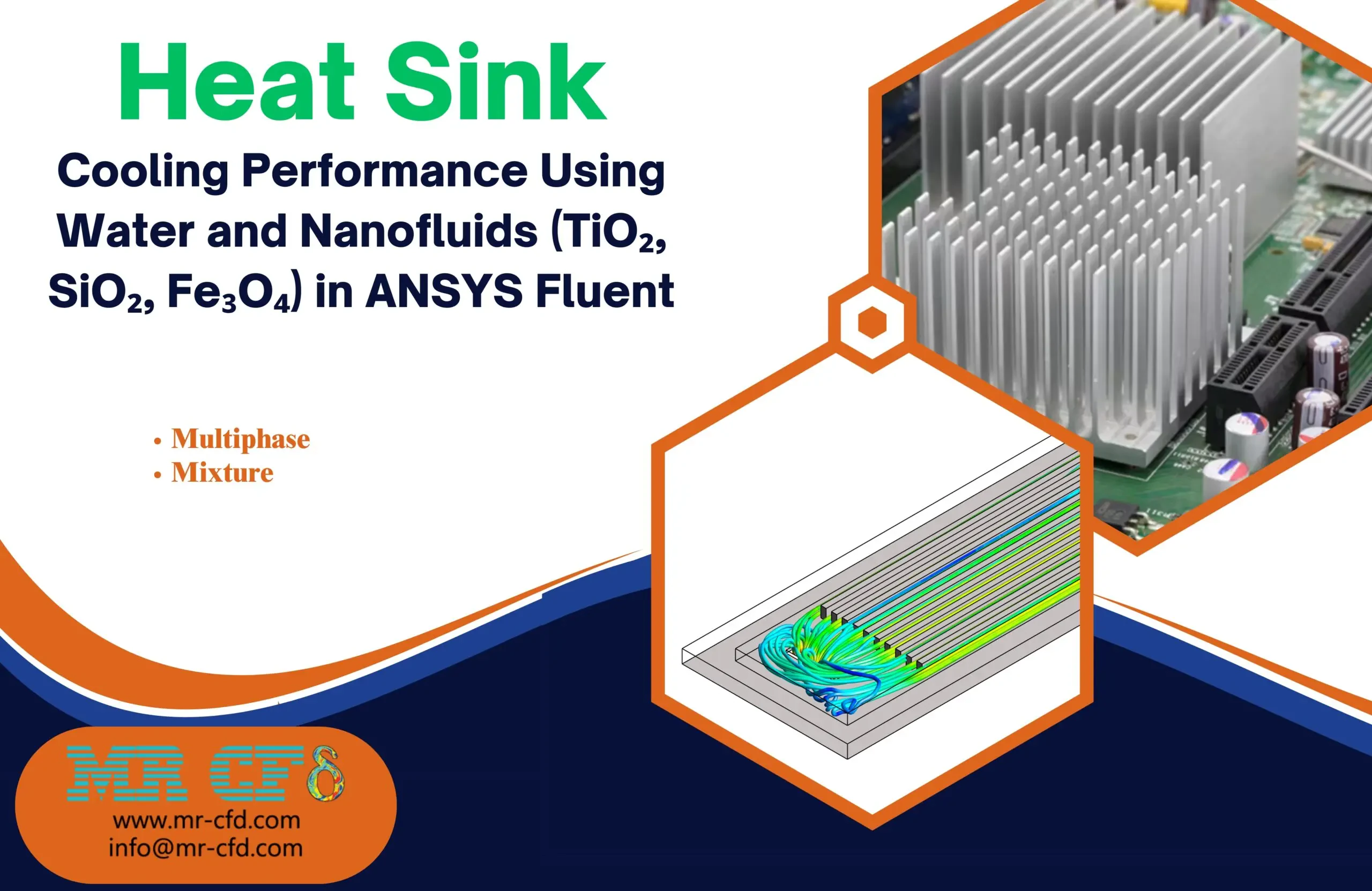
Heat Sink Cooling Performance Using Water and Nanofluids (TiO₂, SiO₂, Fe₃O₄) in ANSYS Fluent
Beginner, Intermediate
Price: $63
This project presents a numerical study of heat transfer in a heat sink using ANSYS Fluent. Four cases were simulated, including pure water (single-phase) and three nanofluids (water mixed with TiO₂, SiO₂, and Fe₃O₄) using the mixture multiphase model. The geometry was created in ANSYS DesignModeler, and a high-quality mesh of about 1.6 million elements was generated. A pressure-based, steady-state solver with the SIMPLE algorithm was applied. The results, illustrated in contour plots of velocity and temperature, show that nanofluids enhance cooling efficiency compared to pure water. Among the tested fluids, the Fe₃O₄–water mixture demonstrated the best thermal performance at the fins and base plate, highlighting its potential for advanced heat sink applications
The Electronic Cooling GOLDEN Training Package is MR CFD’s most complete ANSYS Fluent collection for thermal management of electronics, with over 40 hands-on tutorials that take you from a first heat sink model to advanced, publication-level analysis. Built for professors, CEOs, research teams, and engineering firms, it gives your group a ready-to-use project library, so new members become productive quickly and ongoing work starts from proven templates.
Heat sinks and chip cooling: Simulate basic heat sink cooling, an IGBT heat sink, and a CPU with silicone thermal paste. Study the impact of geometry, splitter plates on pin fin heat sinks, and pin and plate heat sink comparison. Add a porous-medium heat sink, a non-equilibrium porous aluminum foam heat sink with paper validation, and heat sink cooling with water and TiO₂, SiO₂, and Fe₃O₄ nanofluids.
Microchannel cooling: Analyze heat transfer enhancement and conjugate heat transfer in microchannel heat sinks, a microchannel heat source, multiphase nanofluid flow in a minichannel, and two-phase flow boiling of methanol in a heated micro-channel. Optimize a microchannel heat sink with Design of Experiments (DOE) using the Latin Hypercube Sampling Design (LHSD) method.
Immersion cooling and heat pipes: Model submerge cooling of a printed circuit board (PCB), the effect of immersion cooling on heat sink performance, and liquid immersion cooling of an ASIC miner. Simulate a thermosyphon heat pipe with the VOF multiphase model, and evaporation and condensation in a heat pipe.
Battery thermal management: Study battery cooling with PCM, nanofluid, and water vapor. Model battery modules with cooling channels and a cooling plate, and a battery pack with a cold plate. Work through a 1P1S battery with a PCM cover and a lithium-ion battery cooled with PCM, both validated against papers.
Data centers, server and computer rooms: Reproduce a data center thermal performance study with paper validation, and model data center HVAC and thermal management, data center cooling, and a server room with 6 cabinets. Add computer room air conditioning with DPM, radiation heat transfer in a computer room, and miner room ventilation.
Generator and machinery rooms: Simulate generator room ventilation in an industrial application and with fans, transformer room ventilation, and storage container room ventilation. Evaluate the impact of ventilation on temperature and humidity in a turbine hall, and the ventilation system of a ship engine room.
What’s included:
Step-by-step exercises with complete setup, meshing, solving, and post-processing
Projects spanning beginner, intermediate, and advanced levels, including paper-validation cases
1-year technical support
3-month HPC access
Lifetime updates
Backed by 15 years of MR CFD simulation expertise
Whether you’re preparing a research paper, designing cooling for chips, batteries, or data centers, or building in-house CFD capability, this package gives you the knowledge, tools, and confidence to deliver faster and stay ahead of the competition.