

Motion Modeling & Moving Zones GOLDEN Training Package
Price:
$19,772
$5,219
The Motion Modeling & Moving Zones GOLDEN Training Package delivers +185 ANSYS Fluent tutorials, transforming teams into experts with instant project readiness. Tailored for professors, CEOs, and firms, it covers MRF, mesh motion, and dynamic mesh for pumps, fans, mixers, and Pelton, tidal, and wind turbines, jet engines, pistons, 6DOF motion, oscillating flows, one-way and two-way FSI, thermal FSI, and DEM-coupled moving geometries, plus UDF-driven motion for solids, sloshing, and aerodynamic forces. Includes step-by-step exercises, 1-year support, 3-month HPC, lifetime updates, and 15 years of MR CFD expertise for stress-free onboarding and competitive edge.
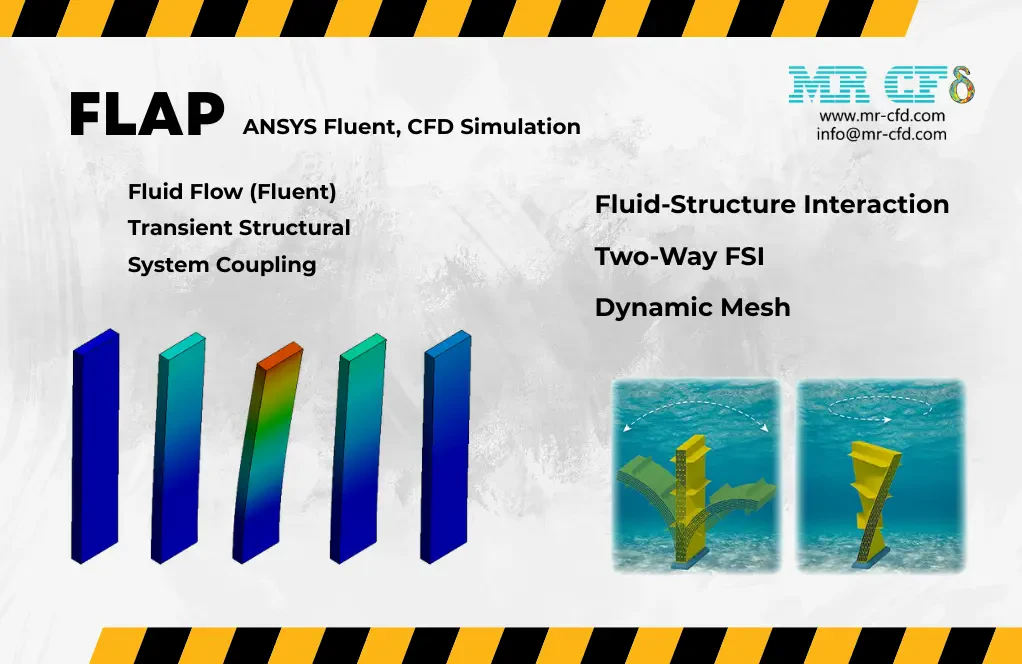
Flap, Two-way FSI, ANSYS Fluent CFD Simulation
Intermediate, Advanced
Price: $210
This product numerically simulates a Flap motion or deformation using ANSYS software. This project is implemented as a Fluid-Structure Interaction (FSI) approach. We perform the Fluid simulation in ANSYS Fluent and the Solid simulation in ANSYS Transient Structural. The System Coupling is used to define Data Transfer between fluid and structural calculations. We use a 2-Way FSI for data transfer in both from fluid to solid and from solid to fluid. We design the 3-D model in the Design Modeler software and mesh it in the ANSYS Meshing software. We use the Dynamic Mesh option to account for fluid domain deformation. The run calculation is in an Unsteady State (transient).
Price: $56
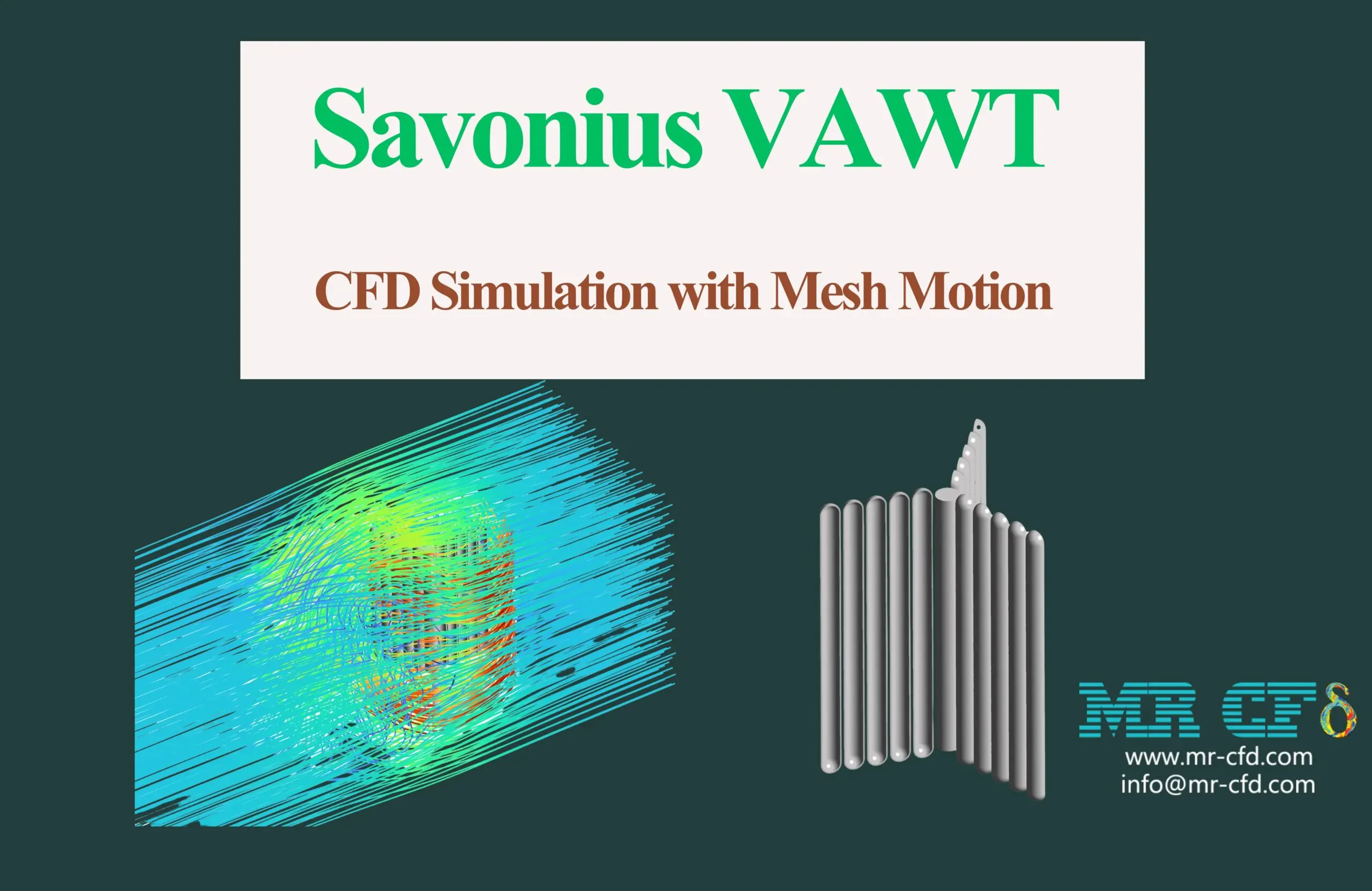
This study presents a CFD analysis of a Savonius VAWT using mesh motion in ANSYS Fluent to examine aerodynamic performance and flow characteristics. The rotor geometry was modeled in DesignModeler and meshed with a non-conformal, unstructured grid containing about 5.5 million cells for accurate flow resolution. A transient, pressure-based solver with the RNG k-ε turbulence model was applied; air was used as the working fluid, with rotating and stationary flow zones defined. The simulation revealed pressure variations, wake formation, and vortex structures around the blades, highlighting key aerodynamic behaviors of the Savonius VAWT.
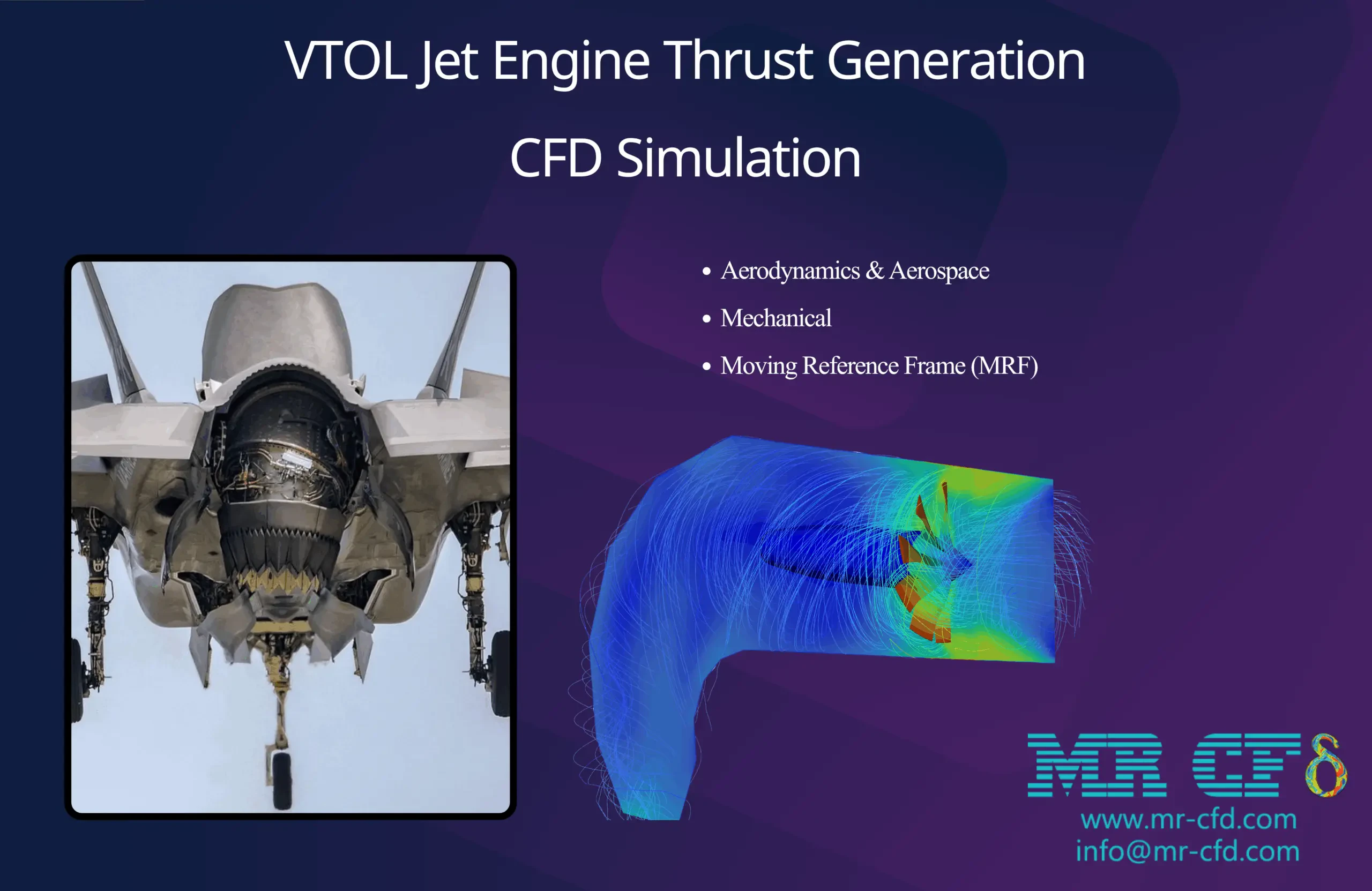
VTOL Jet Engine Thrust Force Generation, CFD Simulation
Intermediate, Advanced
Price: $150
This report presents a simulation that investigates the thrust generation of a VTOL (Vertical Take-Off and Landing) jet engine operating in vertical mode. The aerodynamic performance and thrust force produced by a rotating fan within a bent pipe configuration were analyzed. The 3D geometry of the bent pipe with fan was created using ANSYS SpaceClaim software. A high-quality unstructured mesh with boundary layer refinement was generated using ANSYS Meshing software. Appropriate turbulence model settings and boundary conditions were applied to correctly simulate the rotating fan dynamics and the resulting thrust force generation.
Price: $80
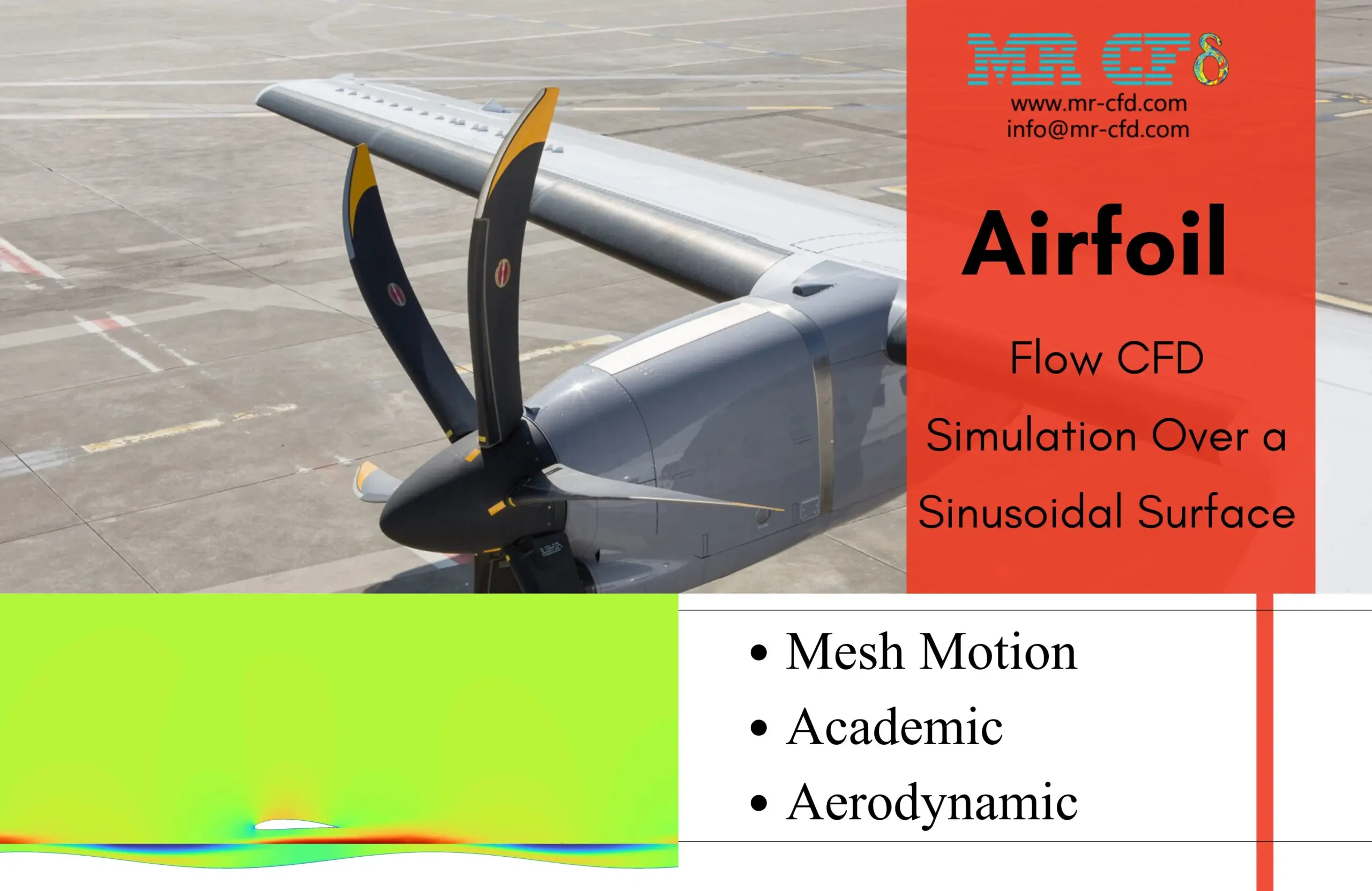
This simulation studies airflow around an airfoil placed above a sinusoidal wall using mesh motion in ANSYS Fluent to analyze aerodynamic effects. The 2D model includes an airfoil over a wavy bottom surface, divided into stationary and moving zones, with a structured refined mesh near the airfoil and wall. A transient pressure-based solver with the k–ω SST turbulence model was applied using a 55 m/s inlet velocity and mesh motion of 56 m/s for the moving zone. Velocity contours show accelerated flow over the airfoil’s upper surface, while pressure contours indicate low pressure above and high pressure below, confirming lift generation influenced by the wavy boundary.
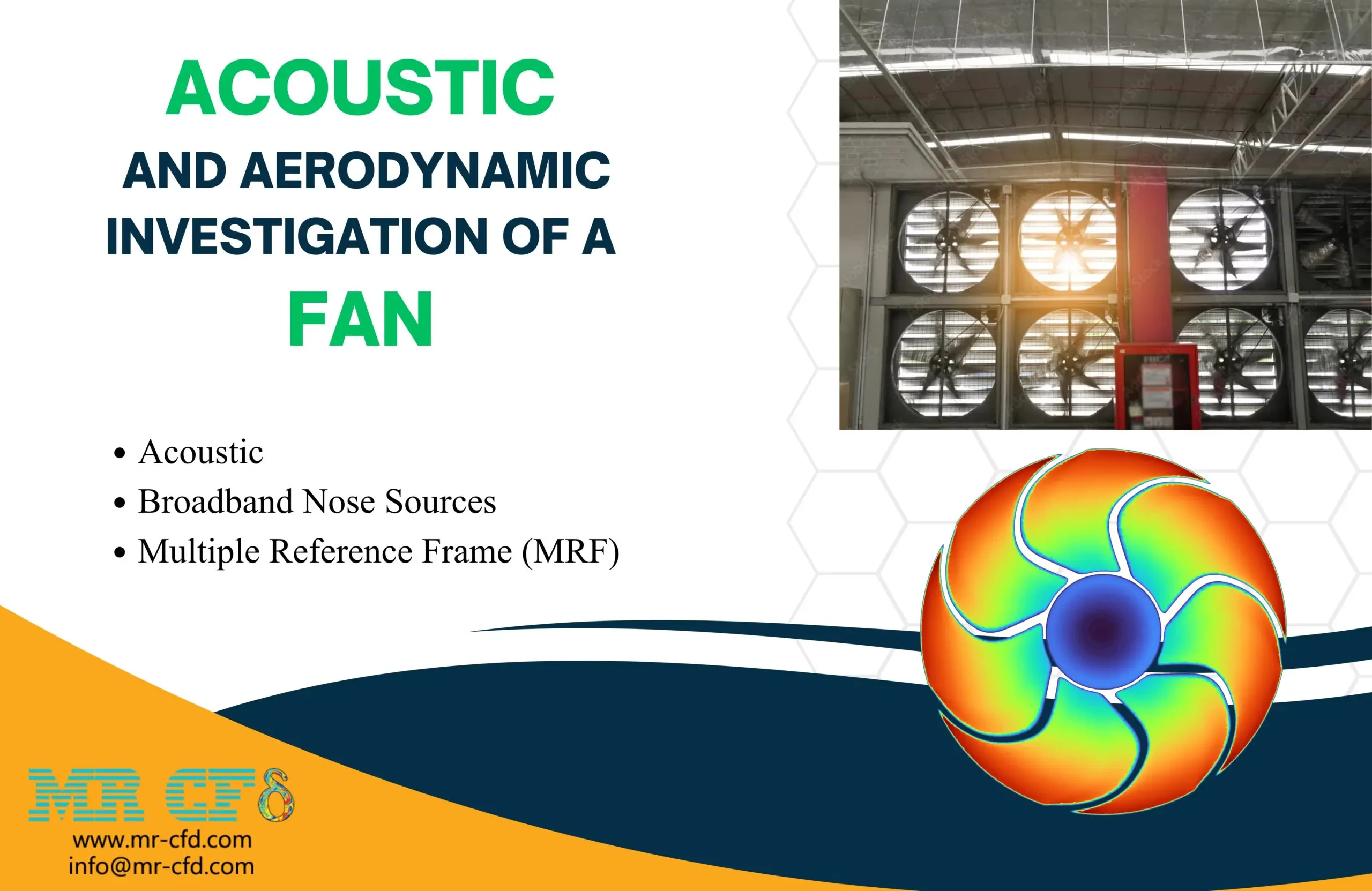
Acoustic and Aerodynamic Investigation of a Fan Using the MRF Technique in ANSYS Fluent
Intermediate
Price: $28
The fan geometry, consisting of six blades and three zones, was created in DesignModeler and meshed with an unstructured tetrahedral grid of about 3 million elements. Broadband noise sources were applied in ANSYS Fluent to evaluate the acoustic performance and sound power level distribution. The Multiple Reference Frame (MRF) approach was used to model the rotating zone at 3000 RPM under steady-state conditions. Results show high-pressure and velocity regions near the blade tips, leading to stronger acoustic power levels along the fan casing.
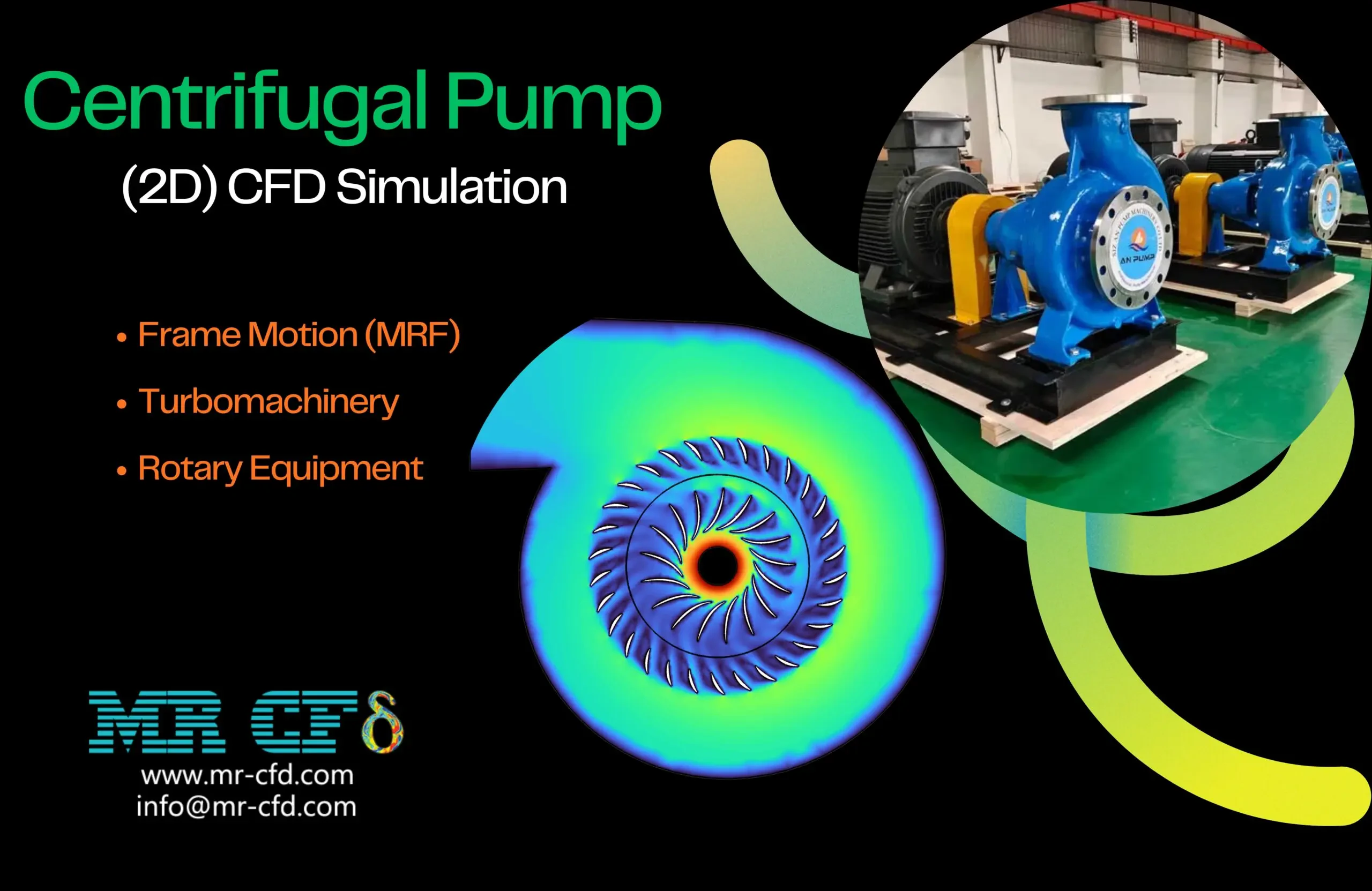
Price: $100
The centrifugal pump was modeled in ANSYS with two zones: the stationary casing and the rotating impeller. A triangular mesh with 17,536 cells was generated to discretize the geometry. The impeller was simulated using the Moving Reference Frame (MRF) approach with a rotation speed of 1500 RPM.
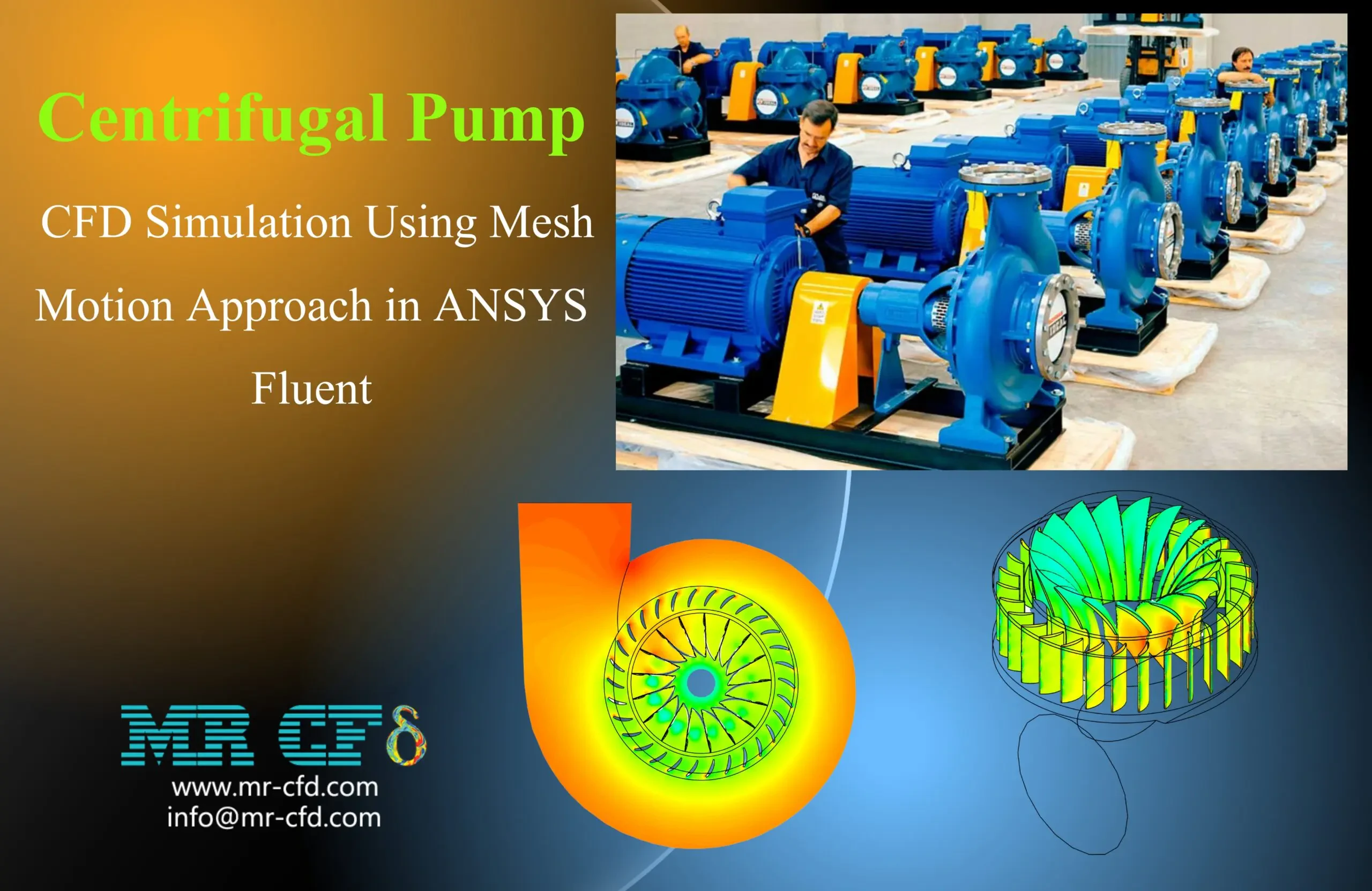
Price: $20
This project presents a CFD simulation of a centrifugal pump performed in ANSYS Fluent using the mesh motion approach. The geometry was modeled in SpaceClaim/DesignModeler and discretized into a high-quality tetrahedral mesh (About 2M elements). A pressure-based transient solver with the k–ω SST turbulence model was applied, with water as the working fluid. Results show a clear pressure rise from impeller inlet to outlet, confirming efficient energy transfer by the pump.
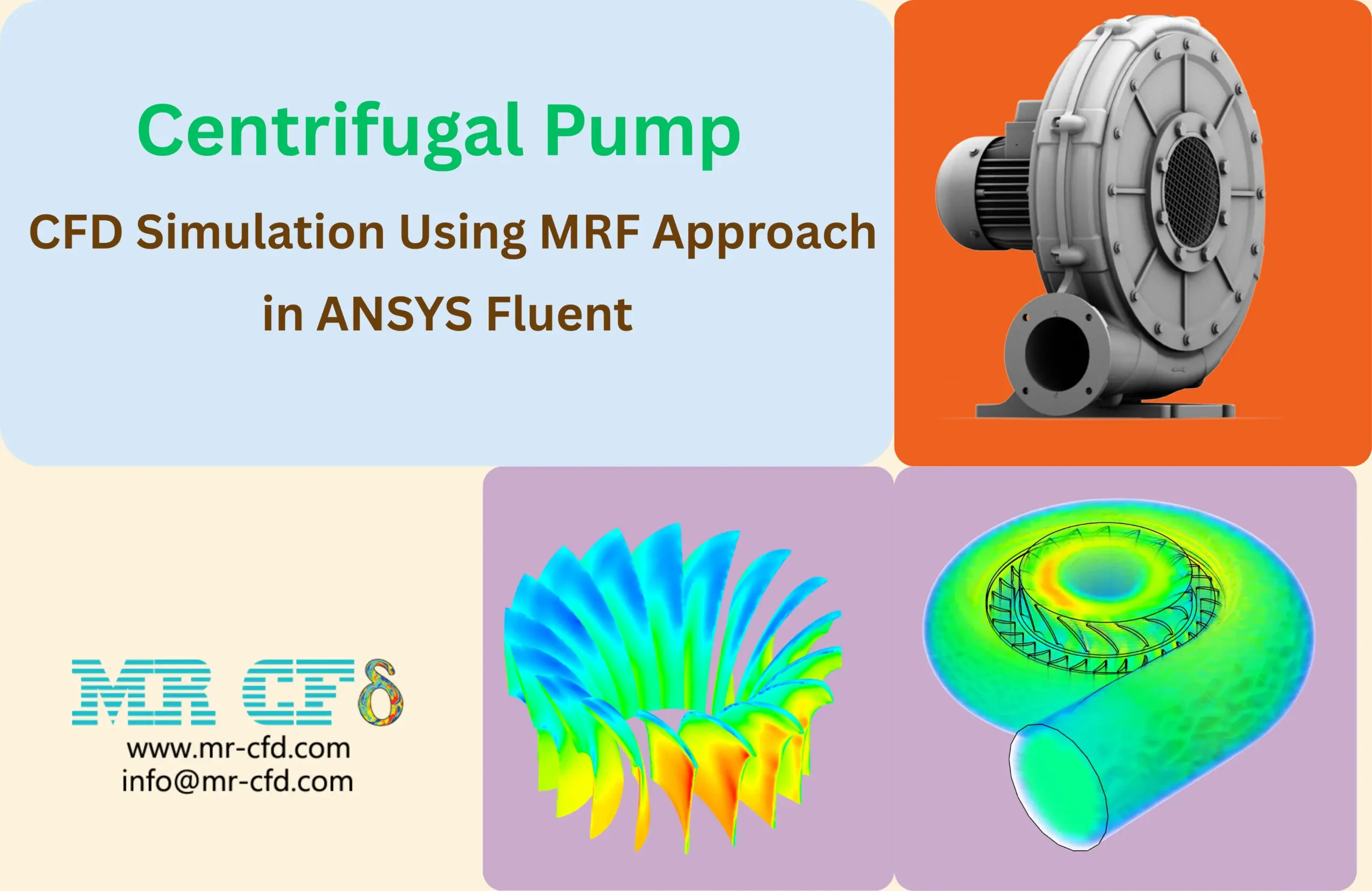
Price: $16
This project presents a CFD analysis of a centrifugal pump using ANSYS Fluent. The 3D geometry was modeled in SpaceClaim and meshed with about 2 million tetrahedral elements. The simulation used a steady pressure-based solver with the k-ω SST turbulence model and MRF for rotation at 1500 RPM. Results show a clear velocity increase up to ~300 m/s and a significant pressure rise across the impeller and volute.
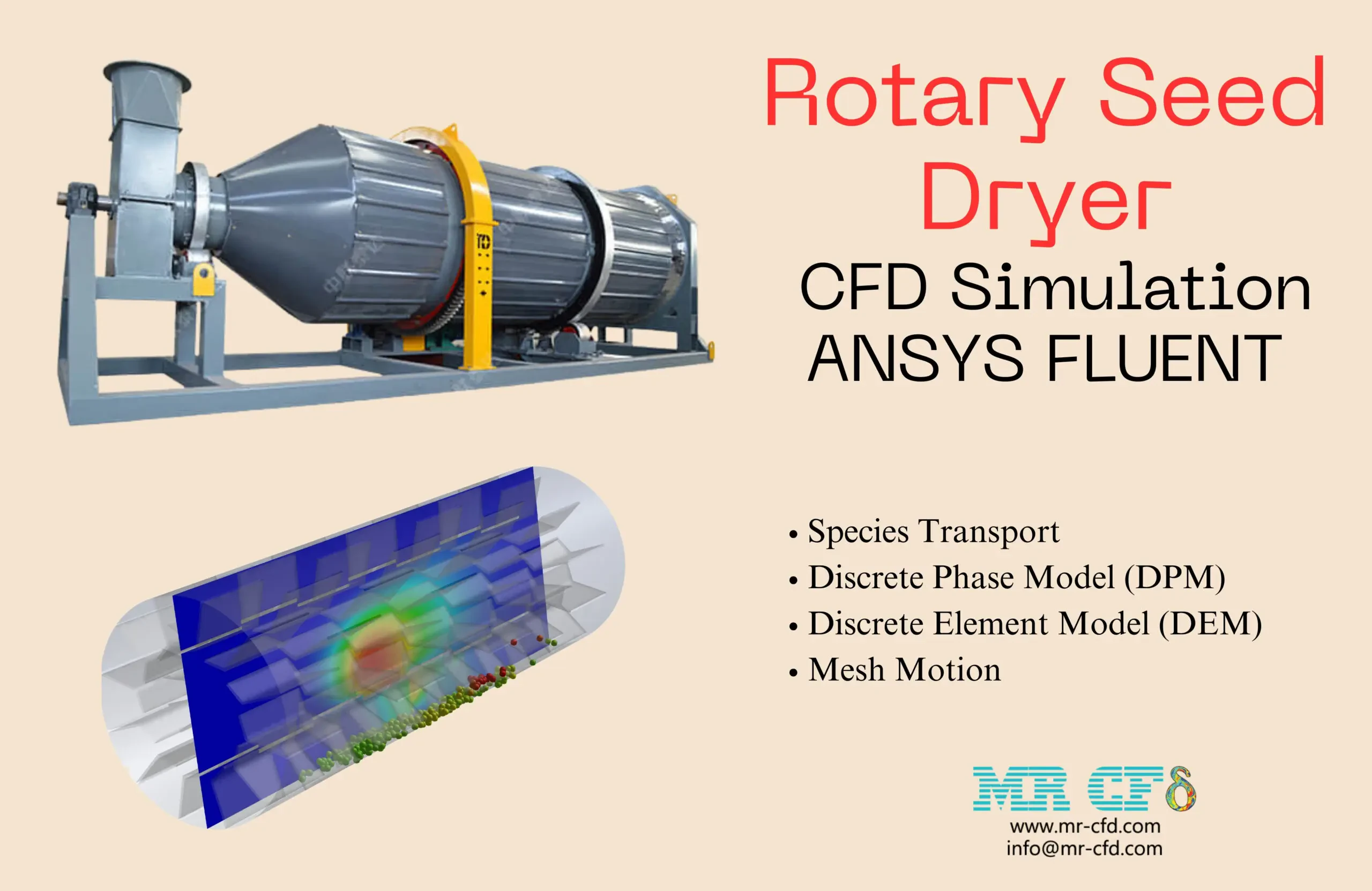
Rotary Seed Dryer CFD Simulation, Using DPM and Moving Mesh, by ANSYS FLUENT
Intermediate, Advanced
Price: $220
This work presents a CFD–DEM simulation of a rotary seed dryer. Hot air flows through the inclined drum at 350 K while the drum rotates at 20 RPM. Seeds are modeled with the Discrete Phase Model (DPM) coupled with evaporation into H₂O vapor. The Discrete Element Method (DEM) accounts for particle–particle and particle–wall collisions, improving realism of seed motion. Contours of H₂O mass fraction reveal zones of strong evaporation, reaching values up to 0.0026. The combined CFD–DPM–DEM approach shows how airflow, fin mixing, and collisions enhance drying efficiency.
The Motion Modeling & Moving Zones GOLDEN Training Package is MR CFD’s most complete ANSYS Fluent collection for simulating moving, rotating, and deforming geometry, with +185 hands-on tutorials that take you from first setup to advanced, publication-level modeling. Built for professors, CEOs, research teams, and engineering firms, it gives your group a ready-to-use project library, so new members become productive quickly and ongoing work starts from proven templates.
Moving Reference Frame (MRF): Set up steady rotating-zone simulations of centrifugal pumps in 2D and 3D, fans with combined acoustic and aerodynamic analysis, mixers, compressors, turbines, and VTOL jet engine thrust generation. Cover Pelton turbines with acoustic analysis, FSI, and cavitation.
Moving and sliding mesh: Run transient rotor-stator simulations with mesh motion, including centrifugal pumps compared against MRF, Savonius VAWT turbines, airfoil flow over a sinusoidal surface, and tidal turbines. Add multiphase and particle coupling with rotary seed dryers using DPM and moving mesh.
Dynamic mesh: Model smoothing, remeshing, and layering for oscillating multiphase flow, balloon pumping in an aorta, twin screw extruders with DEM and dynamic mesh, 6DOF motion, and pump and cavitation cases with deforming domains.
UDF-driven motion: Control motion with user-defined functions for cylinder-piston systems, solid movement, rotational and oscillating motion, sloshing and aerodynamic forces, and velocity and mass flow rate profiles.
Fluid-structure interaction: Work through intrinsic FSI and System Coupling concepts, two-way flap FSI, wind turbine blades, airfoils, turbine vibration, and thermal FSI for T-junction and bent pipes.
What’s included:
Step-by-step exercises with complete setup, meshing, solving, and post-processing
Projects spanning beginner, intermediate, and advanced levels
1-year technical support
3-month HPC access
Lifetime updates
Backed by 15 years of MR CFD simulation expertise
Whether you’re preparing a research paper, optimizing a rotating machine, or building in-house CFD capability, this package gives you the knowledge, tools, and confidence to deliver faster and stay ahead of the competition.