

ANSYS Fluent Online Courses
Here's every CFD online course related to ANSYS Fluent category.
Price: $8
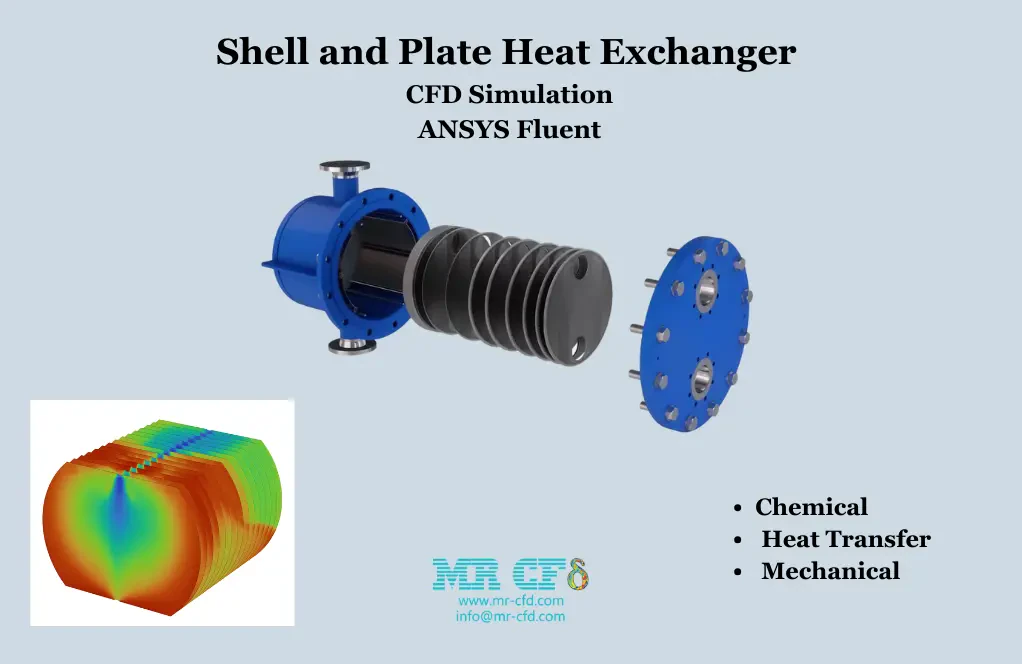
This product simulates a shell and plate heat exchanger using ANSYS Fluent software. The geometry of the problem is designed in spaceclaim. Then the Fluent meshing software was used to mesh the geometry producing 3,686,338 polyhedral elements. The turbulence of the flow is simulated via Realizable k-e model.
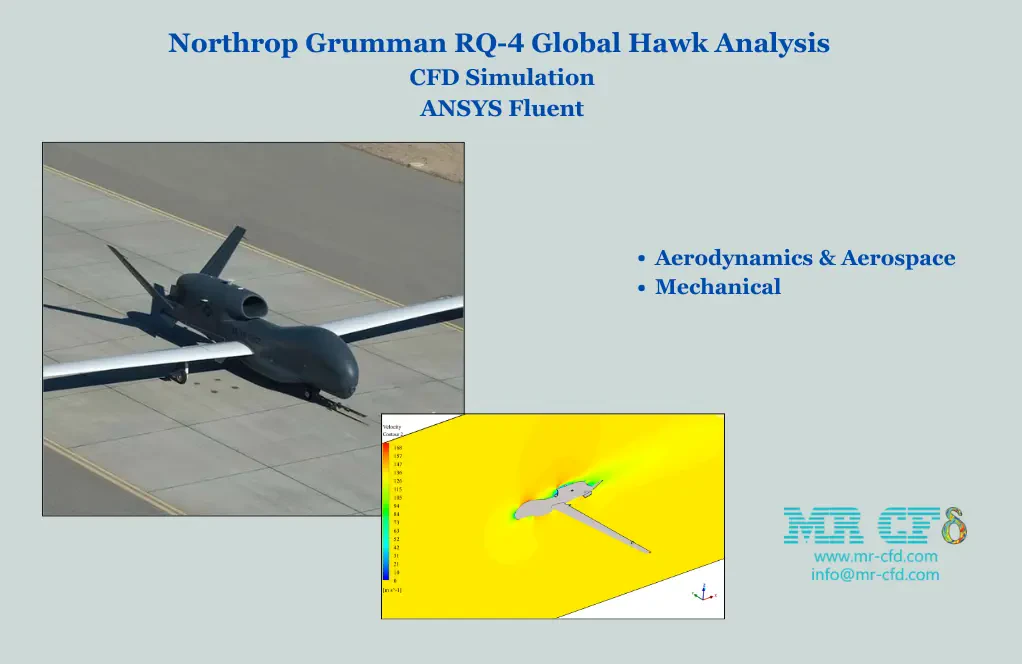
Northrop Grumman RQ-4 Global Hawk Analysis CFD Simulation, ANSYS Fluent
Beginner, Intermediate
Price: $219
This study aims to investigate the aerodynamic performance of a Grumman RQ-4 Global Hawk using ANSYS Fluent. The Global Hawk geometry was modelled using SpaceClaim then imported into ANSYS Fluent for meshing consisting 3,764,695 elements. The simulation used a pressure-based solver.

Venturi Nozzle Multiphase Flow Analysis
Intermediate
Price: $10
The problem numerically simulates multiphase flow in a venturi nozzle using ANSYS Fluent software. The geometry is designed in ANSYS Design Modeler and ANSYS Meshing is used to generate a mesh with 829,367 cells. The Volume of Fluid (VOF) multiphase model is employed to handle the interaction between air and water phases. The Realizable k-epsilon turbulence model with Enhanced Wall Treatment is used to simulate turbulent flow. Results are analyzed for air volume fraction, pressure distribution, and velocity patterns throughout the venturi turbine geometry.
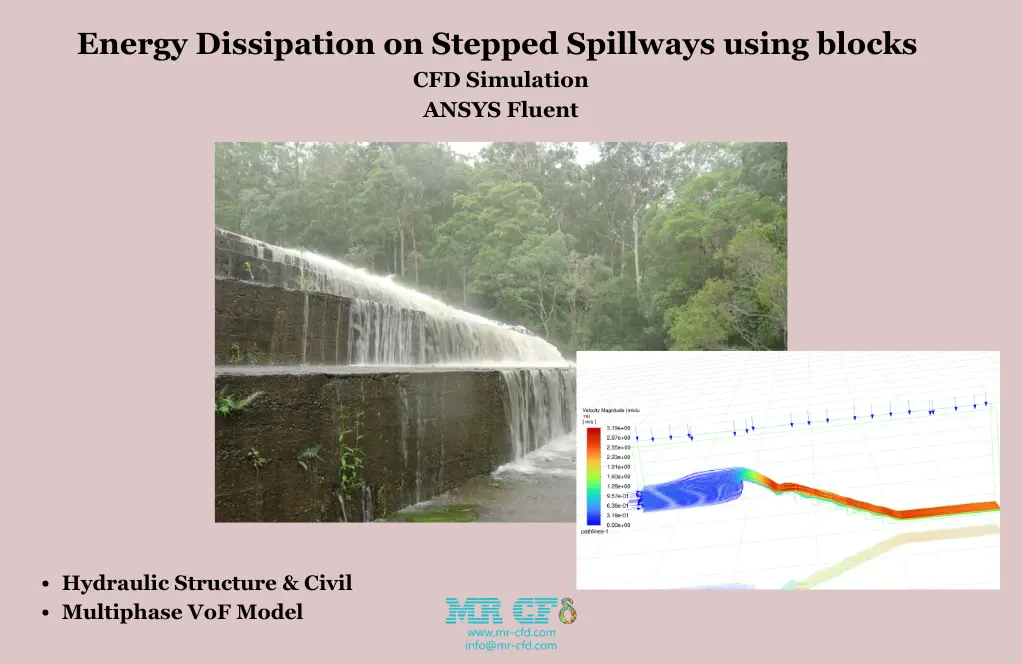
Energy Dissipation on Stepped Spillways using blocks CFD Simulation
Beginner, Intermediate
Price: $14
This study investigates the effects of energy dissipation blocks on the energy dissipation efficiency of stepped spillways using computational fluid dynamics (CFD) simulations. Two spillway configurations, with and without blocks, were analyzed under different flow conditions. The results showed that the presence of blocks enhanced energy dissipation by 6% compared to the conventional stepped spillway design. These findings contribute to the optimization of stepped spillway designs for improved energy dissipation and downstream channel protection.
Price: $16
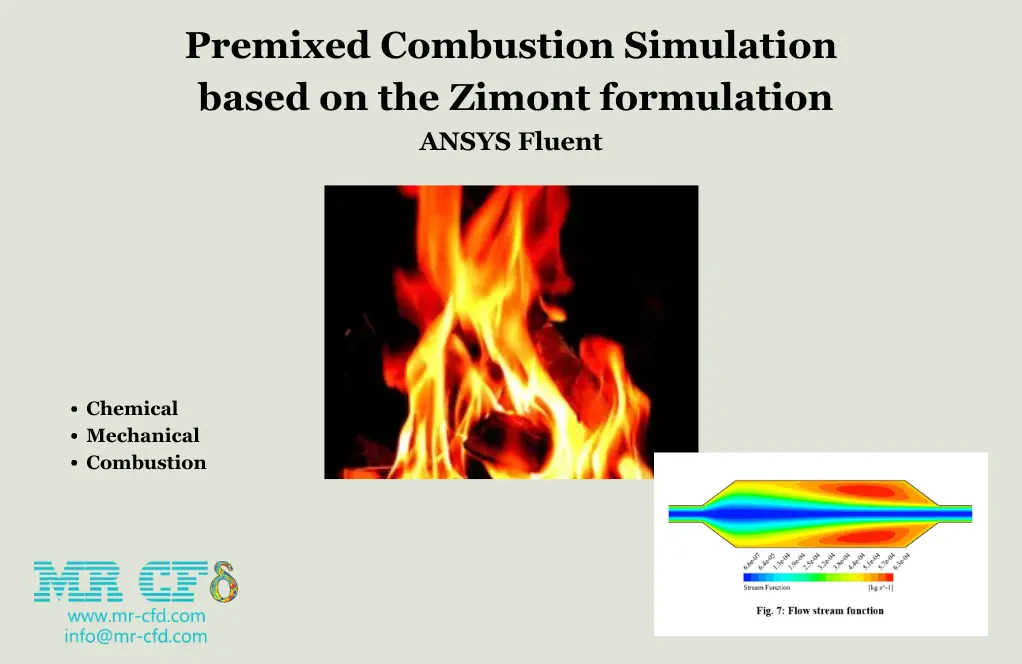
In this project, a part of an annular combustion chamber is simulated by Ansys Fluent software. Premixed combustion of methane-air is analyzed, and Zimont's method is also used to model the flame speed. Structured grid is used to create a mesh in the computing domain.

CO2 Plume Dynamics in a Seabed Environment
Intermediate, Advanced
Price: $12
The problem numerically simulates CO2 plume dynamics in a seabed environment using ANSYS Fluent software. The 2-D geometry is designed in ANSYS Design Modeler and ANSYS Meshing is used to generate a structured mesh with 306,278 elements. The Eulerian multiphase model is employed to handle the interaction between different phases. Results are analyzed , including CO2 distribution, pressure fields, and velocity patterns.

Price: $18
This project aims to evaluate the impact of tube geometry and nanofluid composition on heat transfer performance. Three nanofluid compositions are examined: Alumina/water, MWCNT/water, and a hybrid Alumina-MWCNT/water nanofluid. It explores two geometric configurations: circular and diamond-shaped tubes' effect on heat transfer performance. The turbulence of the flow is simulated by Realizable k-epsilon model. The single phase model is considered to simulate nanoparticle presence in the base fluid.
Price: $160
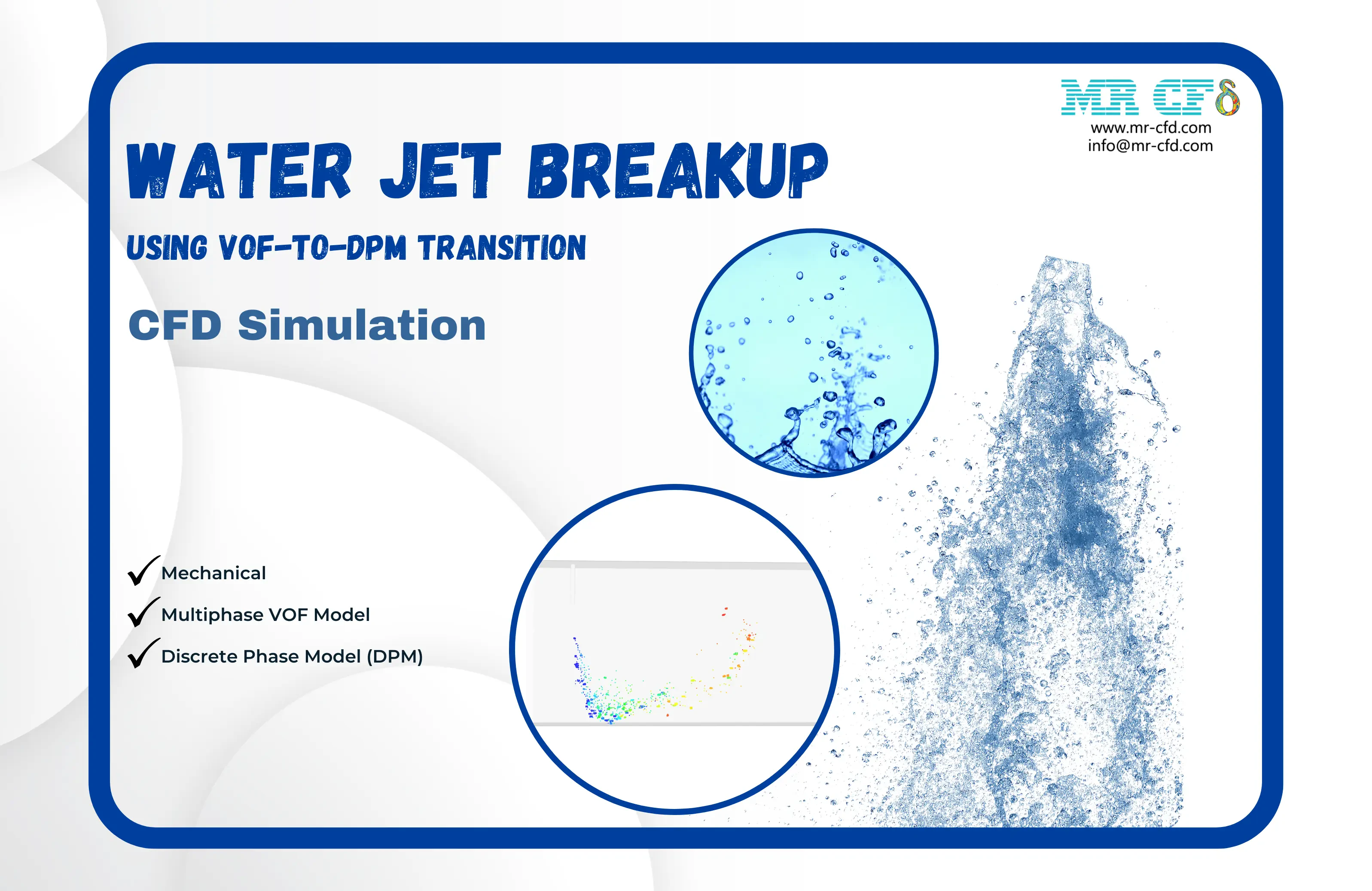
The problem numerically simulates the Water Jet Breakup using ANSYS Fluent software. The3-D geometry is designed in Design Modeler software. We used ANSYS Meshing to generate mesh; the element number equals 3,157,674. The Adaptive mesh refinement is the mesh method for this problem. The liquid bulk in the domain is simulated using VOF model. Also, the droplets are modeled via DPM model.
Packed Bed Reactor with Radiative Quartz Spheres
Intermediate, Advanced
Price: $12
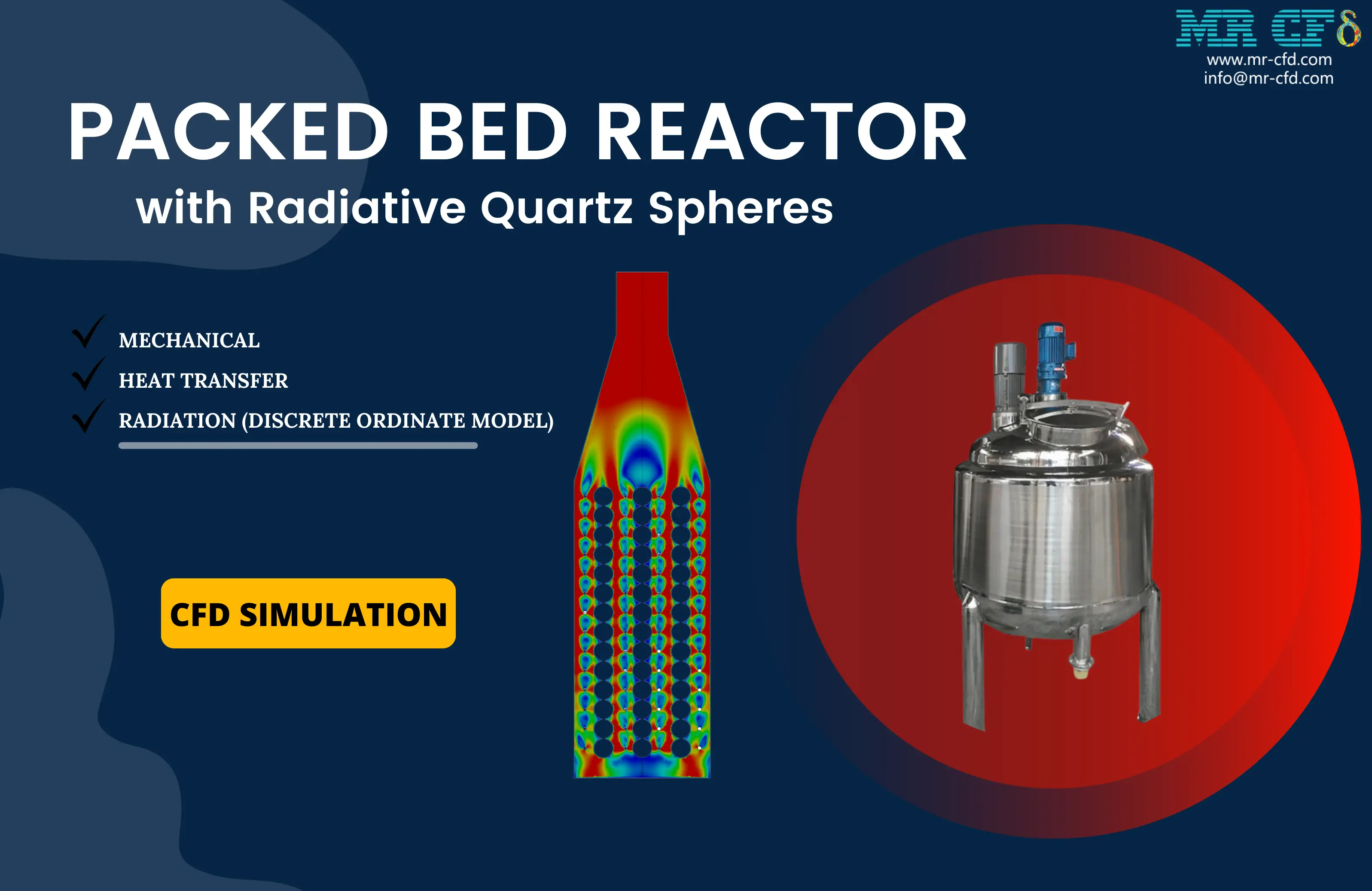
This study numerically simulates the heat transfer and fluid dynamics in a packed bed reactor with radiative quartz spheres using ANSYS Fluent software. The 3-D model is designed using ANSYS Design Modeler and meshed with ANSYS Meshing software, resulting in approximately 4 million polyhedral elements. The simulation employs the RNG k-ε turbulence model with standard wall functions, and the Discrete Ordinate (DO) radiation model to capture temperature variations accurately. The energy equation is enabled to track temperature distribution, and the solver is pressure-based with steady-state conditions. The study aims to provide insights into optimizing packed bed reactor designs for various industrial applications.