

Species Transport GOLDEN Training Package
Price:
$20,373
$3,609
MR CFD's Species Transport & Reacting Flow CFD Simulation GOLDEN Training Package offers 175+ ANSYS Fluent tutorials on species modeling, combustion, pollution dispersion, and chemical reactions, perfect for professors, managers, and companies to rapidly upskill teams. It includes 1-year support and 3 months HPC from 15 years' expertise.
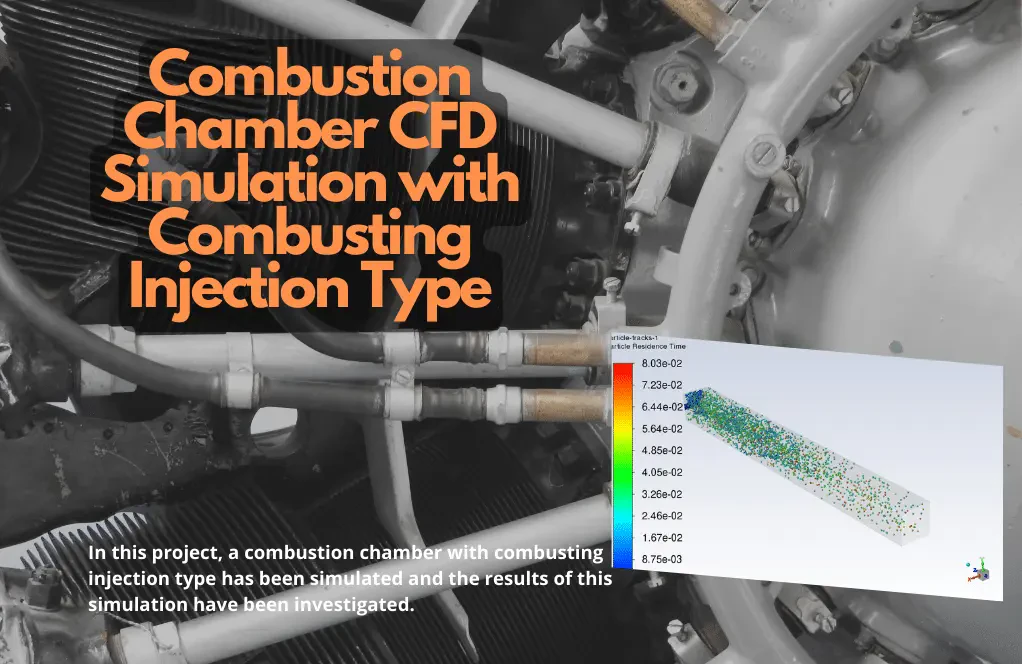
Combustion Chamber with Combusting Particle
Intermediate, Advanced
Price: $60
The problem numerically simulates a combustion chamber with combusting particles using ANSYS Fluent software. We design the 3-D model by the SpaceClaim software. We Mesh the model by ANSYS Meshing software. The mesh type is Structured, and the element number equals 125000. We perform this simulation as unsteady (Transient). We use the Species Transport model to define the combustion process. We use the discrete phase model (DPM) to define Injection into combustion chamber.
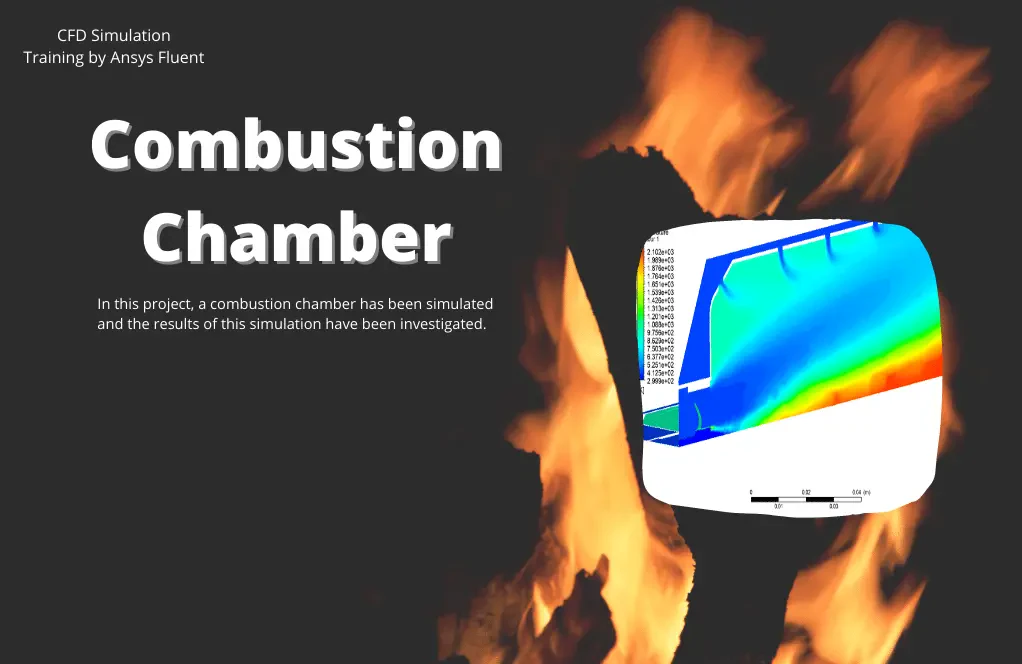
Price: $28
The problem numerically simulates the Combustion Chamber using ANSYS Fluent software. We design the 3-D model by the SpaceClaim software. We Mesh the model by ANSYS Meshing software, and the element number equals 2626307. We use the Species Transport model to define a combustion reaction.
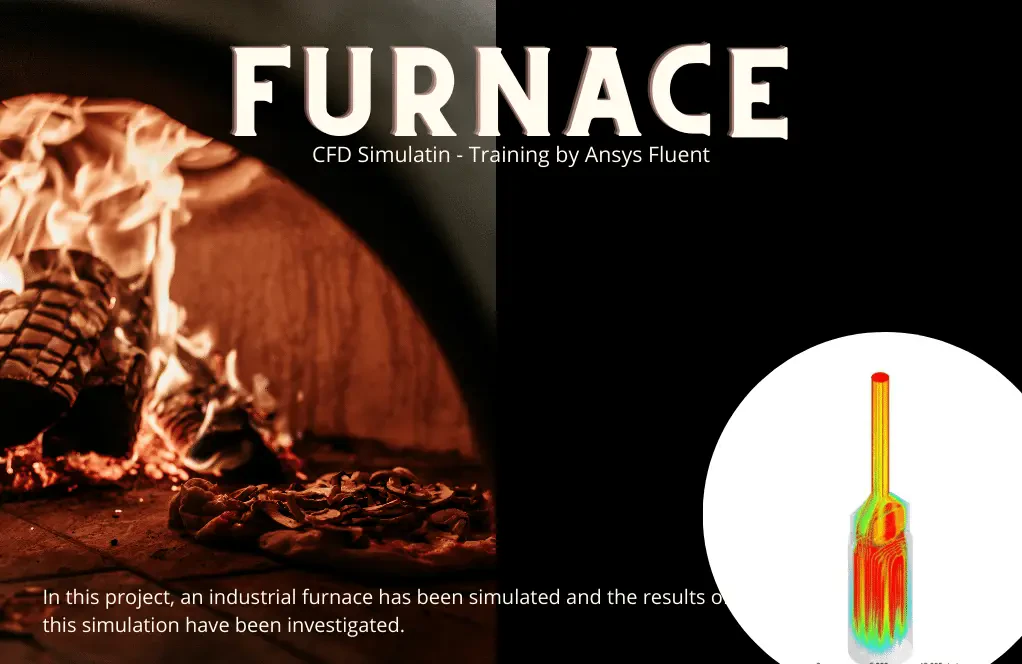
Furnace, Numerical Study, Industrial Application
Intermediate
Price: $270
The problem numerically simulates Furnace using ANSYS Fluent software. We design the 3-D model by the Design Modeler software. We Mesh the model by ANSYS Meshing software, and the element number equals 7800000. We use the Species Transport model to define the combustion reaction between methane and air.
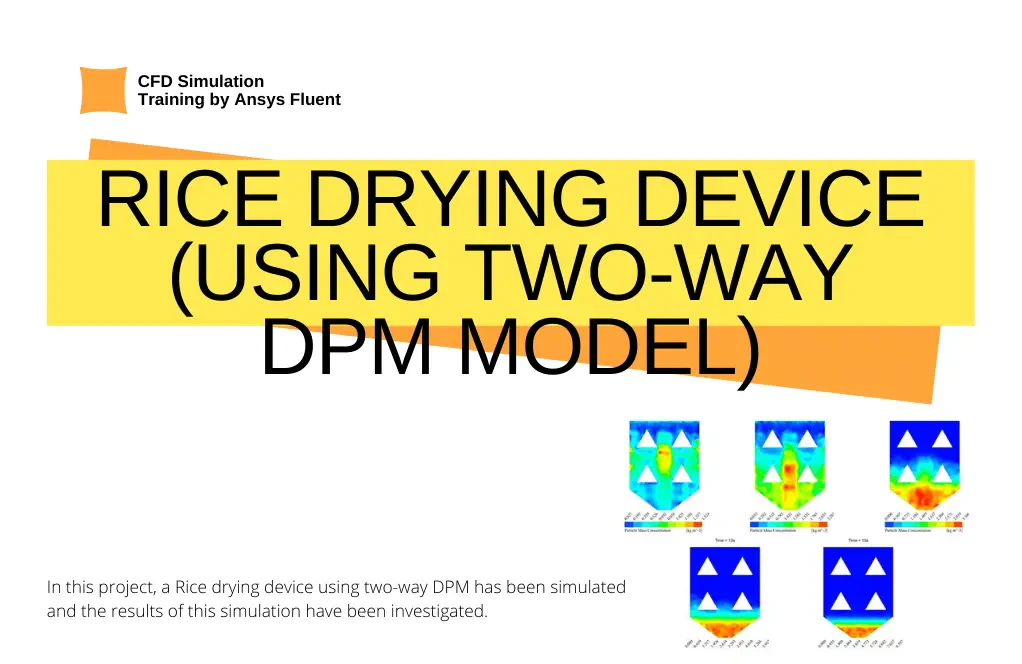
Grain Drying Device CFD Simulation, 2-way DPM Model
Intermediate, Advanced
Price: $80
In this project, a Rice drying device using two-way DPM has been simulated and the results of this simulation have been investigated.
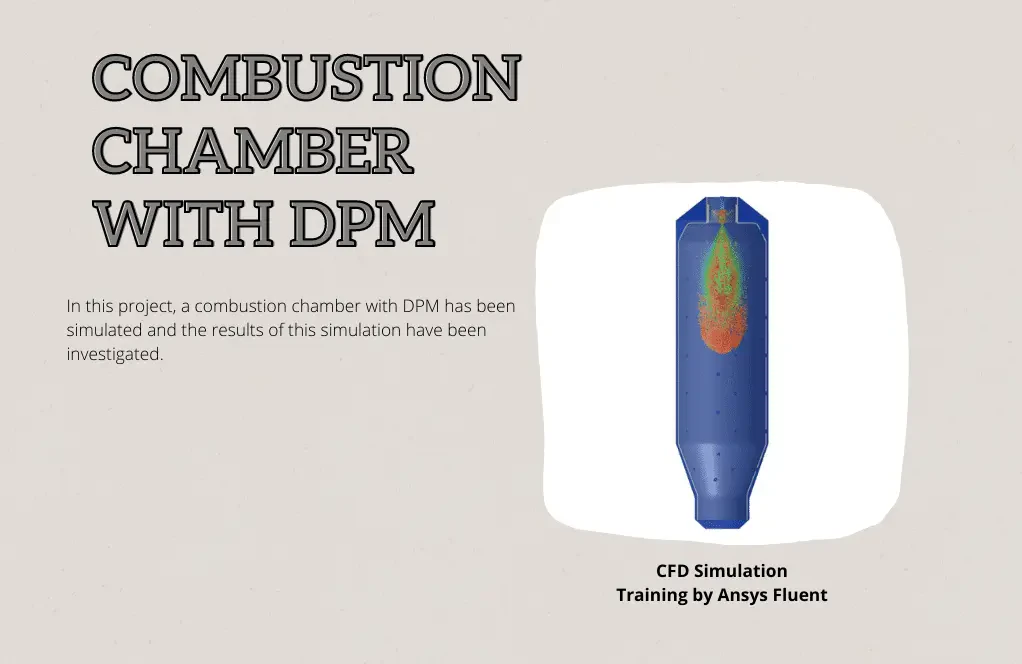
Combustion Chamber by DPM Spray, CFD Simulation Ansys Fluent Training
Intermediate, Advanced
Price: $60
The problem numerically simulates the combustion chamber by DPM using ANSYS Fluent software. We design the 3-D model by the SpaceClaim software. We Mesh the model by ANSYS Meshing software. We perform this simulation as unsteady (Transient). We use the Species Transport model to define the combustion process.
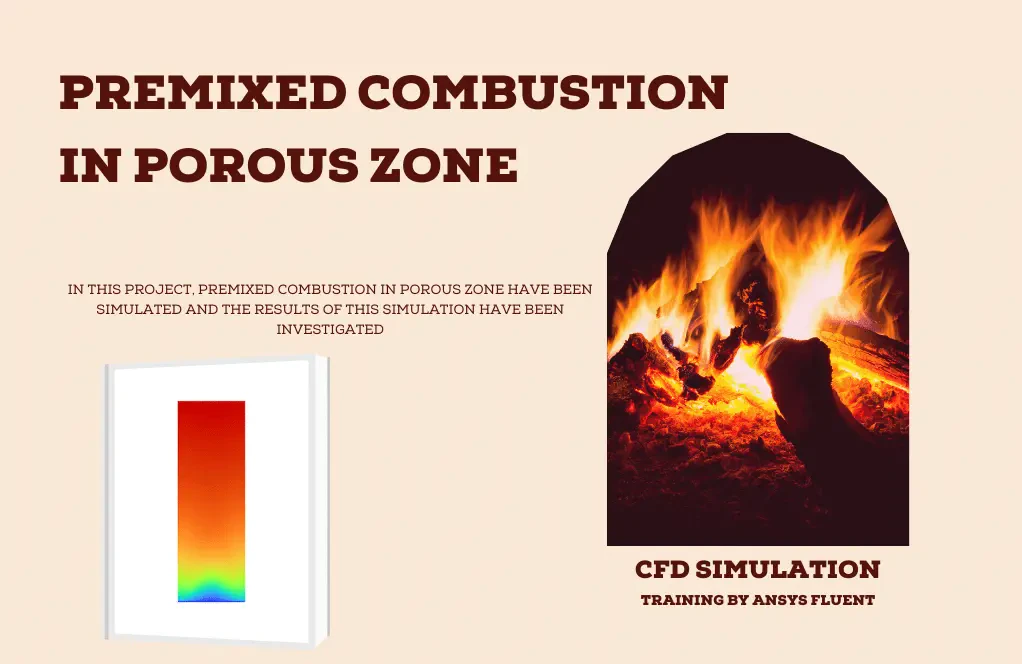
Premixed Combustion in a Porous Zone CFD Simulation
Beginner, Intermediate
Price: $54
The problem numerically simulates the Premixed Combustion in Porous Zone using ANSYS Fluent software. We design the 3-D model by the Design Modeler software. We Mesh the model by ANSYS Meshing software. The mesh type is Structured, and the element number equals 8700. We use the Premixed Combustion in Species model to define combustion reactions.
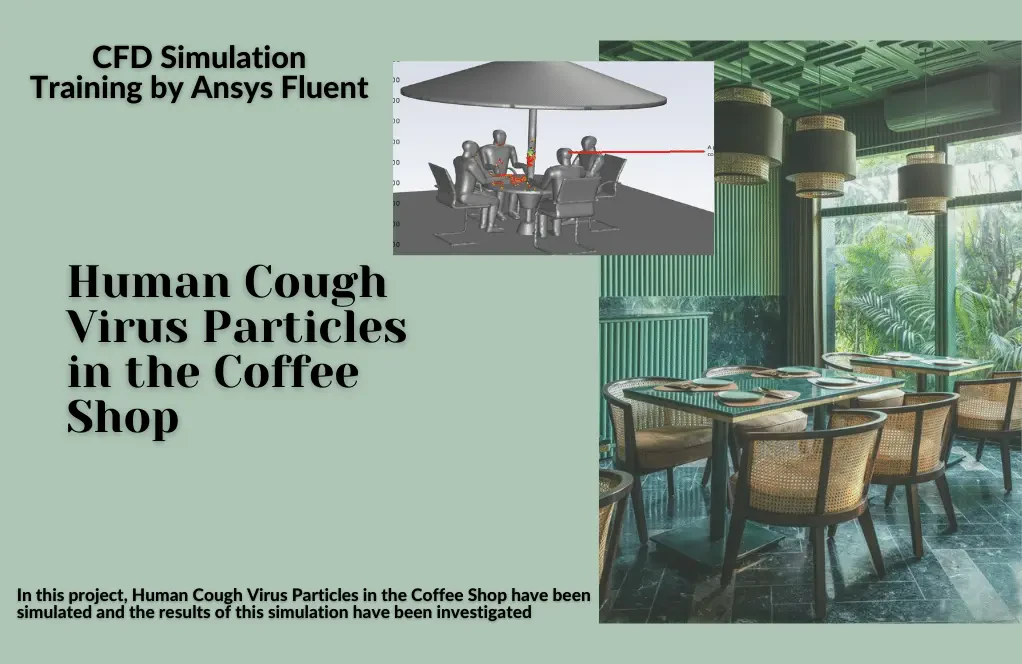
Price: $24
The problem numerically simulates Human Cough Virus Particles in the Coffee Shop using ANSYS Fluent software. We design the 3-D model by the Design Modeler software. We Mesh the model by ANSYS Meshing software, and the element number equals 4578388. We perform this simulation as unsteady (Transient). We use the discrete phase model (DPM) to define virus particles. We define an Injection as the Droplet which will be evaporated. We use the Species Transport model to define evaporating gas.
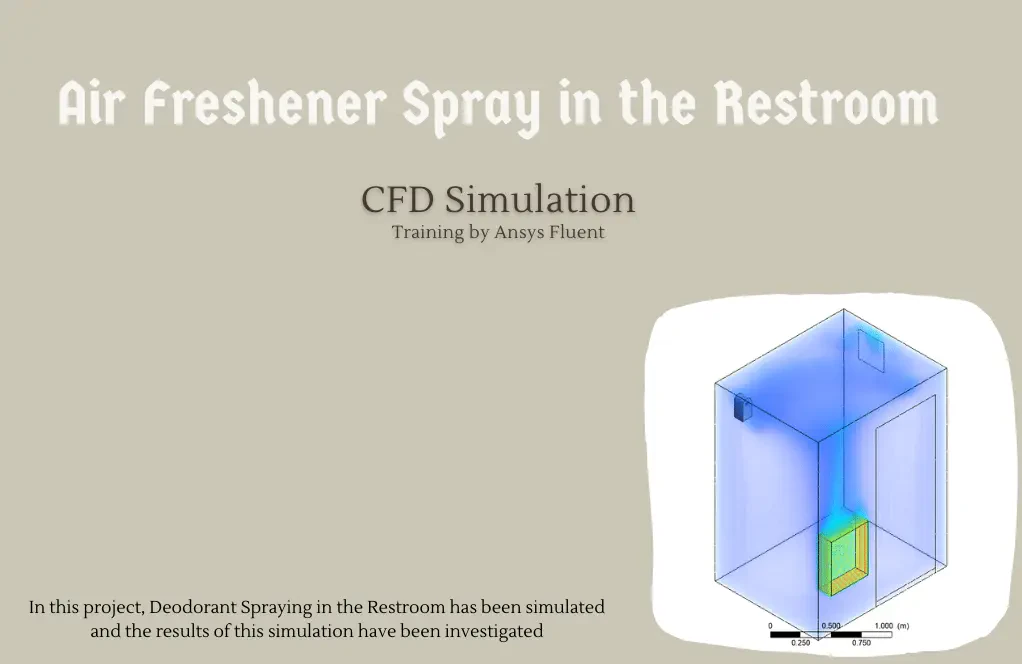
Air Freshener Spray in Restroom CFD Simulation
Beginner, Intermediate
Price: $80
The problem numerically simulates Air Freshener Spray in the restroom using ANSYS Fluent software. We design the 3-D model by the Design Modeler software. We Mesh the model by ANSYS Meshing software, and the element number equals 1187006. We perform this simulation as unsteady (Transient). We use the Species Transport model to define 3 volumetric species. We use the discrete phase model (DPM) to define spraying air fresheners. We define an injection as the droplet that will be evaporated.
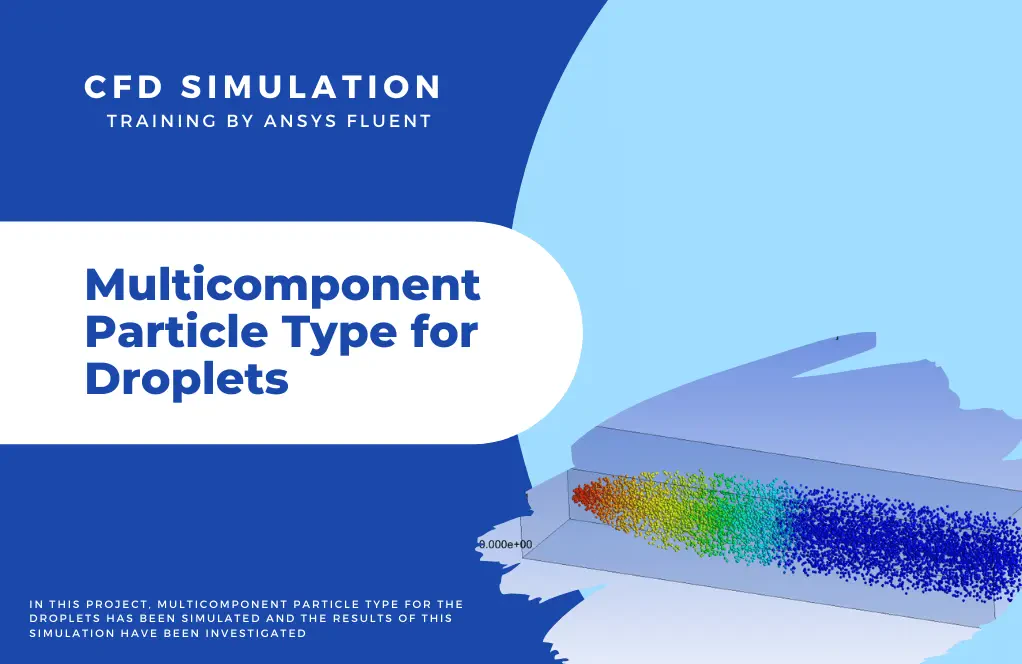
Multicomponent Particle Type for Droplets, CFD Simulation Ansys Fluent Training
Intermediate, Advanced
Price: $72
In this project, multicomponent particle type for the droplets has been simulated, and the results of this simulation have been investigated.
Complete Species Transport and Reacting Flow CFD Course for Chemical Reaction, Pollutant Dispersion, and Combustion Simulation
The Complete Species Transport and Reacting Flow CFD Course: +160 Simulations by ANSYS Fluent is a specialized training solution for engineers, universities, professors, research institutes, companies, technical managers, and CFD teams that need practical expertise in species transport, reacting flow, chemical reactions, pollutant dispersion, combustion, and emissions analysis.
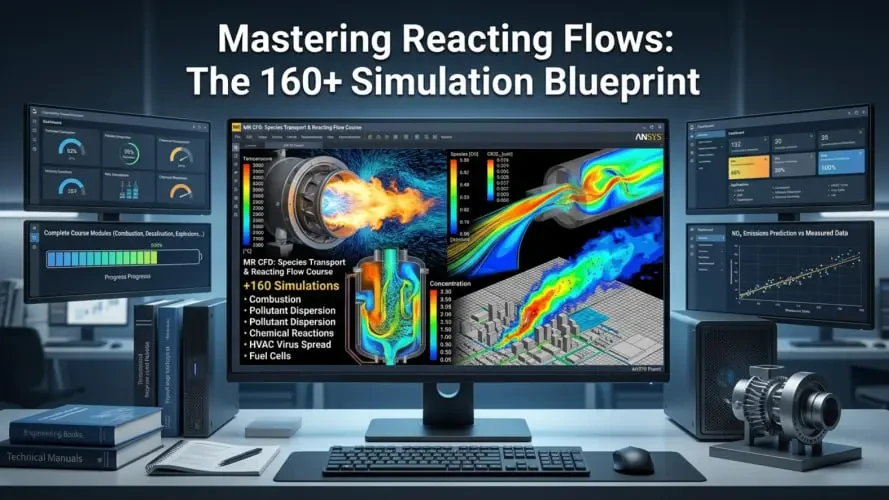
Developed by MR CFD, this course is part of MR CFD’s professional CFD Online Courses and CFD Complete Courses is designed specifically for species transport and reacting-flow applications. The course is also offered as the Species Transport and Reacting Flow GOLDEN Training Package, giving buyers access to a complete all-in-one simulation library for academic, industrial, research, chemical, environmental, HVAC, and energy applications.
This complete course covers species transport modeling, reacting flow, chemical reactions, combustion, biomass and gasification, fuel cells, electrolyzers, pollutant dispersion, pollutant prediction, air pollution ventilation, drying, evaporation, desalination, explosions, fire and smoke, flames, fluidized beds, furnaces, sprays, injection, HVAC virus dispersion, and advanced industrial reaction systems.
Why Choose This Complete Species Transport CFD Course?
This course is built for buyers who need practical reacting-flow simulation capability, not only theoretical knowledge of mass transfer or chemical species. It helps engineering teams, academic departments, and industrial companies train users faster, reduce modeling uncertainty, and standardize CFD workflows for species transport and chemical reaction applications.
| Business Need | How This Complete CFD Course Solves It |
| Faster species transport onboarding | New engineers can learn from complete, pre-built species transport and reacting-flow CFD projects instead of disconnected tutorials. |
| Focused reacting-flow coverage | The course is dedicated to species transport, chemical reactions, combustion, fuel cells, electrolysis, pollutant dispersion, emissions, drying, and gasification. |
| Reduced training cost | One comprehensive course replaces scattered learning resources, repeated internal training, and multiple single-topic tutorials. |
| Academic teaching support | Professors can use the simulations as practical teaching material for students, interns, and research assistants. |
| Enterprise workflow consistency | Teams can follow proven workflows for species diffusion, reaction setup, combustion species, pollutant prediction, and multicomponent transport. |
| Real project readiness | Learners work with applied CFD simulations based on reactors, fuel cells, furnaces, combustion chambers, ventilation systems, urban pollution, sprays, and industrial process equipment. |
A Specialized Species Transport CFD Course, Not a General Combustion or Chemical Package
This complete course is intentionally different from broader combustion, chemical, or multiphase CFD training. A general combustion package may focus mainly on flames, fuels, and burners. A chemical package may cover reactors, heat exchangers, multiphase systems, and process equipment. This course focuses specifically on species transport and reacting flow CFD simulation, including chemical species mixing, mass transfer, reaction modeling, pollutant prediction, and concentration-field analysis.
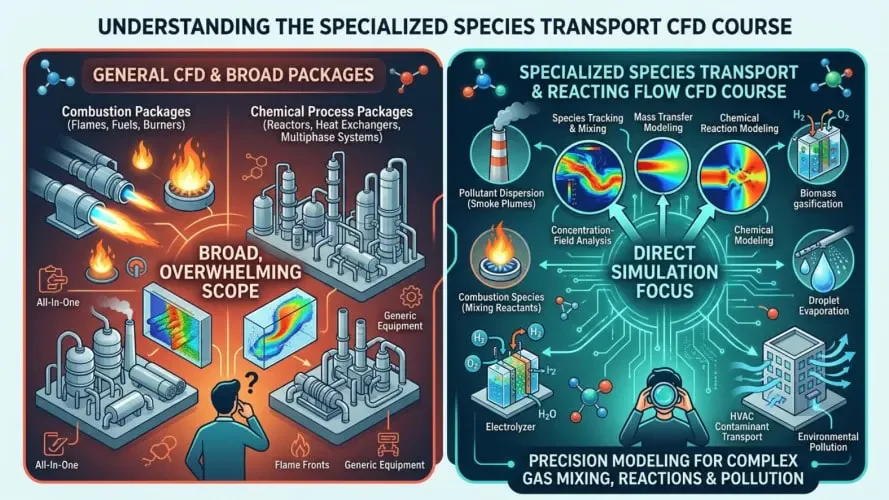
It is built for teams that need direct simulation capability for gas mixing, pollutant dispersion, combustion species, chemical reaction systems, electrochemical devices, biomass gasification, fuel cells, electrolyzers, sprays, evaporation, drying, HVAC contaminant transport, and environmental air pollution.
| Feature | Complete Species Transport and Reacting Flow CFD Course | General Combustion or Chemical CFD Course |
| Main focus | Species transport, reacting flow, chemical reactions, pollutant dispersion, emissions, fuel cells, electrolysis, gasification, and sprays | Broad combustion or chemical engineering topics |
| Best for | Chemical engineers, CFD engineers, combustion teams, environmental engineers, energy teams, professors, and research groups | General process, thermal, or combustion simulation teams |
| Technical depth | Focused mass transfer, species diffusion, reaction mechanisms, pollutant fields, gas mixing, and reacting-flow workflows | Wider but less specialized coverage across many CFD fields |
| Project scope | Air pollution, combustion species, fuel cells, electrolysis, gasification, furnaces, HVAC contaminants, drying, sprays, and emissions | Broader applications with less dedicated species transport depth |
| Purchase motivation | Build complete species transport and reacting-flow CFD capability | Build broader CFD familiarity |
Complete CFD Training for Species Transport, Reacting Flow, and Chemical Engineering Teams
This course gives your organization a structured path to species transport CFD mastery. It supports users who need to simulate chemical species diffusion, fuel-air mixing, methane-air combustion, hydrogen combustion, pollutant dispersion, smoke ventilation, street canyon pollution, fuel cell species transport, PEM electrolysis, alkaline electrolysis, gasification, biomass combustion, furnace reactions, drying processes, evaporation, desalination, sprays, multicomponent droplets, virus particle transport, and HVAC contaminant movement.
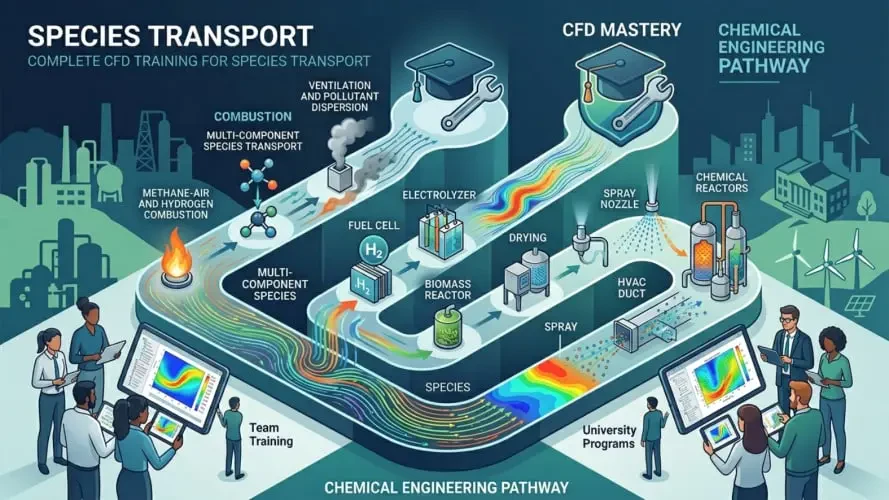
For companies, this complete species transport CFD course reduces dependency on isolated experts and creates a repeatable training pathway for CFD engineers, chemical engineers, process engineers, combustion engineers, environmental engineers, energy engineers, HVAC specialists, and R&D departments. For universities and institutes, it provides ready-to-use simulation projects that can support lectures, laboratories, reacting-flow courses, environmental engineering research, combustion studies, and advanced CFD training programs.
What You Get in This Species Transport and Reacting Flow CFD Course
| Included Asset | Value for the Buyer |
| +160 CFD simulation projects | A comprehensive species transport and reacting-flow CFD library in one complete course package. |
| Step-by-step tutorials | Practical guidance from geometry creation to final post-processing. |
| Complete simulation workflows | Geometry, meshing, solver setup, species model selection, reaction setup, concentration analysis, emissions evaluation, and engineering interpretation. |
| Advanced reacting-flow case studies | Coverage of combustion, fuel cells, electrolyzers, gasification, pollutants, sprays, drying, furnaces, flames, HVAC contaminants, and chemical reactions. |
| 1 year of technical support | Direct support from MR CFD experts for course users. |
| 3 months of HPC access | Additional computational resources for selected learning and simulation needs. |
| Regular course enhancements | Continued value through updates for emerging species transport applications such as fire, flame, fluidized beds, and pollutant prediction. |
Species Transport and Reacting Flow CFD Topics Covered in This Complete Course
This complete CFD course covers a focused range of species transport and reacting-flow simulations, from fundamental species modeling to advanced industrial, environmental, chemical, HVAC, and energy applications.
| Training Area | Covered Topics |
| Species transport fundamentals | Species transport concepts, mass diffusion, concentration fields, multicomponent gas behavior, mixing, species source terms, and reacting-flow setup. |
| Chemical reaction CFD | Reacting flow, chemical reaction modeling, porous reactors, tubular reactors, decomposition processes, catalytic reactions, and industrial reaction systems. |
| Combustion and reacting flow | Premixed combustion, non-premixed combustion, partially premixed combustion, advanced combustion, methane combustion, gas turbine combustion, vortex combustion, and chamber analysis. |
| Biomass and gasification | Biomass combustion, biomass waste incinerators, coal-biomass co-firing, gasification chambers, CHEMKIN workflows, and radiation-coupled gasification. |
| Air pollution ventilation | Car park ventilation, stacker parking ventilation, subway pollution ventilation, tunnel smoke ventilation, smoking rooms, and urban airflow pollutant removal. |
| Pollutant dispersion | Car exhaust dispersion, street canyon pollution, real urban zone pollution, pollution between buildings, air pollution within streets, and atmospheric contaminant transport. |
| Pollutant prediction | Combustion chamber pollutant prediction, soot formation in kerosene flames, NO and soot emissions from wood gas flares, and emissions evaluation. |
| Fuel cell simulations | PEM fuel cells, SOFC, PEMFC stacks, radial PEMFC, serpentine PEMFC, cooling systems, and validation-based fuel cell species transport projects. |
| Electrolyzer simulations | PEM electrolyzer, PEM electrolysis, alkaline electrolysis, SOEC electrolysis stack, and electrochemical reacting-flow systems. |
| Furnaces and industrial heating | Industrial furnace studies, combustion processes in furnaces, hydrogen combustion in furnaces, and high-temperature reacting-flow applications. |
| Fire, flame, and smoke | Fire and smoke in factory buildings, methane leakage fire, flame structures, turbulent V-shaped flame, asymmetric vortex flame, and vortex flame chambers. |
| Explosion and safety | Oil storage tank explosion, pollutant dispersion after explosion, car explosion in tunnels, and ventilation comparison for safety analysis. |
| Drying processes | Heat pump wood drying, grain drying, spray drying chambers, seed drying, rotary rice dryers, and species transport in drying workflows. |
| Evaporation and desalination | Solar water desalination, solar stills, evaporation, water spraying with breakup and evaporation, diesel droplet evaporation, and species transport in phase-change systems. |
| Spray and injection | DPM spray combustion, liquid fuel combustion, high-pressure diesel injection, gas turbine fogging, air freshener sprays, misting systems, and multicomponent droplets. |
| Mixing and gas blending | CH4 and H2 mixing in T-junctions and Y-junctions, fuel-air mixing, gas mixing, and concentration uniformity analysis. |
| HVAC and virus dispersion | Operating room HVAC, cough particle spread, elevator sneeze dispersion, clean room contamination, coffee shop exposure, and indoor species or contaminant transport. |
| PBM and crystallization | Population balance model for nucleation, crystallization, particle formation, and species-coupled population balance applications. |
Advanced Species Transport CFD Modules Included
This complete course includes advanced simulation categories that help engineers move beyond basic concentration tracking and into professional-grade reacting-flow and species transport analysis.
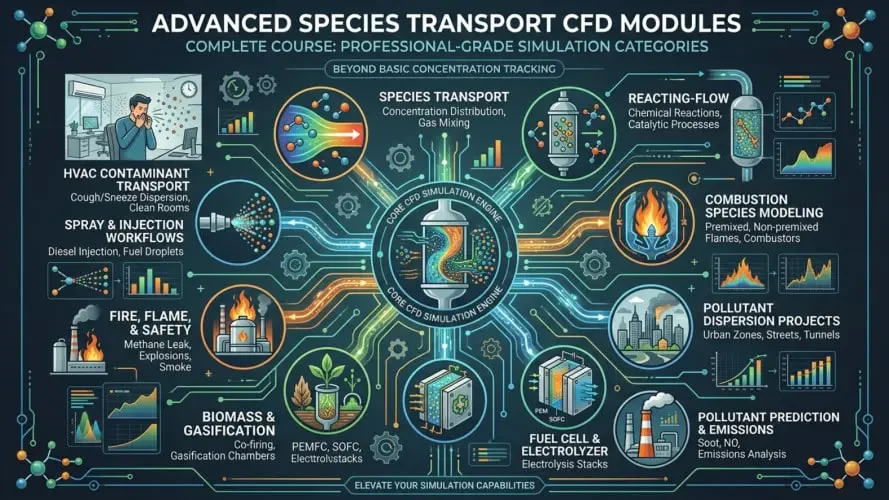
Key advanced modules include:
Species transport simulations for concentration distribution, gas mixing, mass diffusion, source terms, and multicomponent flow behavior.
Reacting-flow workflows for chemical reactions, fuel-air systems, catalytic processes, porous reactors, and thermal-reaction coupling.
Combustion species modeling for premixed, non-premixed, partially premixed, advanced combustion, methane flames, and gas turbine combustors.
Pollutant dispersion projects for streets, tunnels, parking facilities, urban zones, car exhaust, subway systems, and industrial ventilation.
Pollutant prediction and emissions analysis for soot, NO, combustion pollutants, flare emissions, and environmental performance evaluation.
Fuel cell and electrolyzer simulations for PEMFC, SOFC, PEM electrolysis, alkaline electrolysis, SOEC stacks, and electrochemical species transport.
Biomass and gasification simulations for co-firing, biomass waste incineration, gasification chambers, CHEMKIN workflows, and radiation-coupled reactions.
Fire, flame, and safety simulations for factory smoke, methane leakage, tunnel explosions, oil storage tank explosions, and emergency ventilation analysis.
Spray and injection workflows for diesel injection, fuel droplets, gas turbine fogging, misting systems, air fresheners, and multicomponent particles.
HVAC contaminant transport for cough dispersion, sneeze dispersion, clean rooms, operating rooms, coffee shops, elevators, and indoor exposure analysis.
Complete Species Transport CFD Course vs Standard Single-Topic Tutorials
| Feature | Complete Species Transport and Reacting Flow CFD Course | Standard Species Transport CFD Tutorial |
| Main purpose | Comprehensive CFD training for species transport, reacting flow, chemical reactions, pollutants, fuel cells, combustion, and emissions | Single-topic learning for one species transport case |
| Best for | Chemical engineers, CFD teams, combustion engineers, environmental engineers, energy teams, professors, companies, and research institutes | Individual learners studying one basic species model |
| Content depth | +160 applied species transport and reacting-flow CFD simulations | Limited number of cases |
| Project variety | Combustion, fuel cells, electrolysis, gasification, drying, evaporation, pollutant dispersion, HVAC contaminants, sprays, explosions, and flames | Usually limited to one mixing or reaction example |
| Business value | Reduces training cost, accelerates onboarding, and standardizes reacting-flow CFD capability | Builds knowledge in a narrow CFD task |
| Purchase motivation | Build complete species transport and reacting-flow simulation capability | Learn one species transport workflow |
Who Should Buy This Complete Species Transport CFD Course?
This course is ideal for CFD engineers, chemical engineers, combustion engineers, process engineers, environmental engineers, energy engineers, HVAC specialists, fuel cell researchers, university professors, research institutes, technical managers, product development teams, and advanced CFD practitioners.
It is especially valuable for organizations that want to train multiple users, reduce repeated onboarding, support academic programs, standardize species transport CFD workflows, and improve internal simulation capability for chemical reactions, pollutant dispersion, combustion species, electrochemical devices, sprays, drying, and reacting-flow systems.
Business Benefits of Buying This Complete Species Transport CFD Course
| ROI Driver | Business Impact |
| Faster reacting-flow onboarding | New engineers become productive sooner on species transport and chemical reaction CFD projects. |
| Reduced external training dependency | Teams can learn from a complete internal species transport simulation resource. |
| Better workflow consistency | Engineers follow proven species transport and reacting-flow CFD workflows instead of scattered tutorials. |
| Lower project risk | Teams learn from pre-built, practical species transport and reaction simulation examples. |
| Stronger academic outcomes | Instructors can assign realistic CFD projects for combustion, pollutants, fuel cells, electrolysis, gasification, and HVAC contaminant transport. |
| Faster design improvement | Teams can evaluate concentration fields, pollutant movement, emissions, reaction performance, and ventilation efficiency more effectively. |
| Higher long-term value | One complete course supports repeated training across departments, students, interns, and new employees. |
Why This Complete CFD Course Is Built for Direct Purchase
When your team needs serious species transport and reacting-flow CFD capability, buying isolated tutorials one by one creates gaps, duplicated effort, and inconsistent learning outcomes. This complete course removes that friction by giving you a specialized species transport simulation library in one purchase.
You get practical training built around real engineering applications, including combustion, chemical reactions, fuel cells, electrolyzers, biomass gasification, furnaces, pollutant dispersion, urban air pollution, fire and smoke, explosions, drying, evaporation, desalination, sprays, injection, HVAC virus dispersion, and emissions prediction. That makes this course a strong choice for buyers who want immediate access to a focused, organized, and commercially valuable reacting-flow CFD learning system.
So...
Invest in the Species Transport and Reacting Flow GOLDEN Training Package: +160 CFD Simulations by ANSYS Fluent and give your team a complete species transport CFD training system built for advanced industrial, academic, chemical, environmental, energy, and HVAC applications.
Whether you manage a university lab, a corporate CFD department, a chemical engineering team, an environmental simulation group, a combustion research unit, an energy systems department, or a technical training center, this course helps you reduce training time, improve simulation quality, and build long-term internal expertise.
Instead of purchasing separate tutorials and managing disconnected learning materials, choose one complete species transport and reacting-flow CFD course that delivers depth, technical support, HPC access, and practical project readiness in a single solution.
FAQ for Complete Species Transport CFD Course
What is included in the Complete Species Transport and Reacting Flow CFD Course?
The course includes +160 CFD simulation projects covering species transport, reacting flow, chemical reactions, combustion, biomass gasification, fuel cells, electrolyzers, pollutant dispersion, pollutant prediction, drying, evaporation, desalination, sprays, fire, flame, explosion, and HVAC contaminant transport.
Who is this species transport CFD course designed for?
This course is designed for CFD engineers, chemical engineers, combustion engineers, environmental engineers, process engineers, energy engineers, university professors, research institutes, technical managers, and advanced CFD users who need practical species transport and reacting-flow simulation training.
Is this course different from a general combustion CFD course?
Yes. A combustion CFD course focuses mainly on flame, fuel, and combustion systems, while this course covers broader species transport and reacting-flow applications, including pollutants, fuel cells, electrolyzers, gasification, drying, evaporation, HVAC contaminants, and chemical reactions.
Does this course cover reacting flow and chemical reaction CFD?
Yes. The course includes reacting-flow simulations, chemical reaction modeling, combustion species, catalytic reactions, porous reactors, gasification, electrochemical systems, and industrial reaction applications.
Does this course include pollutant dispersion and air pollution CFD?
Yes. The course includes pollutant distribution from car exhaust, street canyon pollution, urban zone pollution, subway pollution ventilation, tunnel smoke ventilation, car park ventilation, and air pollution control studies.
Are fuel cell and electrolyzer simulations included?
Yes. The course includes PEM fuel cells, SOFC, PEMFC stacks, radial and serpentine PEMFC systems, PEM electrolysis, alkaline electrolysis, and SOEC electrolysis stack simulations.
Does this course cover combustion and flame simulations?
Yes. The course includes premixed combustion, non-premixed combustion, partially premixed combustion, methane combustion, gas turbine combustion, vortex flame chambers, turbulent V-shaped flames, and advanced reacting-flow combustion models.
Does this course include HVAC virus dispersion and indoor contaminant transport?
Yes. It includes cough dispersion, elevator sneeze dispersion, operating room HVAC, clean room contamination, coffee shop exposure, and indoor contaminant transport simulations.
Is technical support included after purchasing the course?
Yes. Buyers receive 1 year of non-limited technical support from MR CFD experts, helping learners and teams resolve technical questions related to the course simulations.
Why should I buy this complete species transport CFD course instead of separate tutorials?
Buying this complete species transport CFD course gives you a more organized, focused, and cost-effective training solution. It supports team-wide learning, reduces repeated training costs, and gives access to a specialized species transport and reacting-flow CFD simulation library in one purchase.
Beginner CFD Course for Starting ANSYS Fluent Simulation
Start your CFD journey with MR CFD’s beginner CFD course, a practical introduction to ANSYS Fluent workflows, meshing, boundary conditions, and real engineering simulations. Perfect for beginners before moving into advanced CFD Courses.