

MR CFD’s All Courses
Here's every Course from Basic to Advanced, that can boost your skills and career.
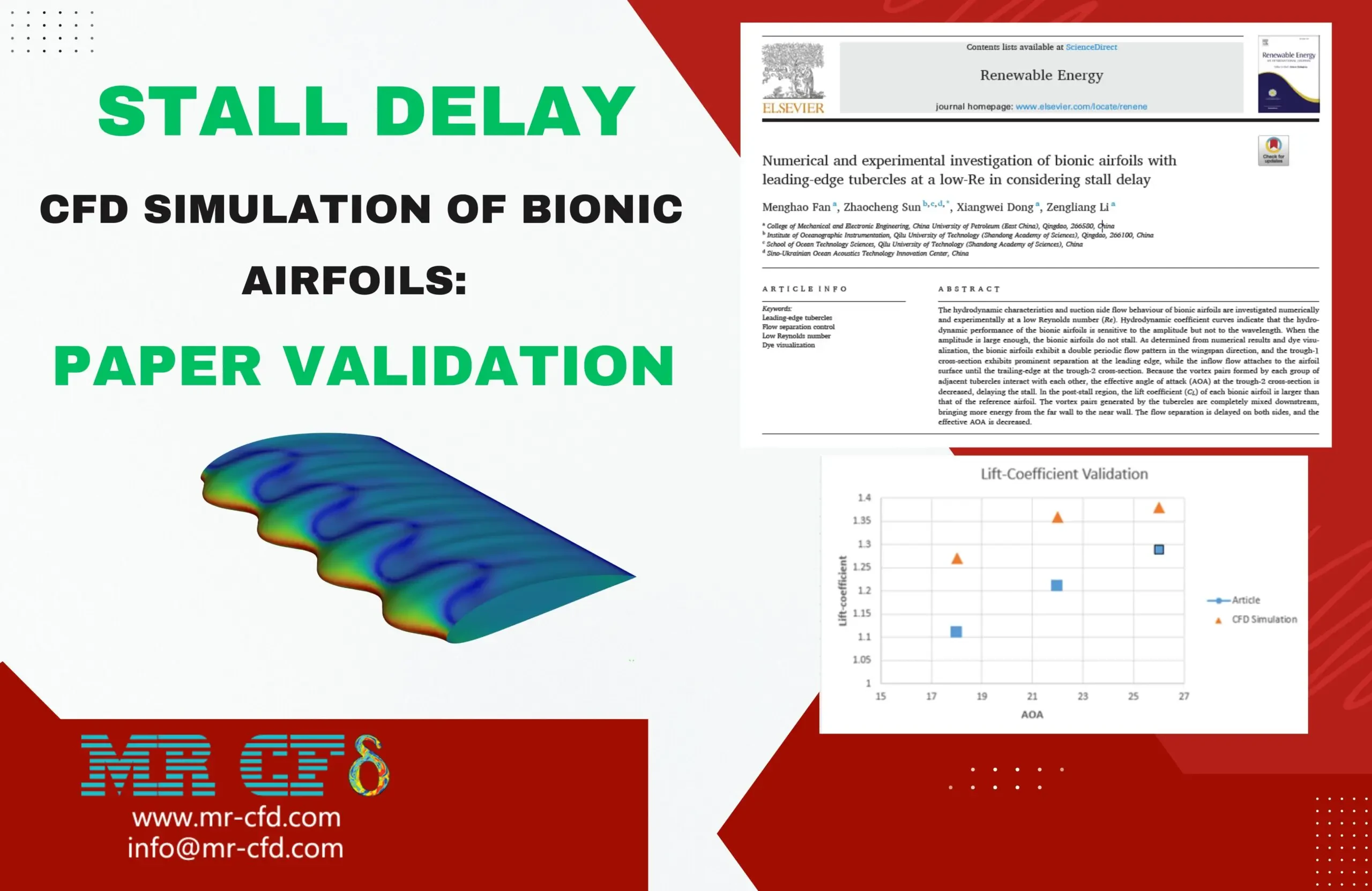
Stall Delay CFD Simulation of Bionic Airfoils: Paper Validation
Intermediate, Advanced
Price: $180
The current CFD Analysis numerically validates the paper “Numerical and experimental investigation of bionic airfoils with leading-edge tubercles at a low-Re in considering stall delay” via ANSYS Fluent software. The geometry of a NACA 4415 baseline airfoil with leading-edge tubercles is designed in SpaceClaim and meshed in ANSYS Meshing, generating 7,291,791 elements which were later converted to polyhedrons for improved accuracy and reduced cost. The turbulence of the flow is modeled using the Realizable k-epsilon turbulence model, with steady-state simulations performed at angles of attack of 18°, 22°, and 26°.
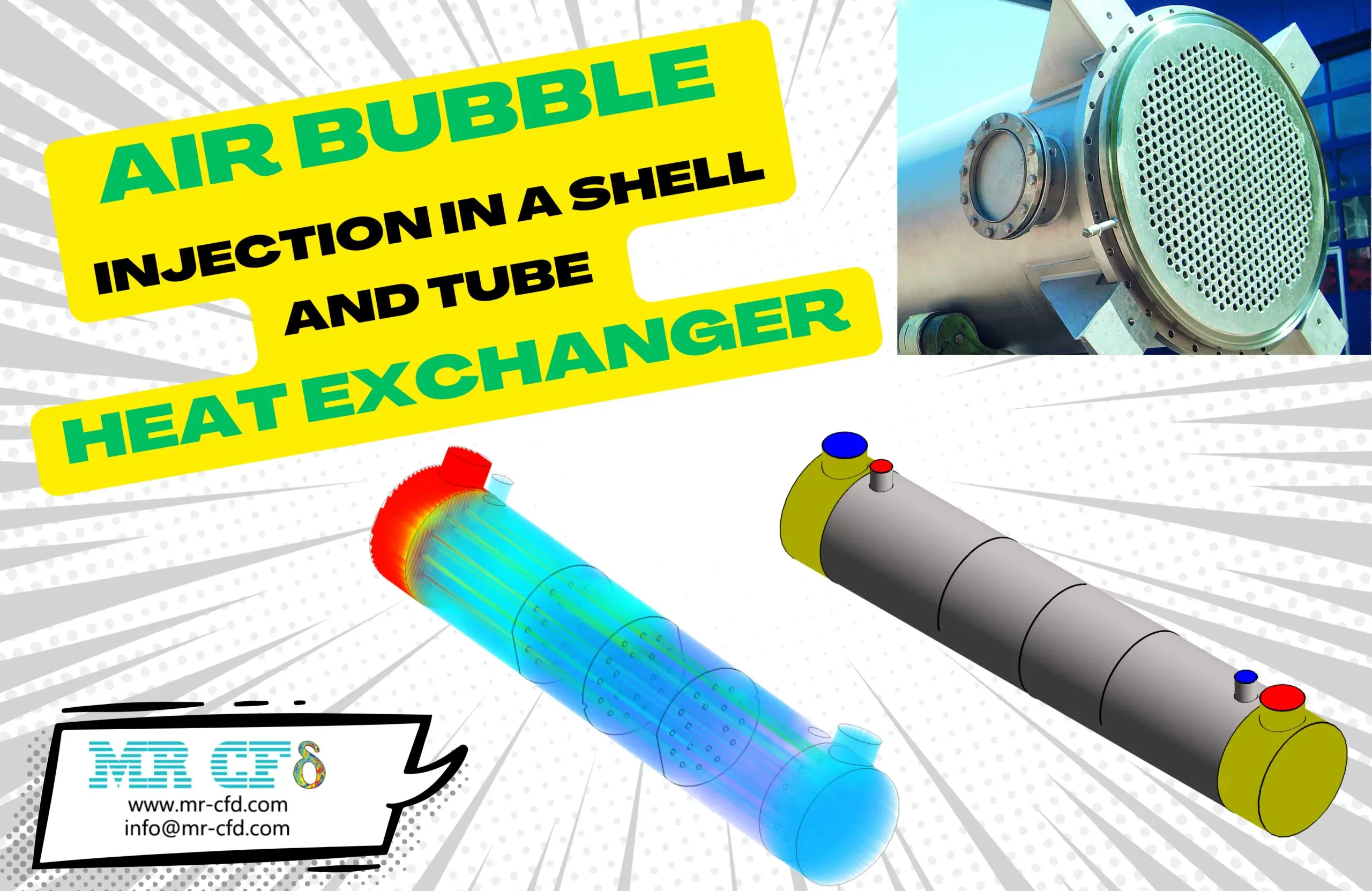
Air Bubble Injection in a shell and tube heat exchanger
Intermediate, Advanced
Price: $200
In this project, the heat transfer performance of a shell-and-tube heat exchanger with air bubble injection was simulated using ANSYS Fluent software. Three cases were studied: air injection into the shell, into the tube, and into both sides simultaneously. The geometry was created in SpaceClaim and meshed in ANSYS Meshing, initially generating about 12.6 million tetrahedral elements, later converted to a polyhedral mesh with approximately 2.43 million cells to reduce computational cost. The model was solved using a pressure-based steady solver with gravity effects included. A VOF multiphase model was applied to track air and water phases, while the realizable k-ε turbulence model with standard wall functions was used to capture flow behavior. The energy equation was enabled, and the SIMPLE algorithm with second-order upwind discretization ensured solution accuracy.
Price: $510
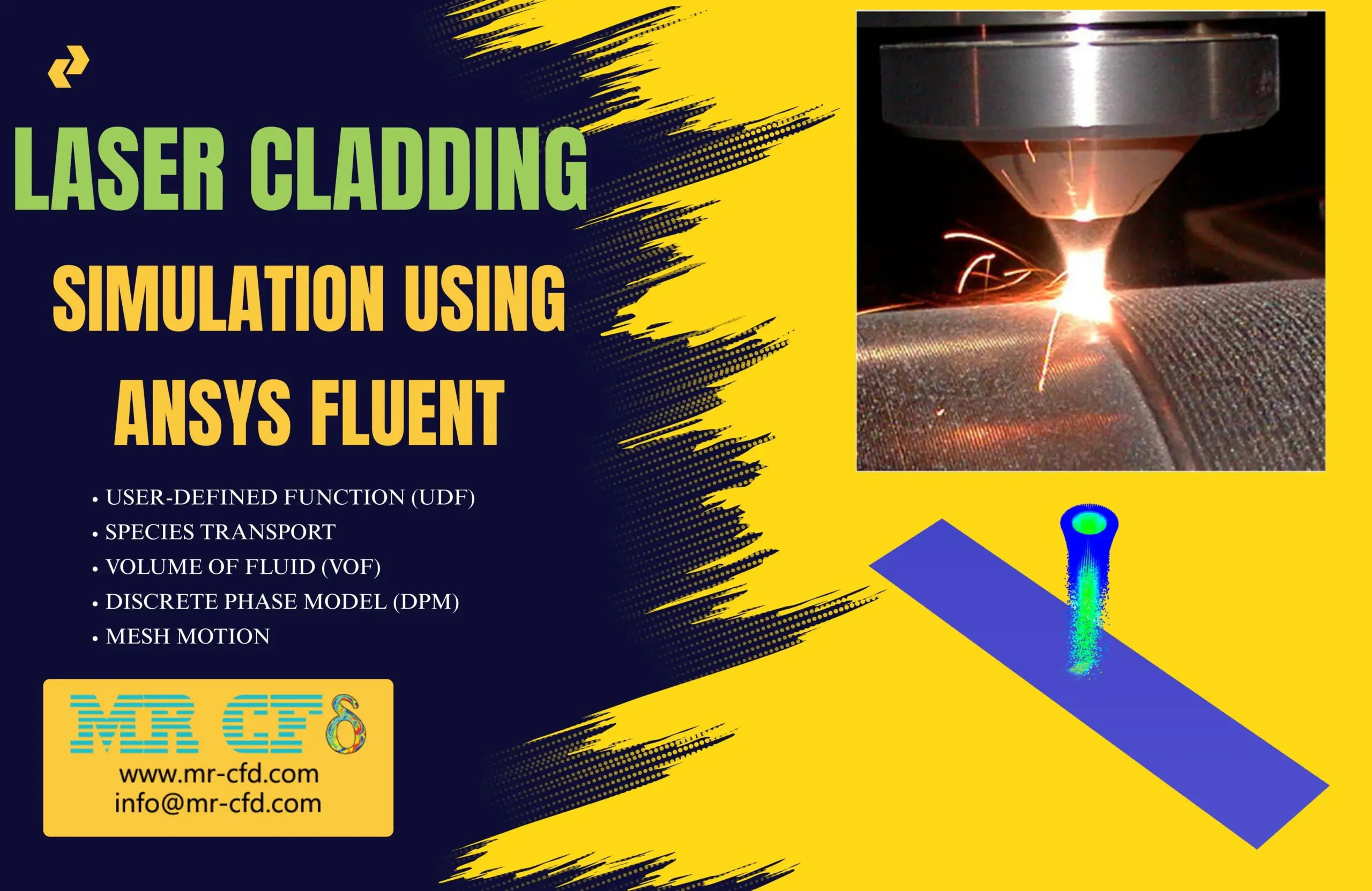
In the Laser Cladding project, we simulated the deposition of nickel droplets under an argon gas stream using ANSYS Fluent software. The three-dimensional geometry was created in Design Modeler with a computational domain of 0.05 × 0.01 × 0.025 m. A structured non-conformal mesh was generated in ANSYS Meshing, consisting of approximately 798,400 computational cells with refined regions near the deposition zone. The transient simulation employed the VOF multiphase model, coupled with species transport and energy equations, while turbulence was modeled using the Realizable k-ε model. A User-Defined Function (UDF) implemented the moving Gaussian laser heat source, enabling realistic simulation of droplet injection, spreading, and weld layer formation.

Flow Conditioner by Perforated Plate: Paper Validation
Intermediate, Advanced
Price: $210
The current CFD analysis numerically validates the paper “Comparison of velocity and turbulence profiles downstream of perforated plate flow conditioners” by Spearman et al. using ANSYS Fluent software. The model designed and meshed the pipe geometry with perforated plate flow conditioner in SpaceClaim and ANSYS Meshing, generating 583,842 tetrahedral cells. A pressure-based solver with k-ε standard turbulence modeling and gravity effects (-9.81 m/s²) is employed, using water as the working fluid with velocity inlet profile and pressure outlet boundary conditions coupled via SIMPLE algorithm.
Price: $300
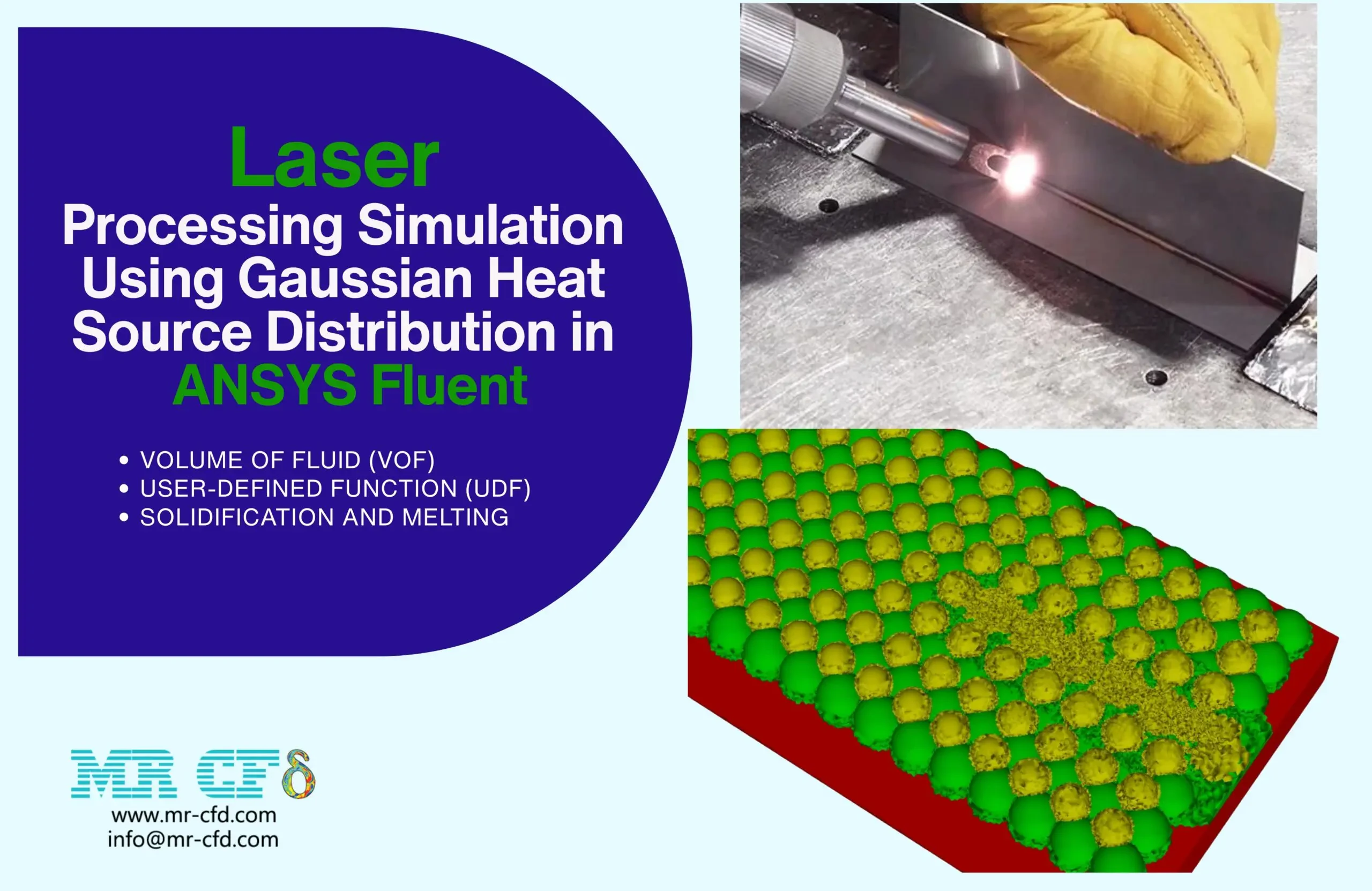
In Laser Processing project, we have simulated the laser-induced selective melting of bi-material particles using ANSYS Fluent software. Three-dimensional modeling was performed using Design Modeler software with a computational domain of 1.0 × 0.5 × 0.4 mm dimensions. The meshing of the model was accomplished using ANSYS Fluent Meshing software, generating approximately 800,000 computational cells with refined regions around the particle bed. The transient simulation employs VOF multiphase model, Solidification and Melting model, and a User-Defined Function (UDF) implementing the moving Gaussian laser heat source with laminar flow characteristics.

Price: $240
In this project, we have simulated the thermal and airflow performance of a greenhouse with and without a heating system using ANSYS Fluent software. Three-dimensional modeling was done using Design Modeler software. The meshing of the model has been done using ANSYS Meshing software, with approximately 1,860,000 cells for the base case and 3,110,000 cells for the heated case. The energy equation, species transport, and solar ray tracing using the Discrete Ordinates (DO) radiation model are enabled for accurate representation of heat transfer and humidity. The standard K-epsilon model is selected for turbulence characteristics of fluid flow.
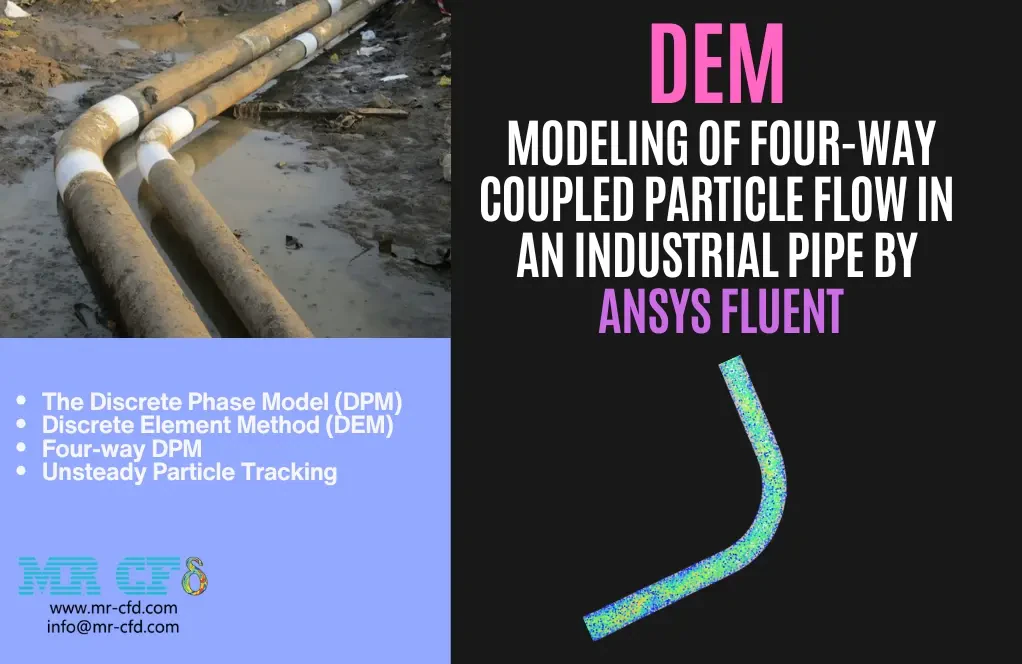
DEM Modeling of Four-Way Coupled Particle Flow in an Industrial Pipe CFD Simulation by ANSYS Fluent
Advanced
Price: $150
The problem numerically simulates particle-laden airflow in a long pipe with a bend using ANSYS Fluent software. We perform this simulation in steady state for the fluid phase with unsteady (transient) particle tracking. We model the problem using a four-way coupled DEM–CFD DPM approach to capture particle–particle and particle–fluid interactions. The DEM collision model, Saffman lift force, and two-way turbulence coupling are included as per project requirements. The geometry is created in ANSYS Design Modeler and meshed in ANSYS Meshing with an unstructured grid of about 382,000 elements.
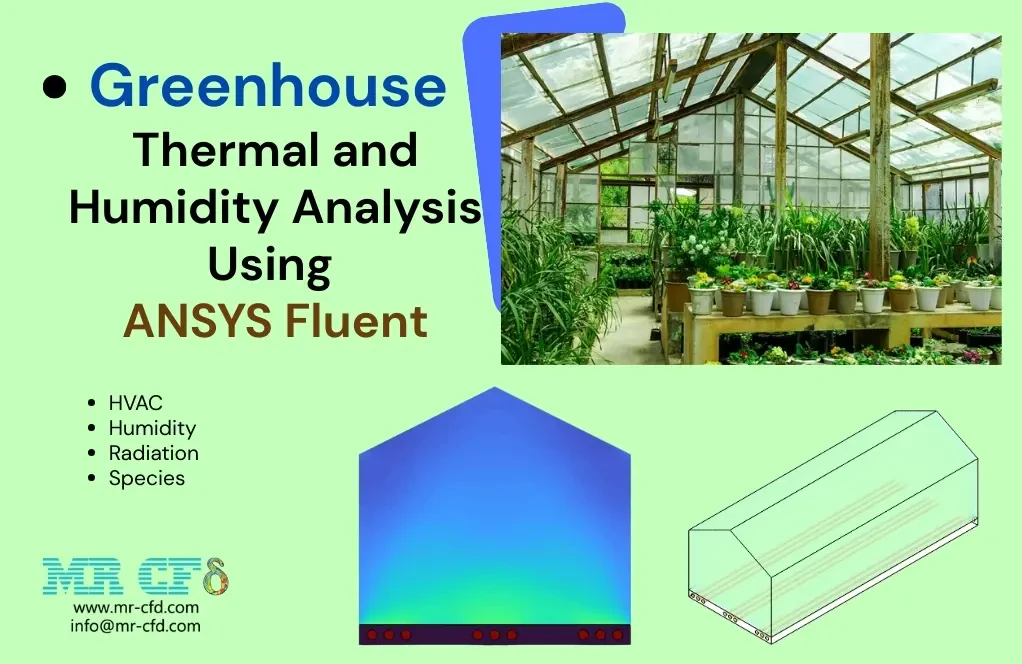
Greenhouse Thermal and Humidity Analysis Using ANSYS Fluent
Intermediate, Advanced
Price: $72
The problem numerically simulates airflow, heat transfer, solar radiation, and humidity inside a greenhouse using ANSYS Fluent software. We perform this simulation as steady-state. The study incorporates the Discrete Ordinates radiation model with solar ray tracing and species transport for air–water vapor mixture analysis.
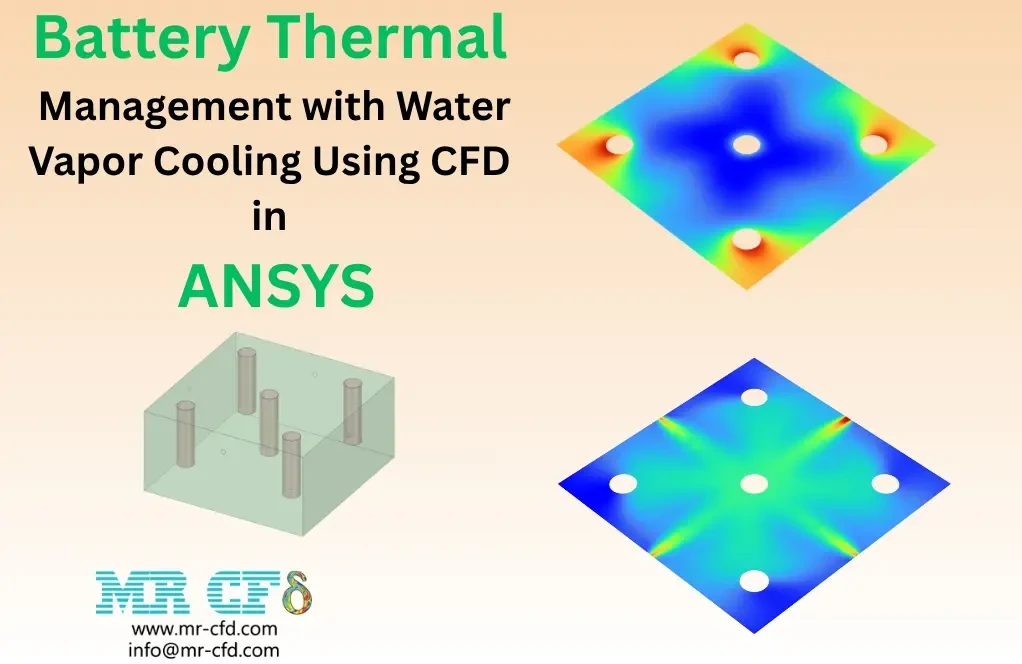
Price: $24
In Battery Thermal Management project simulates battery thermal management using water vapor injection cooling in ANSYS Fluent. A five-cell vertical battery pack is modeled in SpaceClaim, with unstructured mesh and wall boundary layers applied for accuracy. Air and water vapor at 18°C are injected from side nozzles at 0.5 m/s to reduce battery temperatures. The model runs species transport in pseudo-transient mode, includes a grid independence study, and analyzes the effectiveness of vapor cooling on temperature reduction.