

DPM Online Courses
Here's every CFD online course related to DPM category.
Price: $480
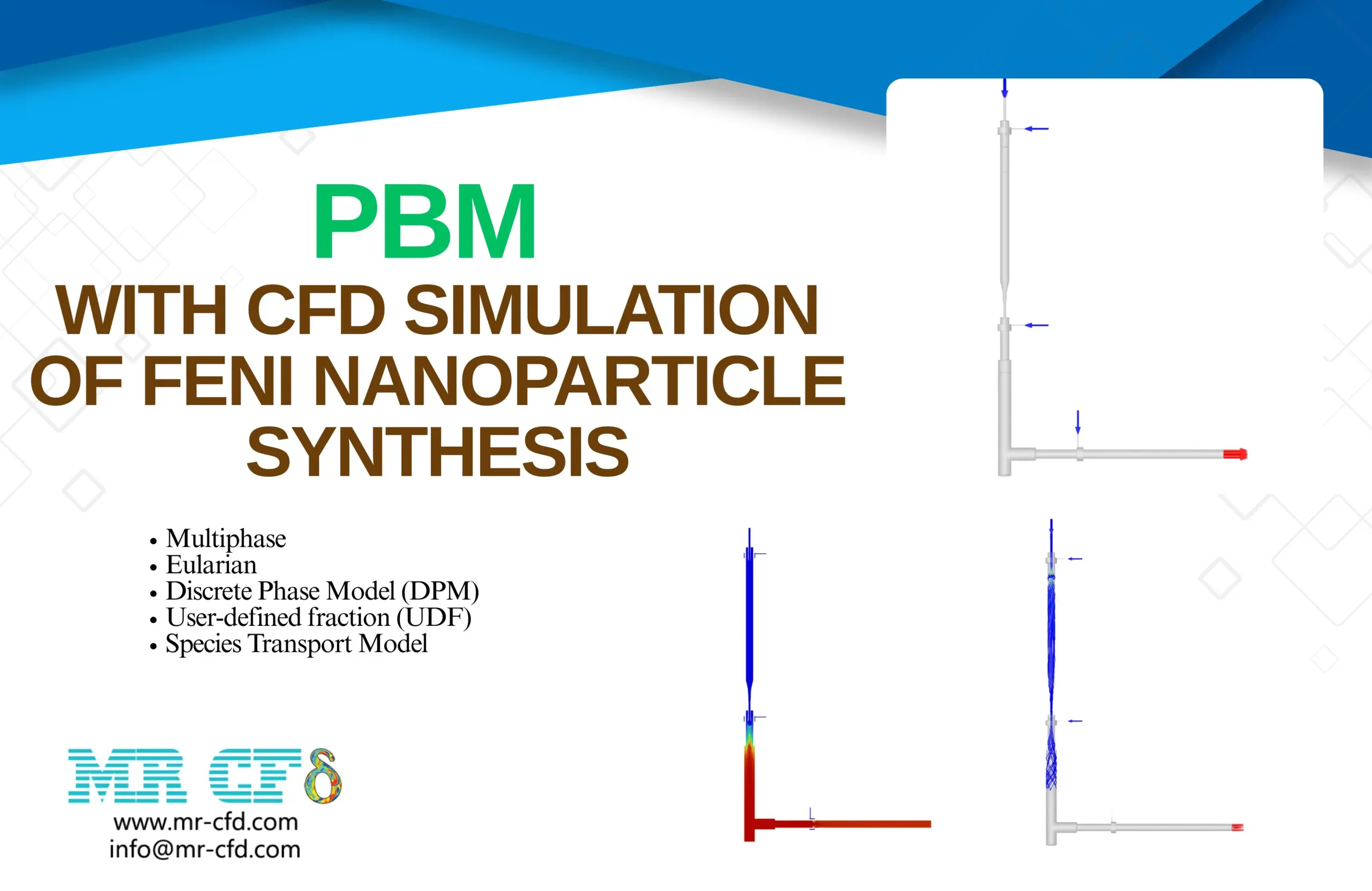
PBM with CFD Simulation of FeNi Nanoparticle Synthesis is performed using ANSYS Fluent . A Multiphase Eulerian approach is applied with FeNi alloy represented in the secondary phase. Powder precursors (FeCl₂ and NiCl₂) are injected into the domain using the Discrete Phase Model (DPM). The Species Transport Model with finite-rate Arrhenius kinetics is used to simulate the reduction reactions. User-Defined Functions (UDFs) implement nucleation, growth, and agglomeration phenomena for nanoparticle prediction.
Price: $510
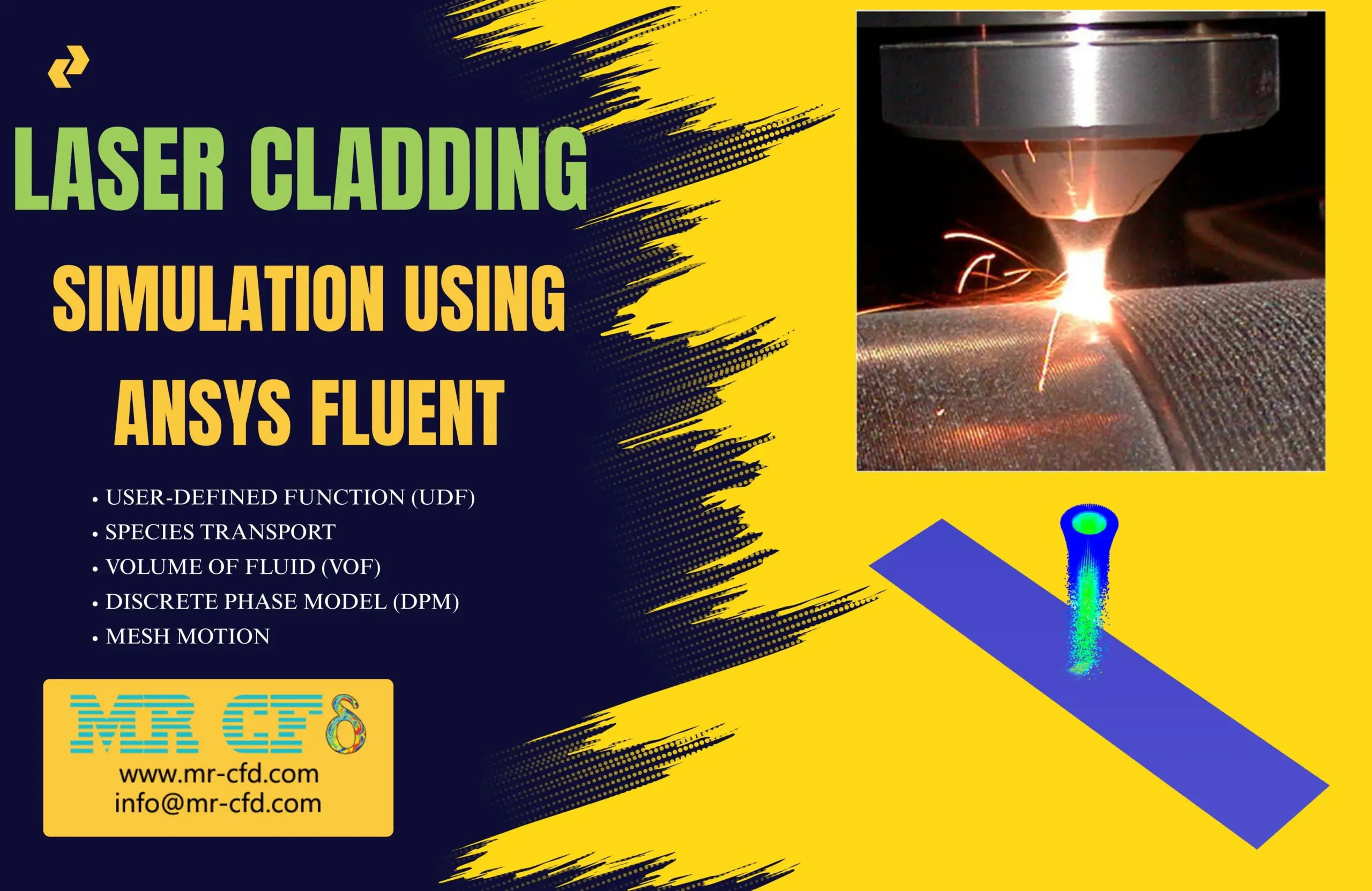
In the Laser Cladding project, we simulated the deposition of nickel droplets under an argon gas stream using ANSYS Fluent software. The three-dimensional geometry was created in Design Modeler with a computational domain of 0.05 × 0.01 × 0.025 m. A structured non-conformal mesh was generated in ANSYS Meshing, consisting of approximately 798,400 computational cells with refined regions near the deposition zone. The transient simulation employed the VOF multiphase model, coupled with species transport and energy equations, while turbulence was modeled using the Realizable k-ε model. A User-Defined Function (UDF) implemented the moving Gaussian laser heat source, enabling realistic simulation of droplet injection, spreading, and weld layer formation.
DEM Modeling of Four-Way Coupled Particle Flow in an Industrial Pipe CFD Simulation by ANSYS Fluent
Advanced
Price: $150
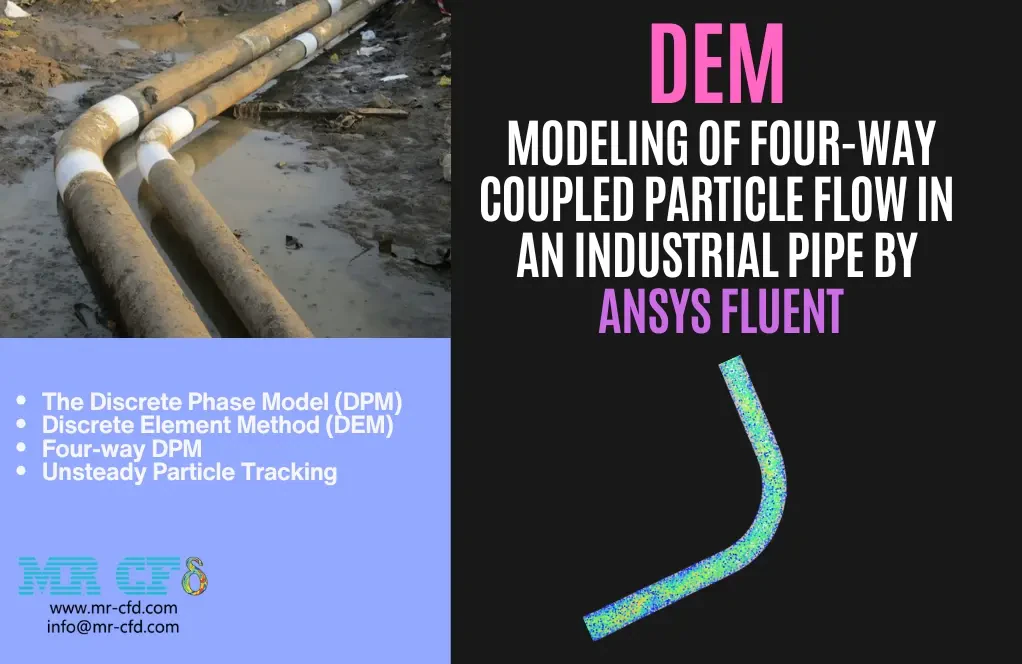
The problem numerically simulates particle-laden airflow in a long pipe with a bend using ANSYS Fluent software. We perform this simulation in steady state for the fluid phase with unsteady (transient) particle tracking. We model the problem using a four-way coupled DEM–CFD DPM approach to capture particle–particle and particle–fluid interactions. The DEM collision model, Saffman lift force, and two-way turbulence coupling are included as per project requirements. The geometry is created in ANSYS Design Modeler and meshed in ANSYS Meshing with an unstructured grid of about 382,000 elements.
Price: $420
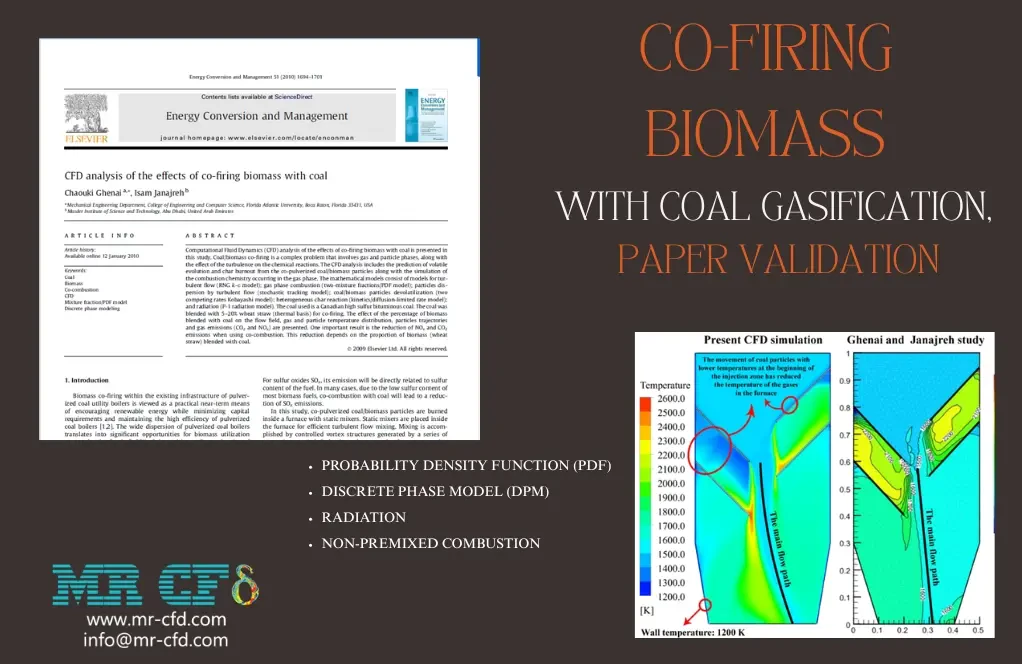
Co-firing Biomass with Coal Gasification. This project involves the simulation of coal and biomass co-firing in a furnace using CFD techniques. The primary objectives are to examine the combustion characteristics and validate the simulation results against the study by Ghenai and Janajreh. The furnace is defined with specific boundary conditions, and simulations are performed using an unsteady, incompressible flow model. The turbulent flow within the furnace is modeled using the k-e RNG turbulent model, thermal radiation is simulated with the P1 model, and combustion is analyzed with a PDF model. The simulation incorporates the kinetics/diffusion-limited rate model for particle combustion and the two competing rates Kobayashi model for devolatilization. Results are compared in terms of temperature contours and particle trajectories, confirming the simulation’s accuracy with a maximum error of approximately 5% in particle temperature ranges.
Price: $240
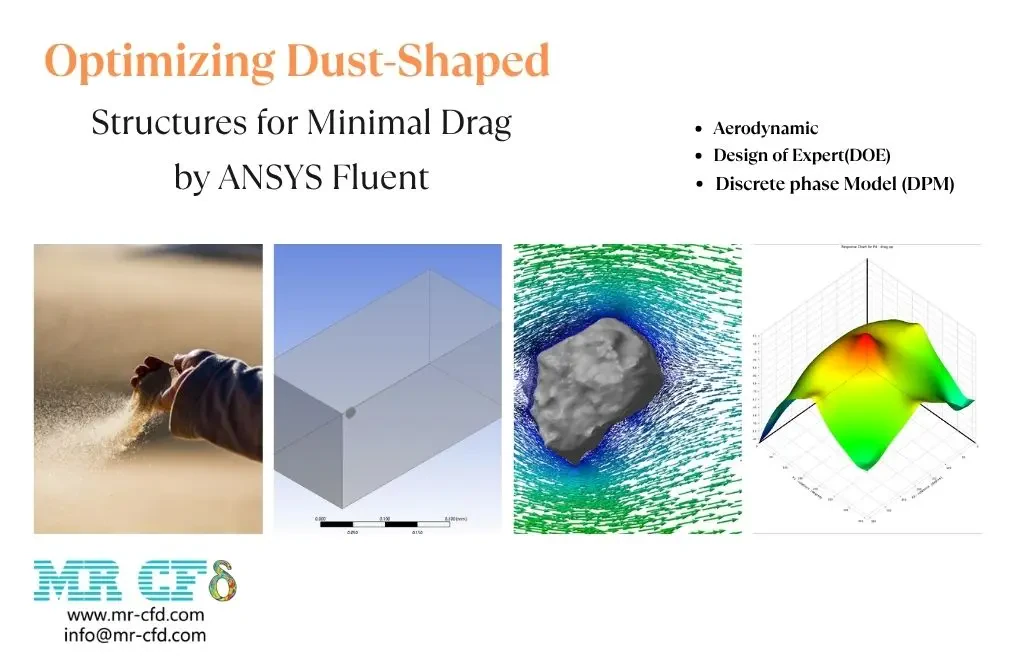
This project simulates and analyzes a dust-shaped geometry exposed to wind using Computational Fluid Dynamics (CFD). The study employs a pressure-based solver with a focus on understanding drag forces resulting from varying inlet velocities and rotational dynamics. The study uses advanced optimization techniques, including Design of Experiment (DOE) and Central Composite Design (CCD) methods, to explore 15 design scenarios. The findings highlight the inlet velocity magnitude as the most influential parameter, aiding in the optimization of aerodynamic efficiency and contributing to enhanced dust simulation accuracy.
Twin Screw Extruder CFD Simulation, Using DEM and Dynamic Mesh
Intermediate, Advanced
Price: $108
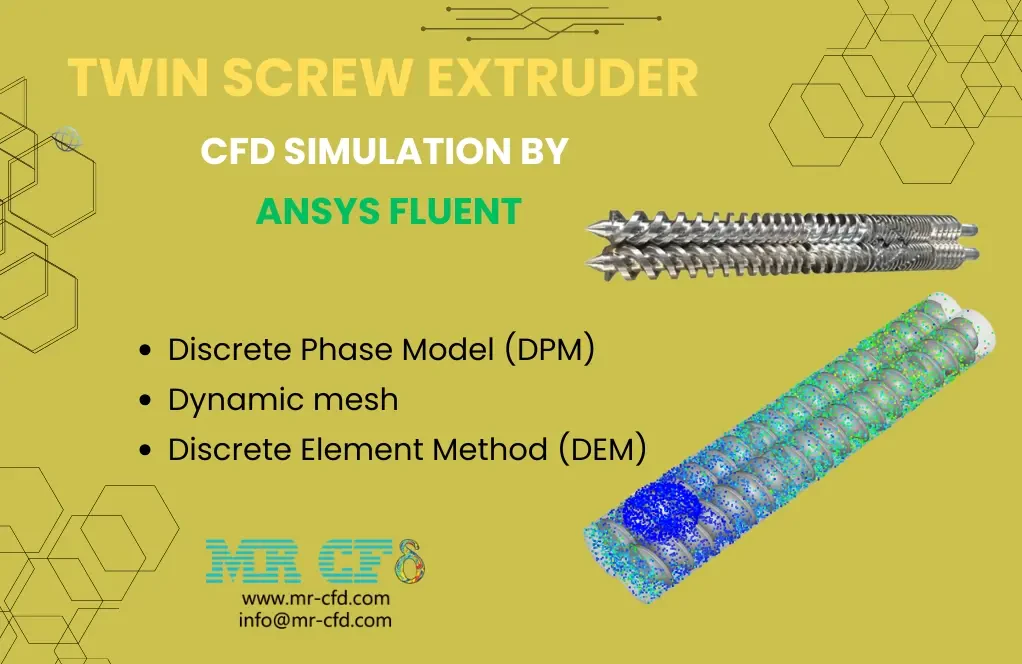
In this project, a twin screw extruder is simulated using ANSYS Fluent to analyze the interaction of water and particles within the system. The flow rate of particles is nine times that of the continuous phase, and both the interactions within the particle phase and with the continuous phase are considered using a 4-way DEM module. The geometry is designed in ANSYS SpaceClaim, and an unstructured mesh is generated in ANSYS Meshing with dynamic adjustments at each time step. The k-epsilon turbulence model and DPM model are employed along with the DEM module to simulate interactions. This complex simulation, involving dynamic meshing and high computational demands, reveals insights into particle tracking and residence time as the extruder operates at 300 rpm with a 60-degree rotation scope.
Quantitative Distribution and CFD Simulation of Human-Exhaled Particles in Ventilation Systems
Intermediate, Advanced
Price: $120
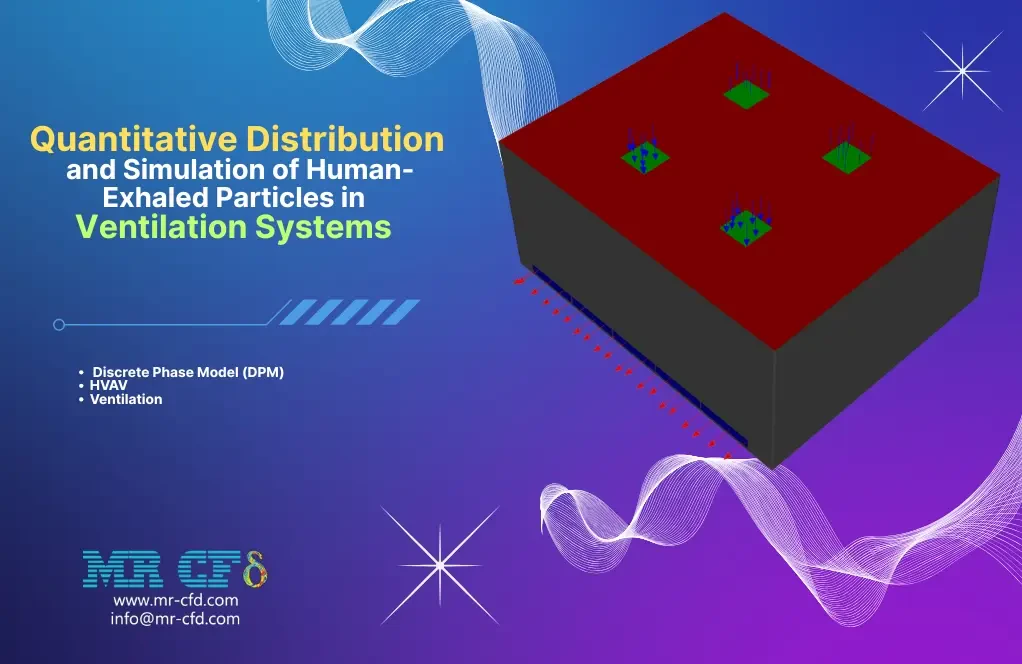
In this project, the quantitative distribution of human exhaled particles in a ventilated room is simulated using ANSYS Fluent software, based on the methodology from Zhijian Liu’s study. The 3-D geometry and mesh were created with user-provided files and consist of 547,820 elements. The simulation accounts for steady-state flow conditions and transitions to solve energy and DPM equations transiently. Airflow dynamics and heat transfer are analyzed using the ideal gas equation to address density variations due to temperature changes. The fan’s operation is modeled through a polynomial pressure jump function.

Hospital Airflow Dynamics: A CFD Study on Ventilation Efficiency and Pathogen Dispersion
Intermediate
Price: $270
The project aims to evaluate and enhance hospital room ventilation systems to effectively control aerosol dispersion, a crucial aspect of maintaining a safe environment within healthcare facilities. Three scenarios are analyzed: sneezing, coughing, and breathing, each with varying particle injection velocities and mass flow rates, to observe their effects on airflow patterns and particle trajectories. The simulation highlights that current ventilation setups exhibit limitations, as particles often become trapped or follow circular paths, indicating areas for improvement in ventilation strategy. Results suggest optimizing airflow by adjusting inlet and outlet conditions and improving flow patterns to enhance particle escape and overall air quality, ensuring safety and comfort in hospital settings.
Particle Distribution and Deposition in Indoor Environments; Paper Validation
Intermediate, Advanced
Price: $210
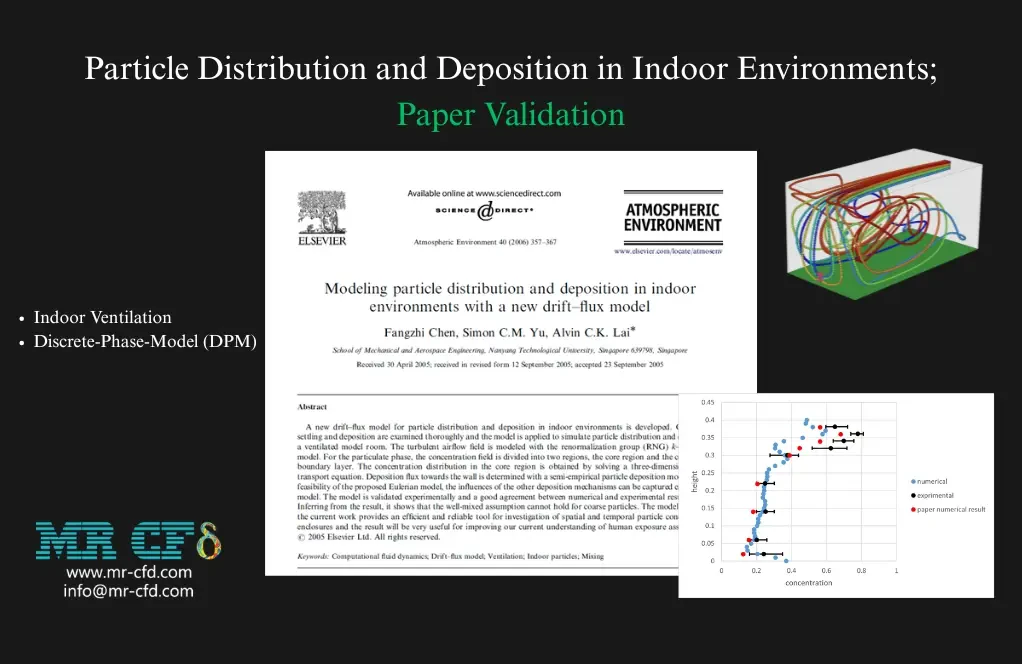
The current CFD analysis numerically validates the paper “Modeling particle distribution and deposition in indoor environments with a new drift–flux model” using ANSYS Fluent software. We designed and meshed the room geometry in Design Modeler and ANSYS Meshing, generating 128,000 cells. A pressure-based solver with k-ε RNG turbulence modeling is employed, and particle dynamics are simulated using the DPM model.