

Electrical & Power Online Courses
Here's every CFD online course related to Electrical & Power category.
Price: $220
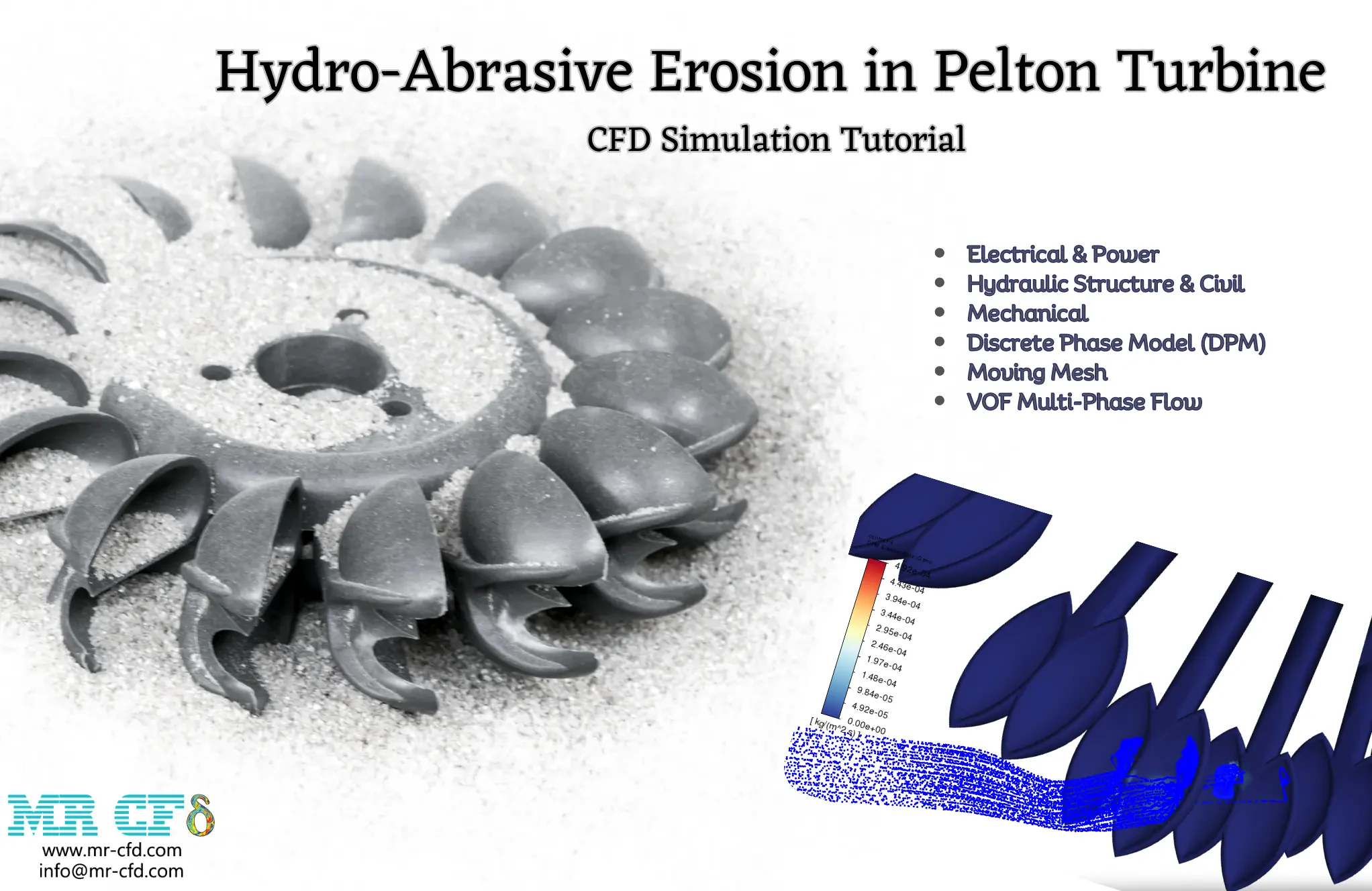
This project numerically simulates the Hydro-Abrasive Erosion in Pelton Turbine using ANSYS Fluent software. The 3-D geometry is designed in Design Modeler software. We used ANSYS Meshing Software to generate mesh; the element number equals 6,433,121. The multiphase VOF model simulates the water jet. The 2-way DPM model also enables the erosion of the solution. The rotational movement of the turbine is modeled using Mesh Motion Approach.
Contra-Rotating Turbine CFD Simulation Training
Intermediate
Price: $42
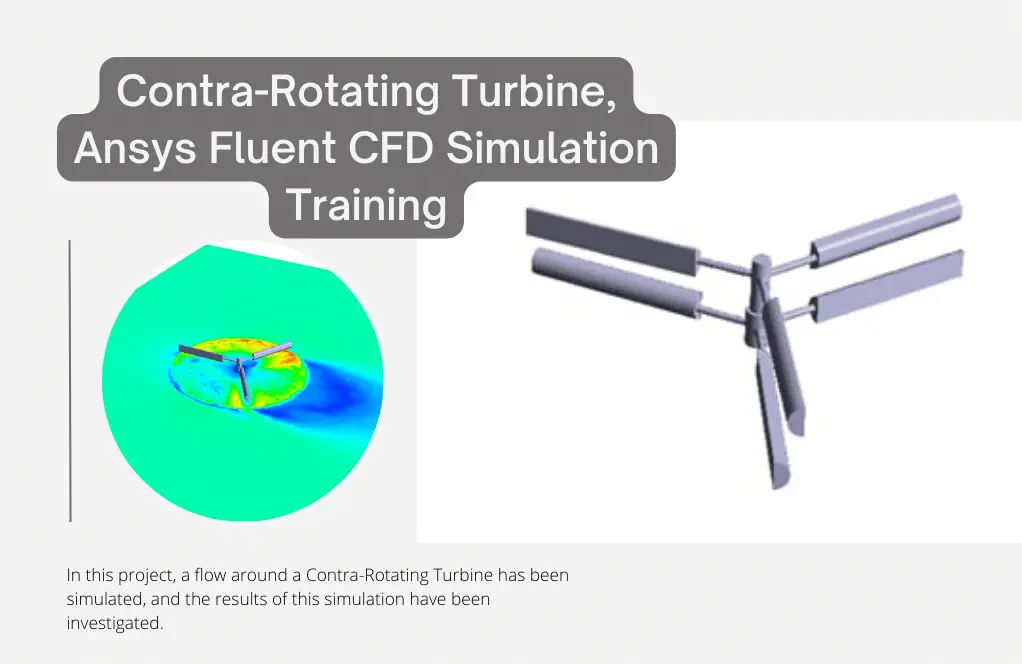
In this project, a flow around a Contra-Rotating Turbine has been simulated, and the results of this simulation have been investigated. This ANSYS Fluent CFD training simulates a contra-rotating VAWT turbine with two blade rows rotating oppositely at 14.7 rad/s. Inlet velocity is 5.3 m/s; mesh motion defines rotations using k-epsilon model and steady pressure-based solver. Results show enhanced pressure/velocity between blades, doubling torque (~1.9 N.m per row) for better power.
Fluid-Structure Interaction over HAWT Turbine Vibration (one-way)
Intermediate, Advanced
Price: $54
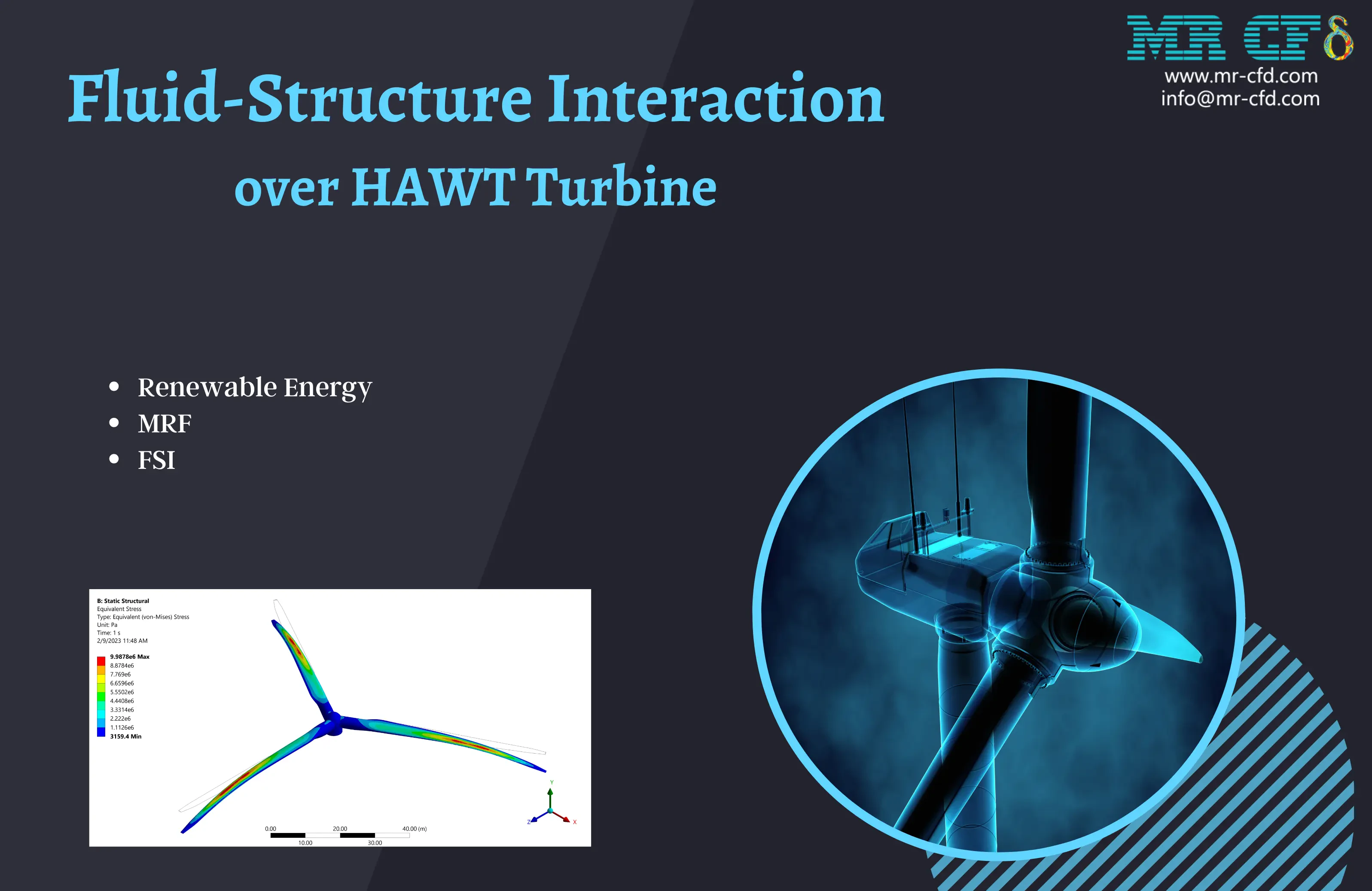
The problem numerically simulates the Fluid-Structure Interaction over HAWT Turbine using ANSYS Fluent software. We design the 3-D model by the Design Modeler software. Mesh grid is generated using ANSYS Meshing , and the element number equals 3,465,821. The MRF method is used to rotate the turbine. FSI model analyses total strain, and stress over the turbine.
Darrieus Turbine, Paper Validation by ANSYS Fluent
Intermediate, Advanced
Price: $330
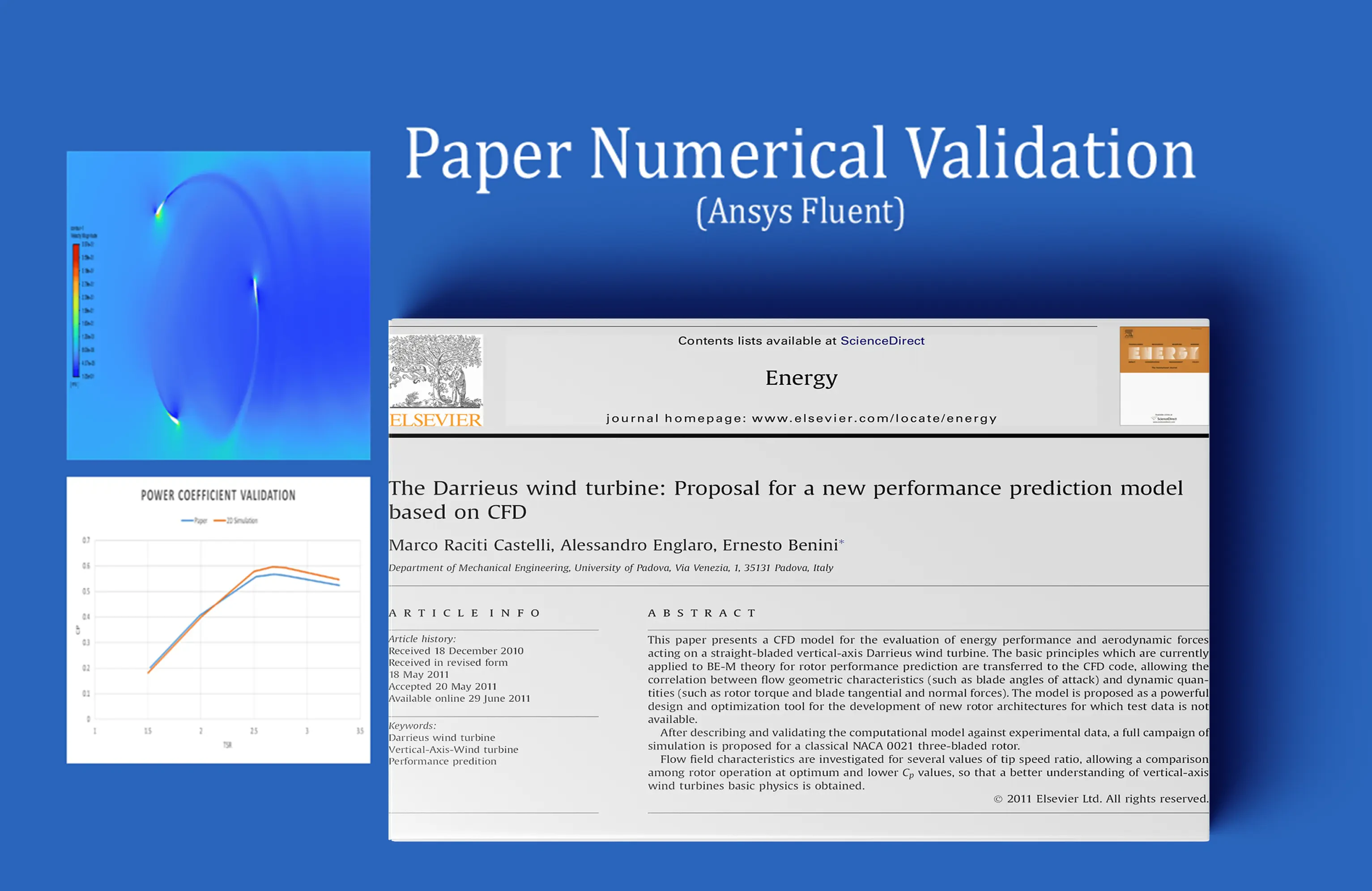
The problem numerically simulates Darrieus vertical axis wind turbine using ANSYS Fluent software. We perform this simulation as unsteady (Transient). We perform the simulation according to a Reference Article and validate the power coefficient. We use the Sliding Mesh model to rotate the rotor of the wind turbine.
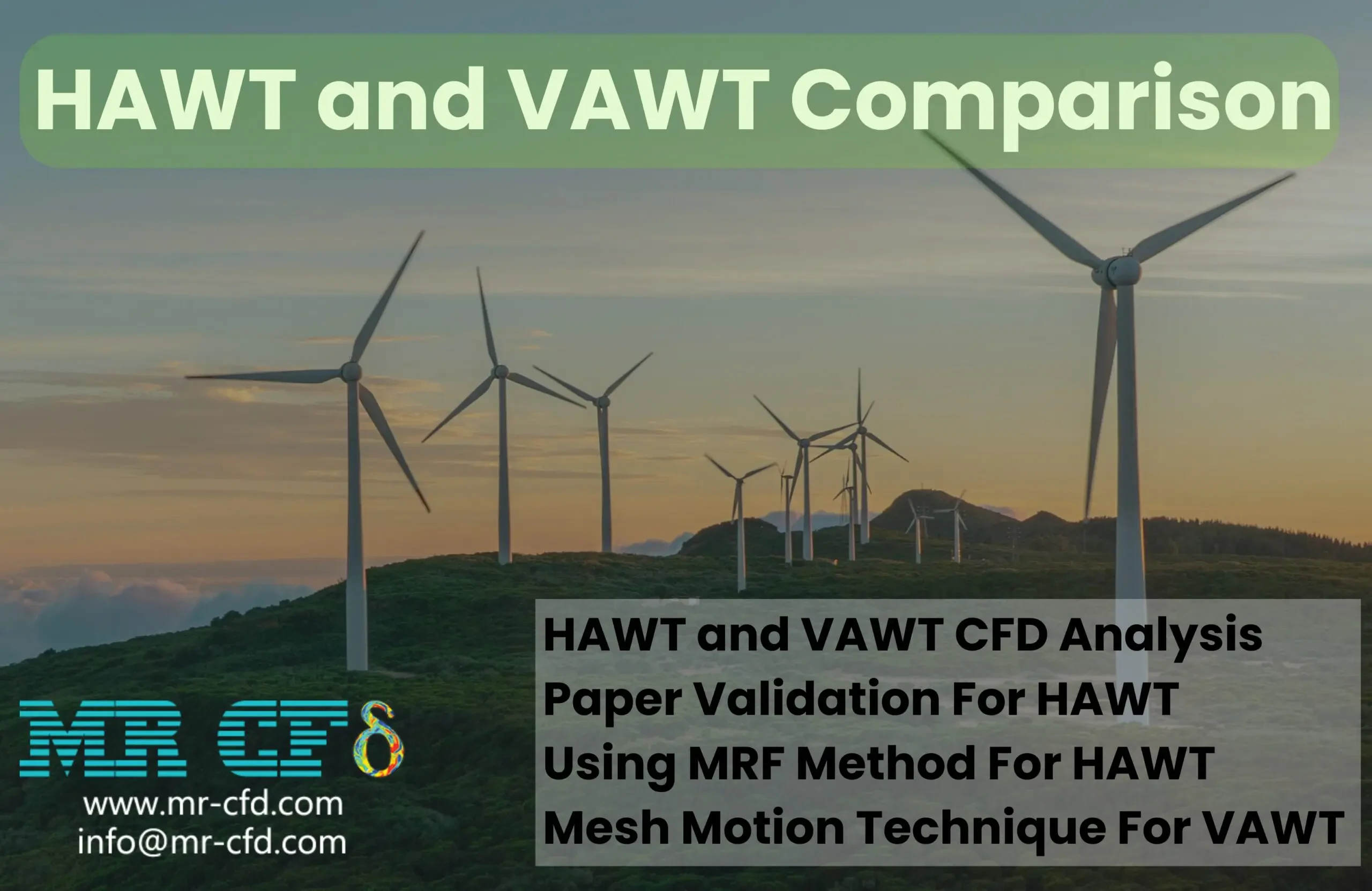
HAWT and VAWT Comparison, (Mesh Motion and MRF)
Intermediate
Price: $72
CFD analyses For HAWT and VAWT using ANSYS Fluent software. Paper Validation For HAWT. 3-D modeling with the ANSYS Design Modeler and mesh Generation with ANSYS Meshing. The Multiple Reference Frame (MRF) or Frame Motion method is applied for HAWT. The Mesh Motion method is applied for VAWT.
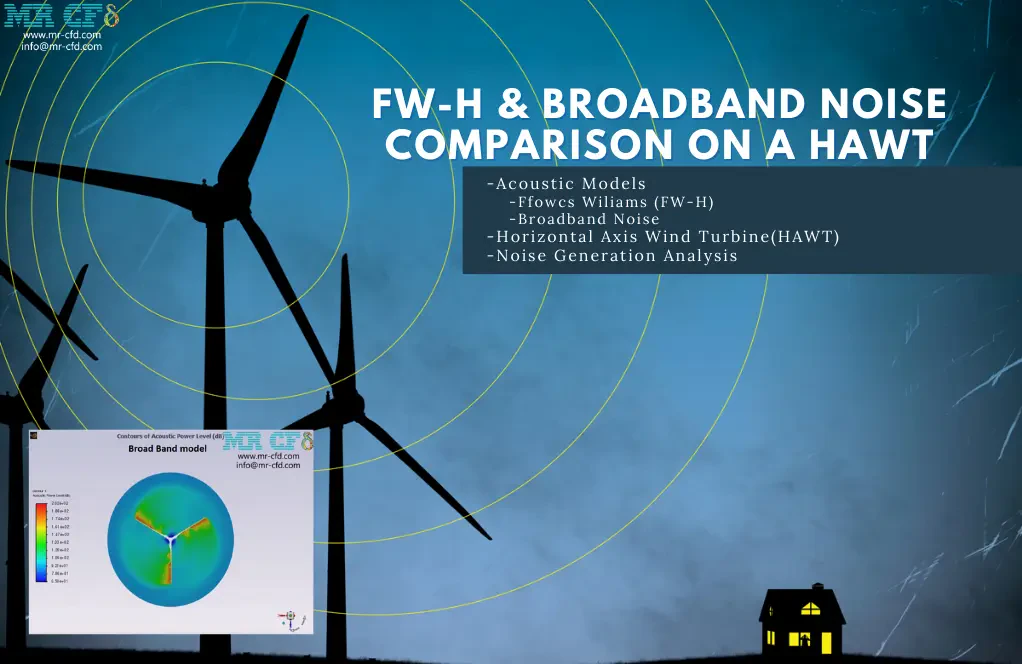
FW-H and Broadband Noise Comparison on a HAWT
Intermediate
Price: $220
The problem numerically analyses different Acoustic Models on a HAWT using ANSYS Fluent software. We design the 3-D model with the ANSYS Design Modeler and mesh the present model with ANSYS Meshing. The Horizontal Axis Wind Turbine sound generation and noise propagation. Ffowcs Williams-Hawkings (FW-H) Vs. Broadband noise models.
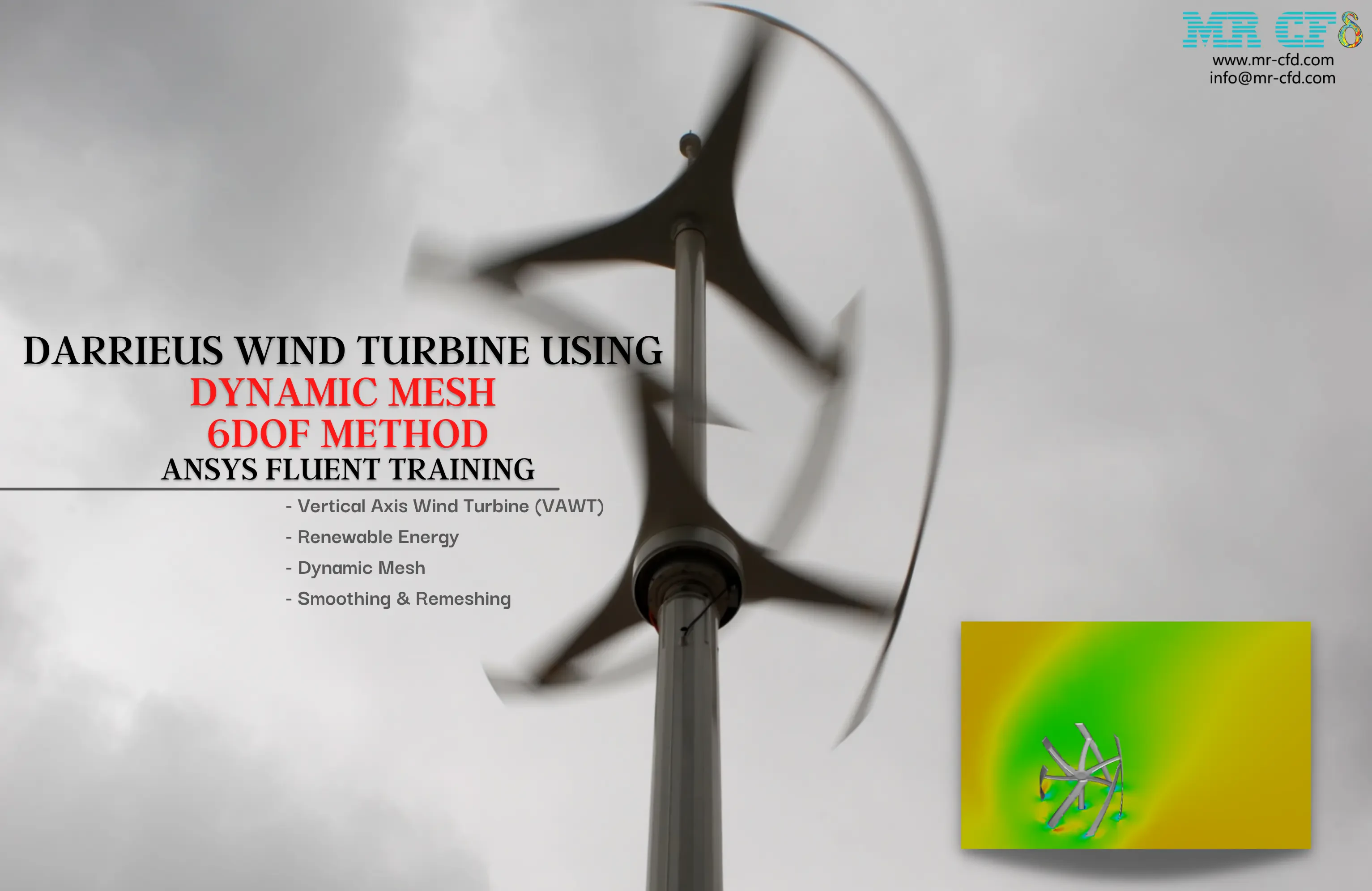
Darrieus Wind Turbine CFD Simulation using Dynamic Mesh 6DOF method, ANSYS Fluent Training
Intermediate, Advanced
Price: $32
The problem numerically simulates the Darrieus Wind Turbine motion using ANSYS Fluent software. We design the 3-D model by the Design Modeler software. We mesh the model with ANSYS Meshing software. The element number equals 2,966,928. We use the 6DOF Dynamic Mesh method to define the turbine rotation. Remeshing and Smoothing mesh methods are also used.
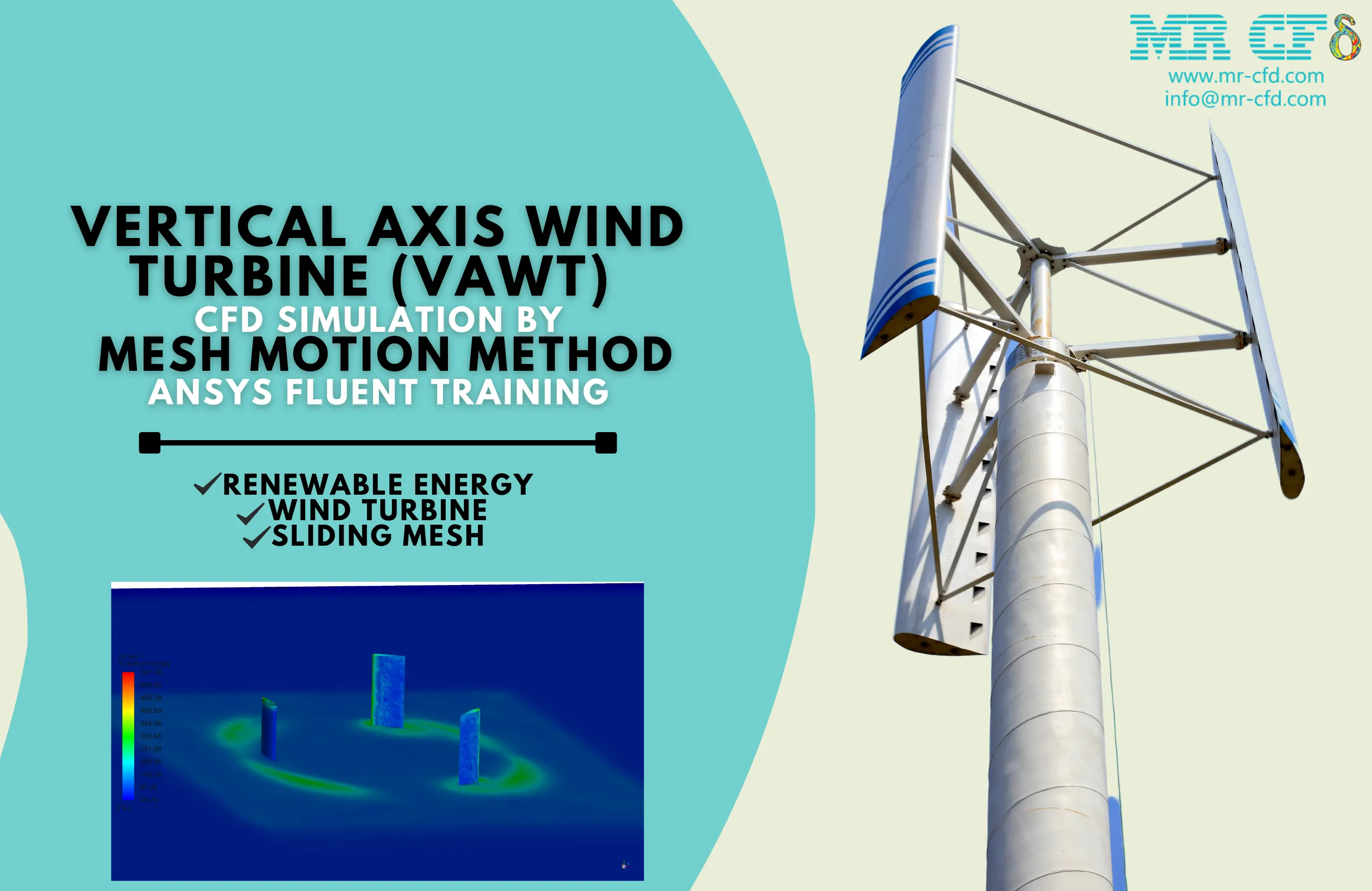
Vertical Axis Wind Turbine (VAWT) CFD Simulation by Mesh Motion Method, ANSYS Fluent Training
Intermediate
Price: $42
The problem numerically simulates the Vertical Axis Wind Turbine (VAWT) using ANSYS Fluent software. We design the 3-D model by the Design Modeler and create the mesh using ANSYS Meshing software. The element type is Hybrid (Structured and Unstructured) and their number equals 904,145. The Mesh Motion option is enabled to define the rotational motion of the wind turbine.
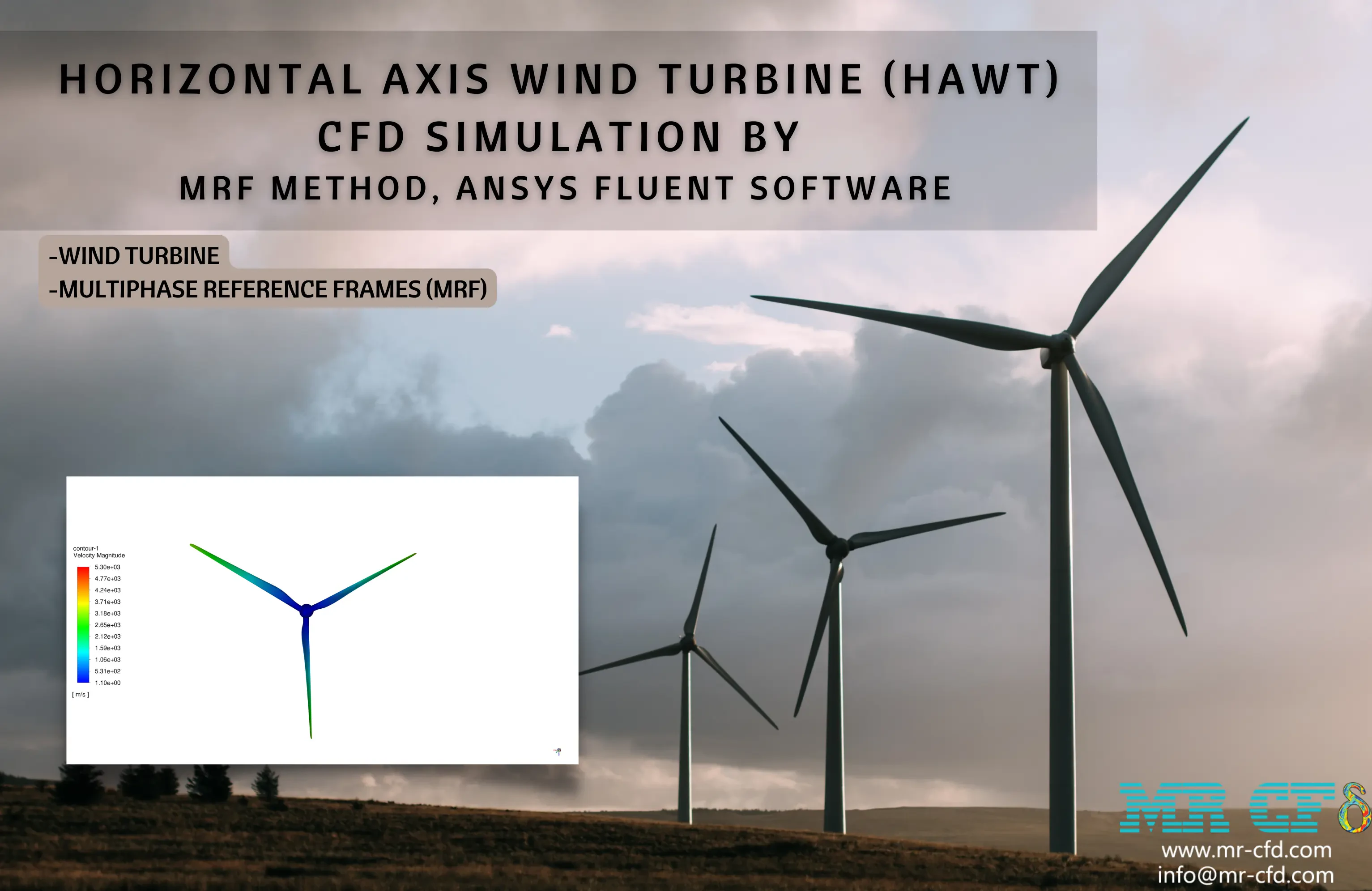
Horizontal Axis Wind Turbine (HAWT) CFD Simulation by MRF Method, ANSYS Fluent Tutorial
Intermediate
Price: $140
The problem numerically simulates the Horizontal Axis Wind Turbine (HAWT) using ANSYS Fluent software. We design the 3-D model by the Design Modeler and create the mesh using ANSYS Meshing software. The element number equals 2,696,011. The MRF option (Frame Motion) is enabled to define the rotational motion of the wind turbine.