

Design Modeler Online Courses
Here's every CFD online course related to Design Modeler category.
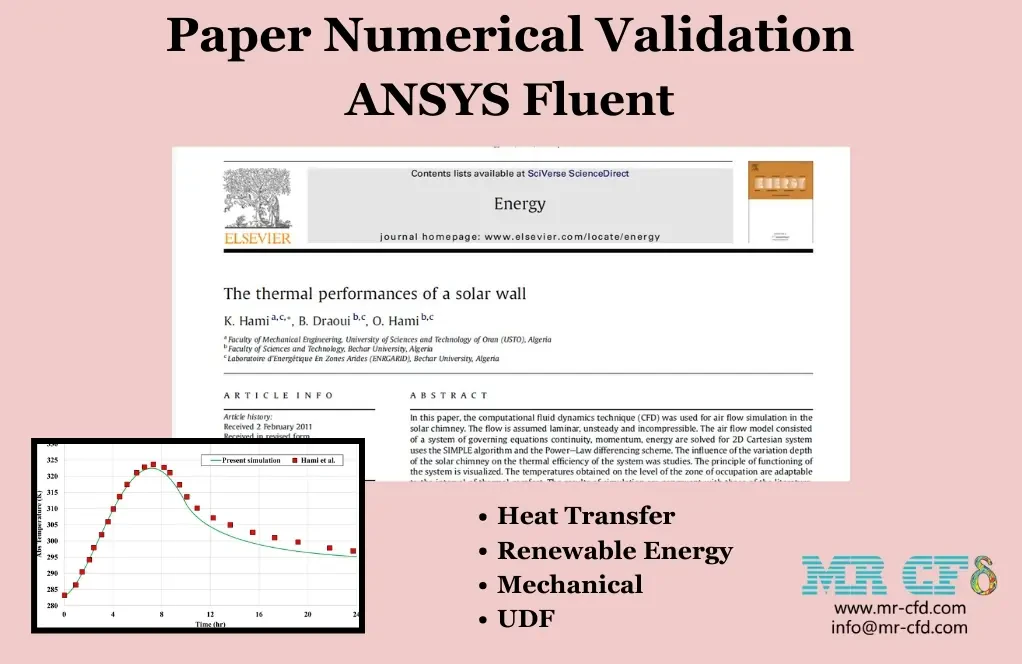
Trombe Wall CFD Simulation, Paper Numerical Validation, ANSYS Fluent
Intermediate, Advanced
Price: $360
The current CFD Analysis numerically Validates the Paper "The thermal performances of a solar wall" via ANSYS Fluent software. We have designed and meshed the geometry using Design Modeler and ANSYS Meshing, producing 26,550 structured cells. UDF is used for the heat source in the absorber.
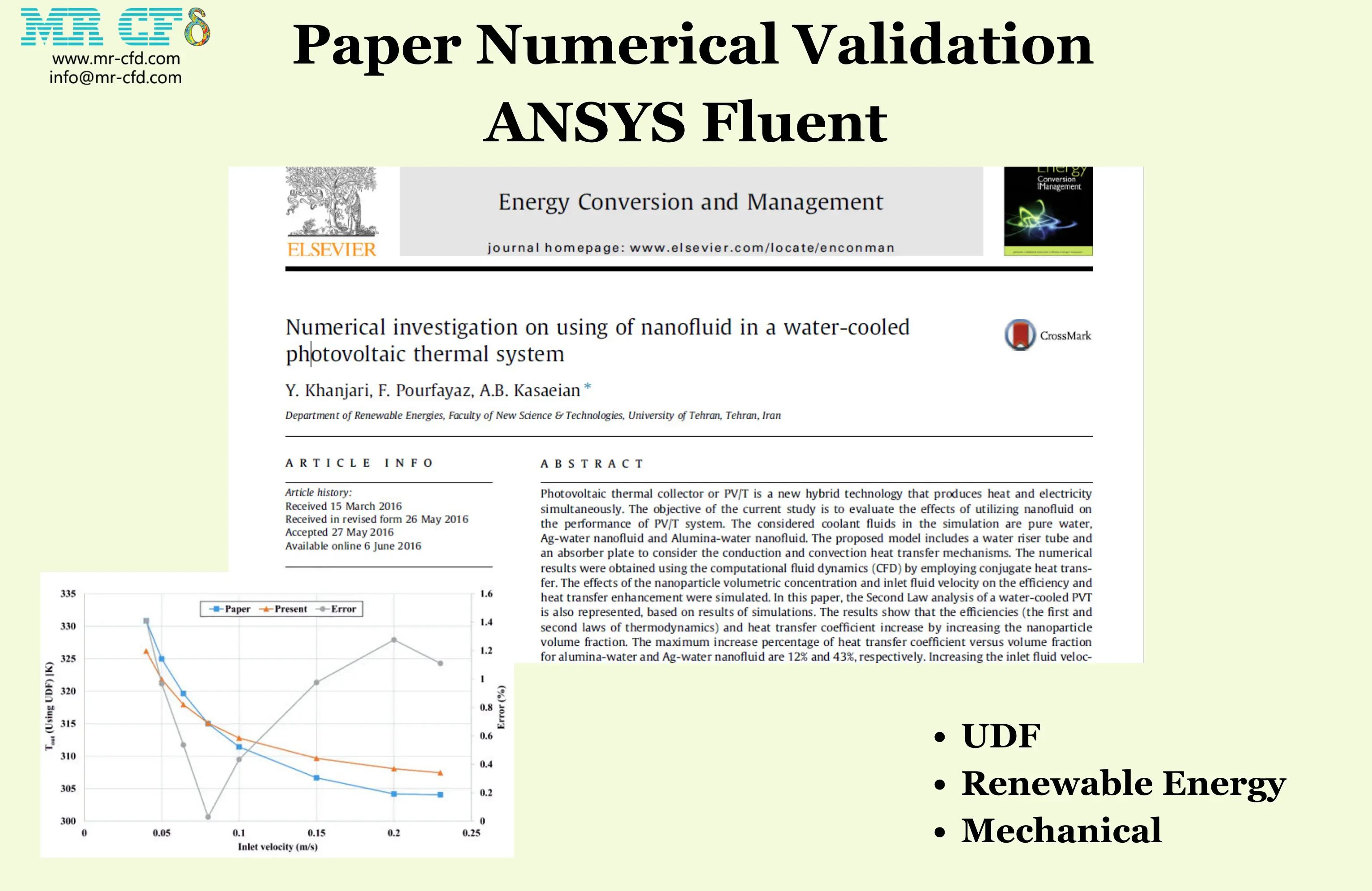
Water-Cooled Photovoltaic Thermal (PVT) System using Nanofluid, Paper Numerical Validation
Intermediate, Advanced
Price: $360
The current CFD Analysis numerically Validates the Paper "Numerical investigation on using of nanofluid in a water-cooled photovoltaic thermal systems" via ANSYS Fluent software. We have designed and meshed the geometry using Design Modeler, producing structured cells. UDF in SOURCE Macro is used for the heat generation.
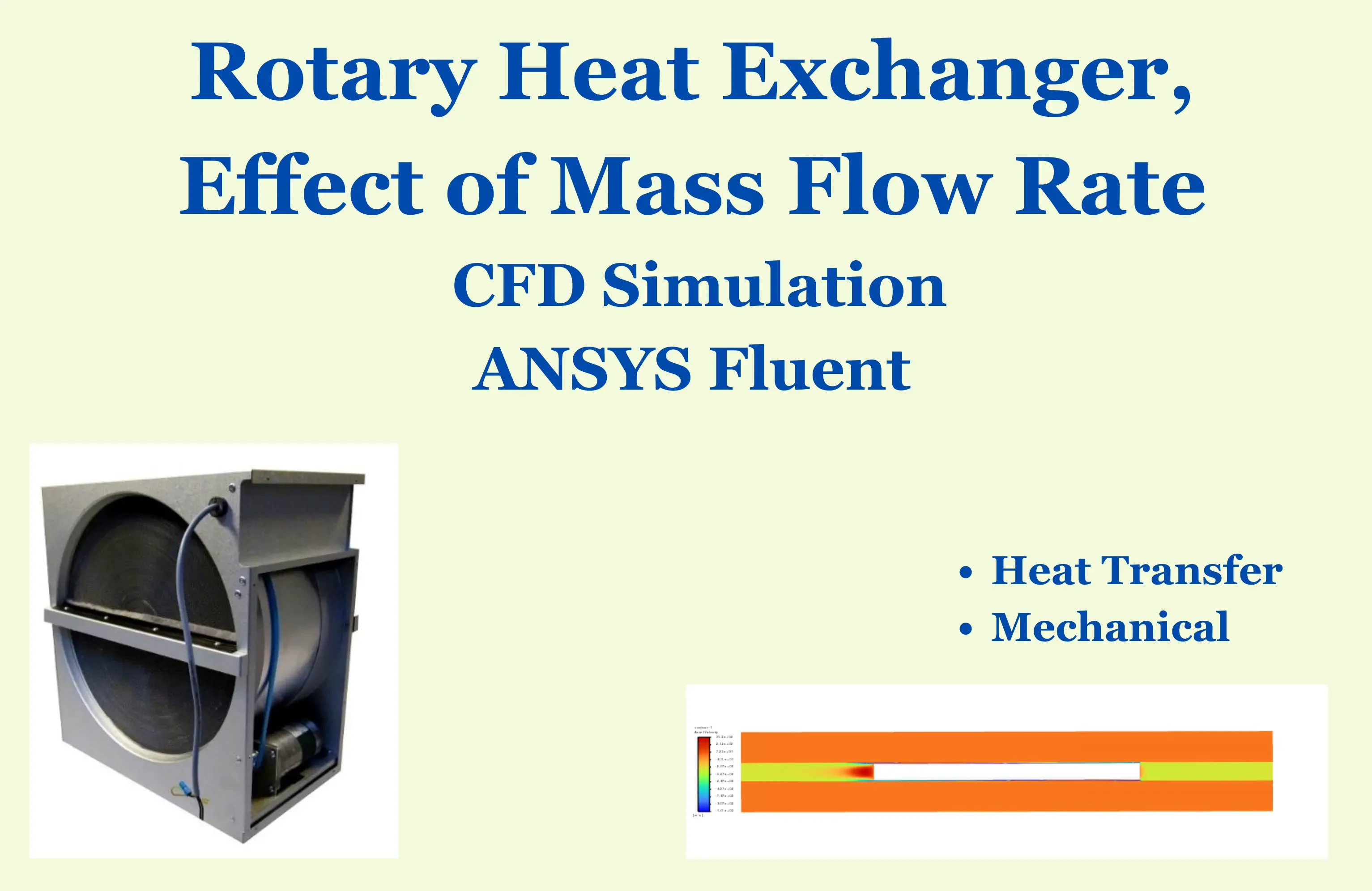
Rotary Heat Exchanger, Effect of Mass Flow Rate CFD Simulation
Beginner, Intermediate
Price: $12
The problem numerically simulates a Rotary Heat Exchanger, Effect of Mass Flow Rate on heat transfer coefficient in ANSYS Fluent software. The 2D geometry of the model is created in Design Modeler software. The model is meshed in ANSYS Meshing creating 86,598 elements. The Standard k-epsilon model is used to describe turbulency of the flow.
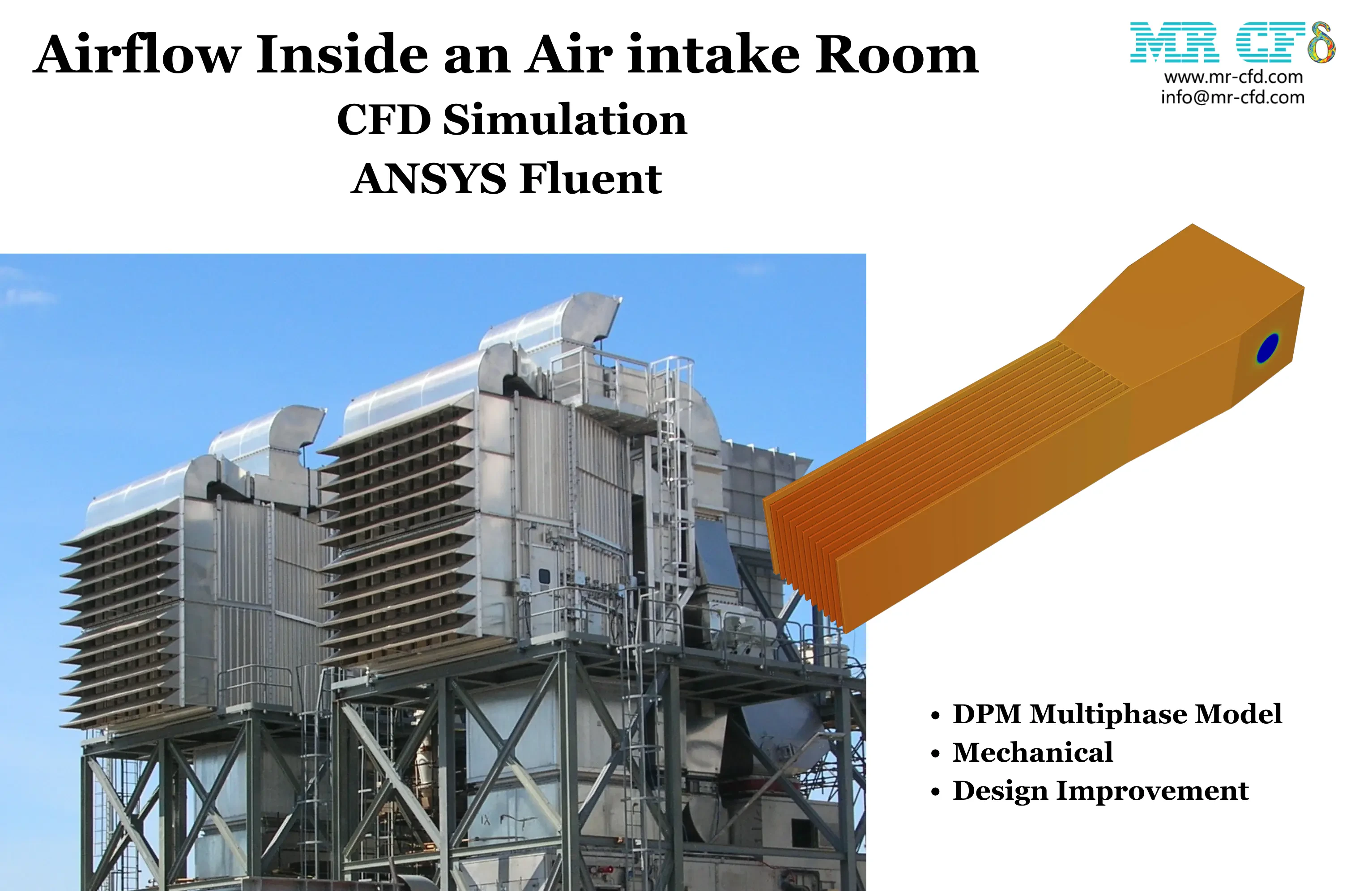
Particle Purifying in Air Intake Room, Design Improvement CFD Simulation
Intermediate, Advanced
Price: $10
The problem numerically simulates an Airflow Inside the Air Intake Room in ANSYS Fluent software. The 3D geometry of the model is created in SpaceClaim software. The model is meshed in ANSYS Meshing creating 13,103,505 and 13,867,650 elements for the first and second case respectively. The Discrete Phase Model (DPM) is used to simulate purifying process. The Realizable k-epsilon model is used to describe turbulence of the flow.
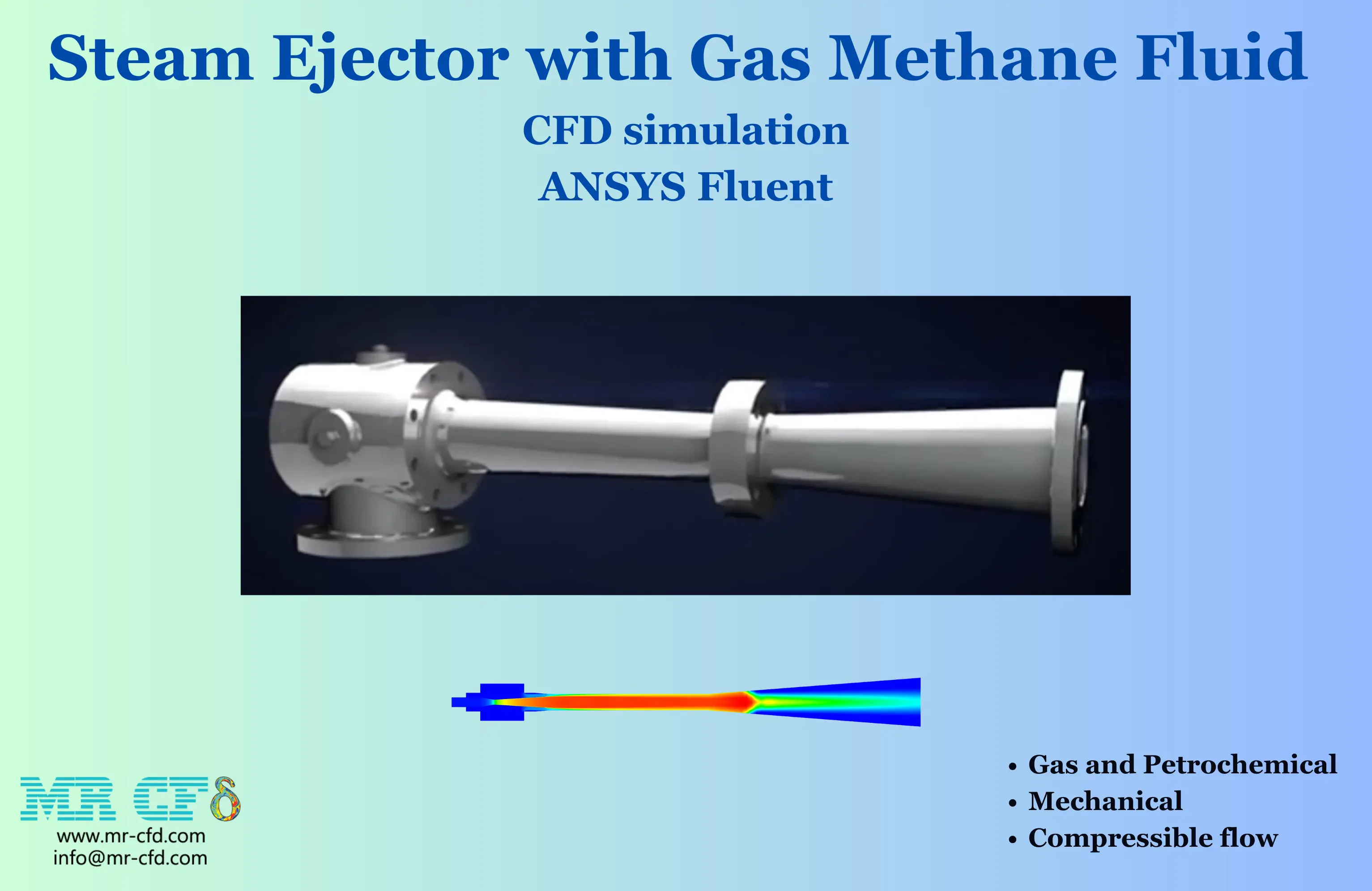
Steam Ejector with Gas Methane Fluid CFD simulation, ANSYS Fluent
Intermediate, Advanced
Price: $12
The problem numerically simulates a Steam Ejector with Gas Methane Fluid in ANSYS Fluent software. The 2D geometry of the model is created in Design Modeler software. The model is meshed in ANSYS Meshing creating 11,132 elements. We simulate the problem via Density-based solver to define Compressible flow.
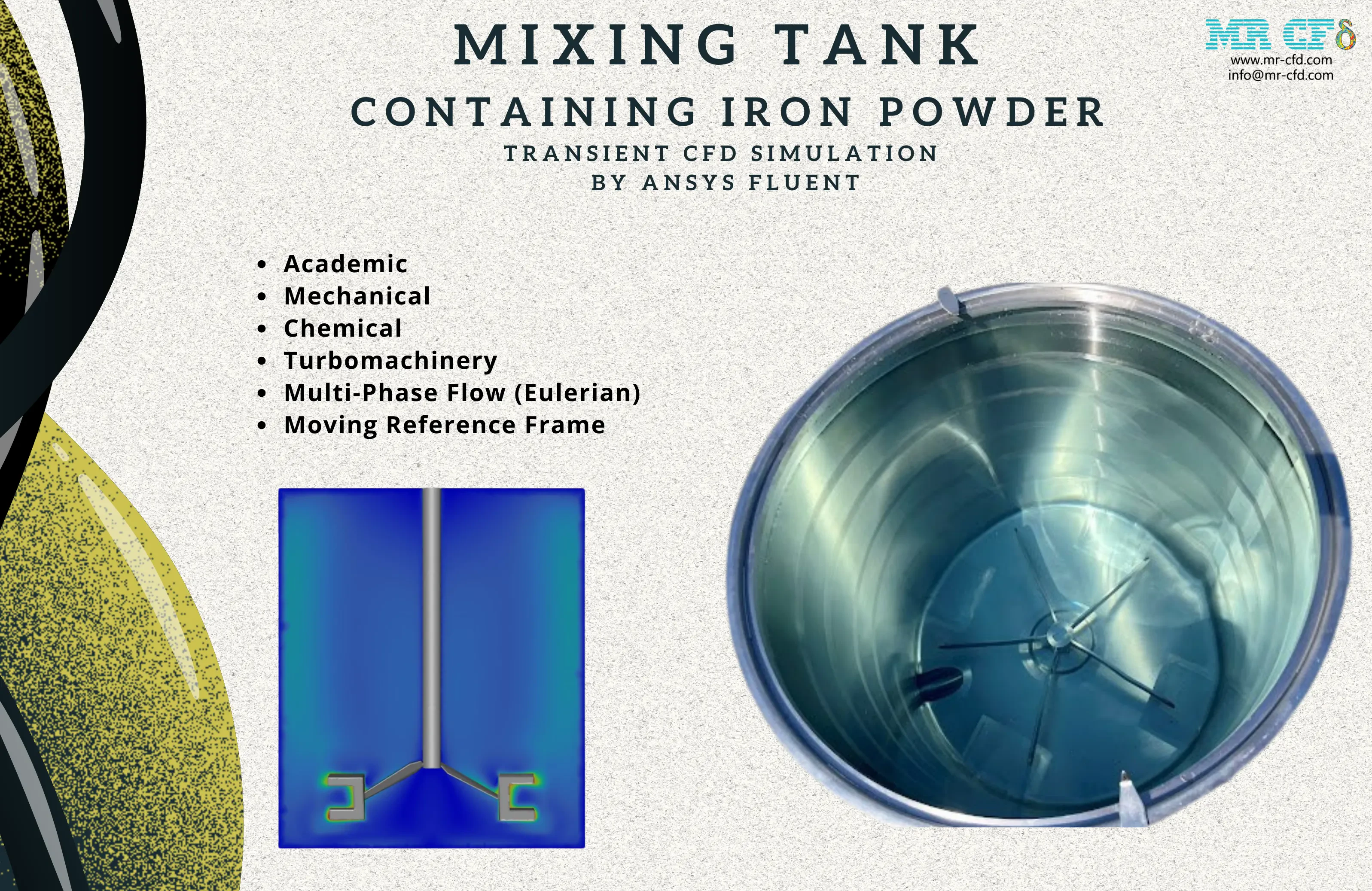
Mixing Tank Containing Iron Powder, Transient CFD Simulation by ANSYS Fluent
Intermediate, Advanced
Price: $42
This report presents a simulation of the mixing of water and iron powder in a cylindrical tank with a rotating impeller using the Eulerian multiphase method. The geometry of the mixing tank was created using ANSYS SpaceClaim software. A high-quality mesh of about 1,260,000 tetrahedron elements was generated using ANSYS Meshing software. Appropriate Eulerian interphase forces and settings were applied and the Moving Reference Frame (MRF) method was used.
Price: $569
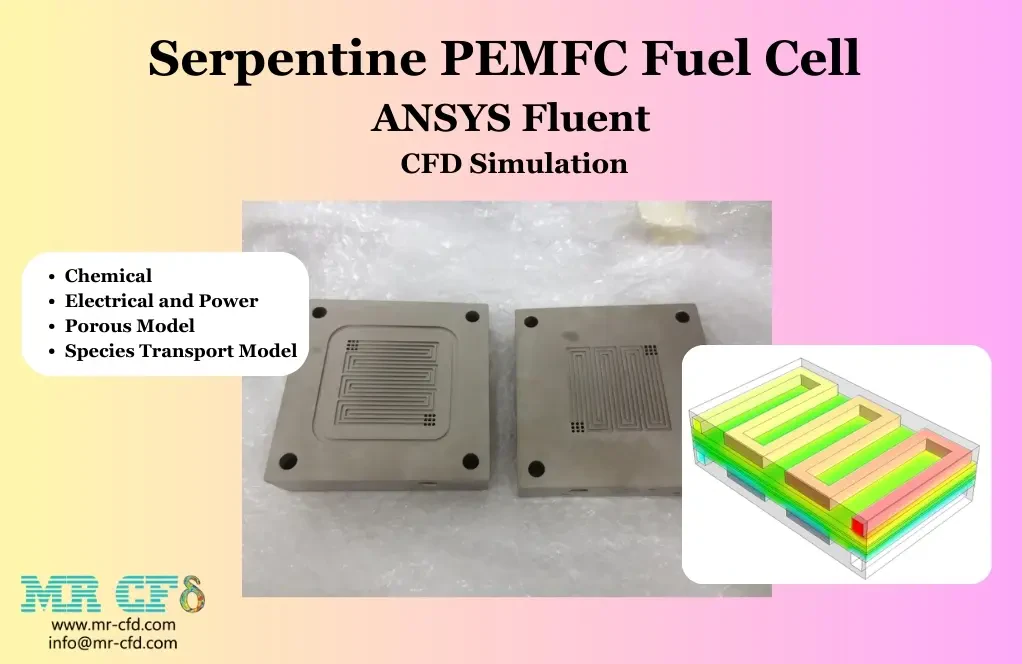
The problem numerically simulates a Serpentine Fuel Cell using ANSYS Fluent software. We design the 3-D model with the Design Modeler software. We mesh the model with ANSYS Meshing software, and the element number equals 9,396,122. We use the Fuel Cell and Electrolysis Model to define a fuel cell. We used the PEMFC sub-model to define a proton exchange membrane fuel cell. We used the Species model to define H2, O2, and H2O.
Price: $569
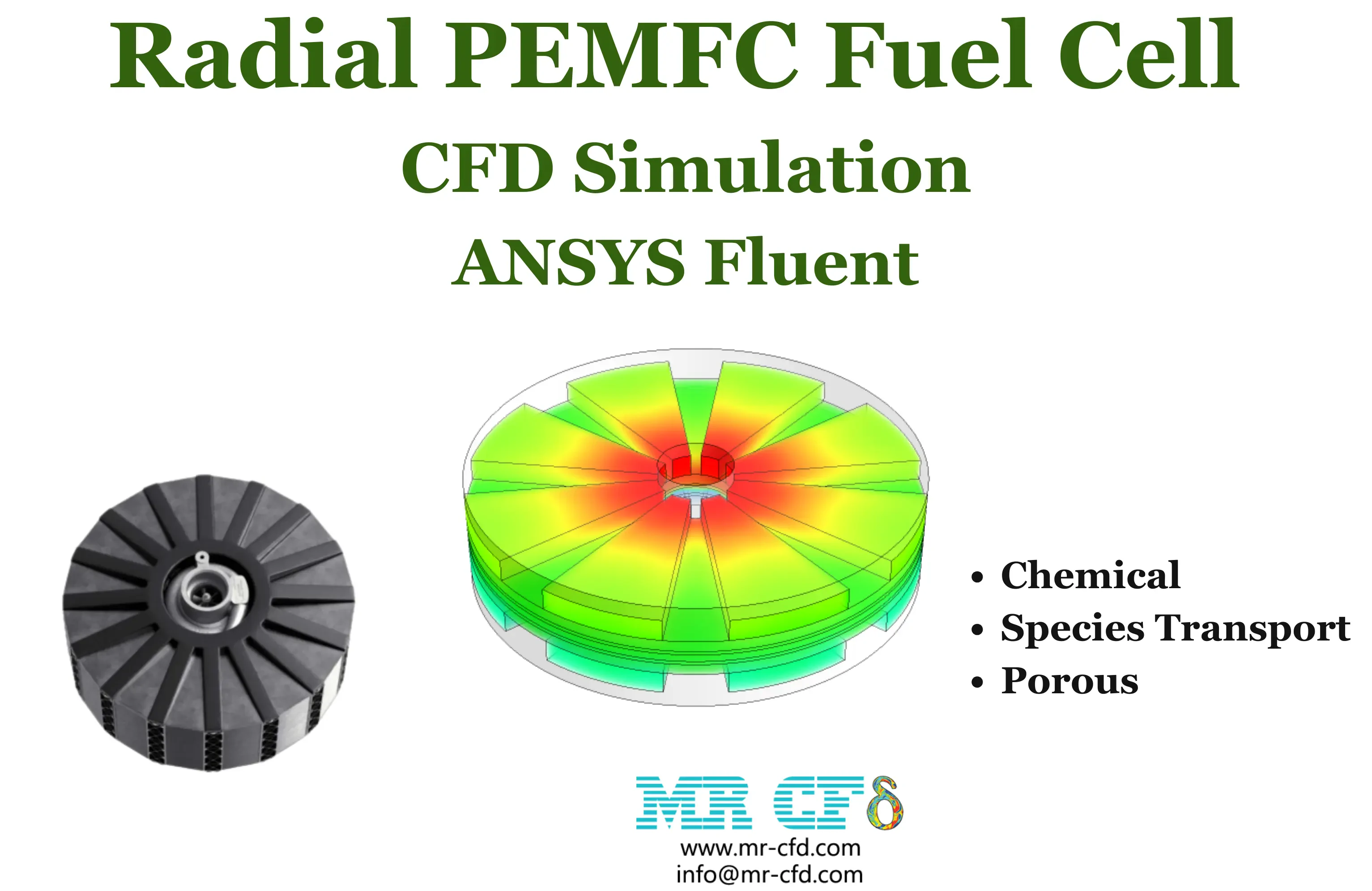
The problem numerically simulates a Radial Fuel Cell using ANSYS Fluent software. We design the 3-D model with the Design Modeler software. We mesh the model with ANSYS Meshing software, and the element number equals 2,393,706. We use the Fuel Cell and Electrolysis Model to define a fuel cell. We used the PEMFC sub-model to define a proton exchange membrane fuel cell. We used the Species model to define H2, O2, and H2O.
Price: $629
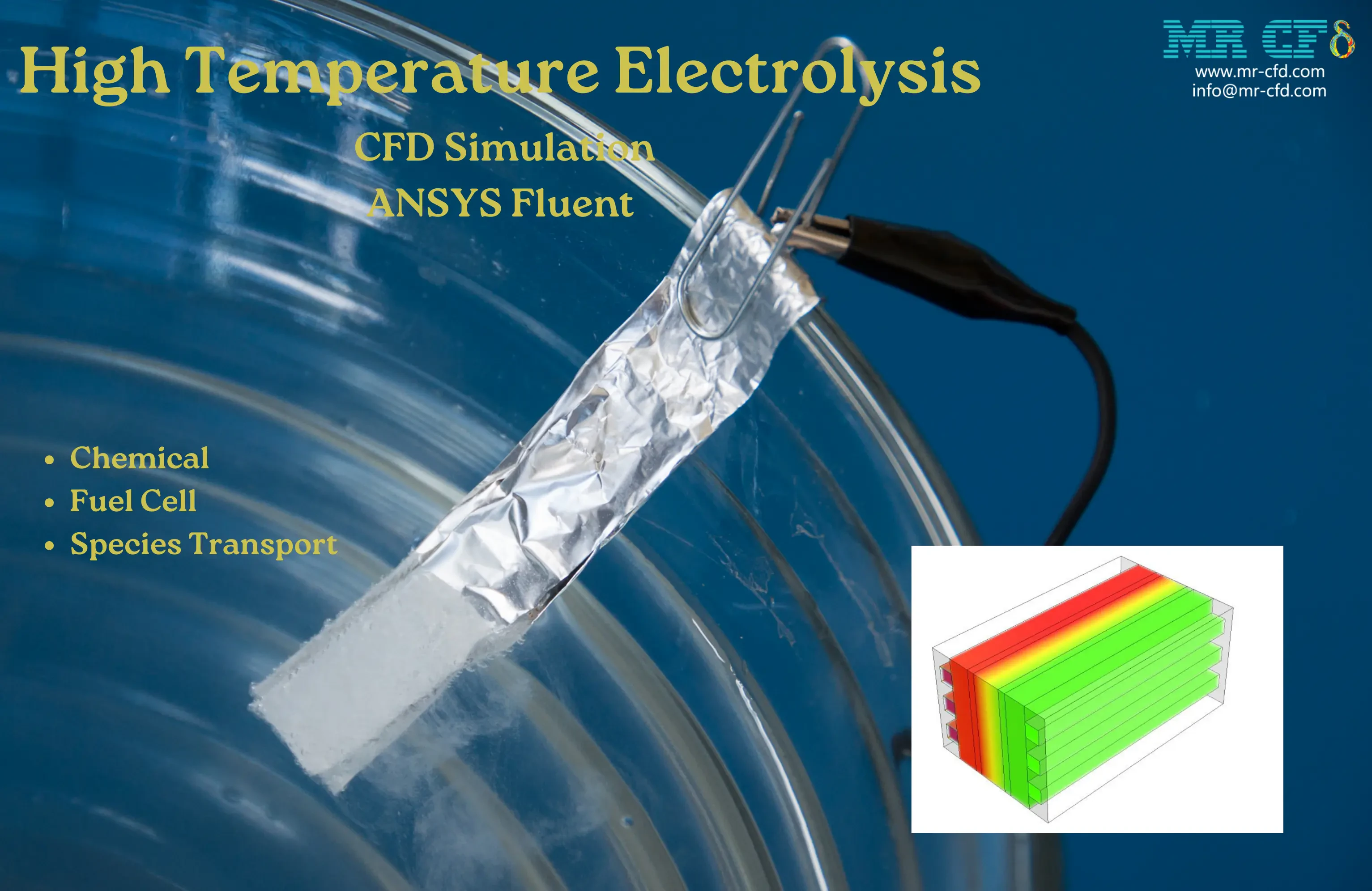
The problem numerically simulates the Electrolysis using ANSYS Fluent software. We design the 3-D model with the Design Modeler software. We mesh the model with ANSYS Meshing software, and the element number equals 2,393,706. We use the Fuel Cell and Electrolysis Model and the Electrolysis sub-model. We used the Species model to define H2, O2, and H2O.