

Paper Validation Online Courses
Here's every CFD online course related to Paper Validation category.
Price: $360
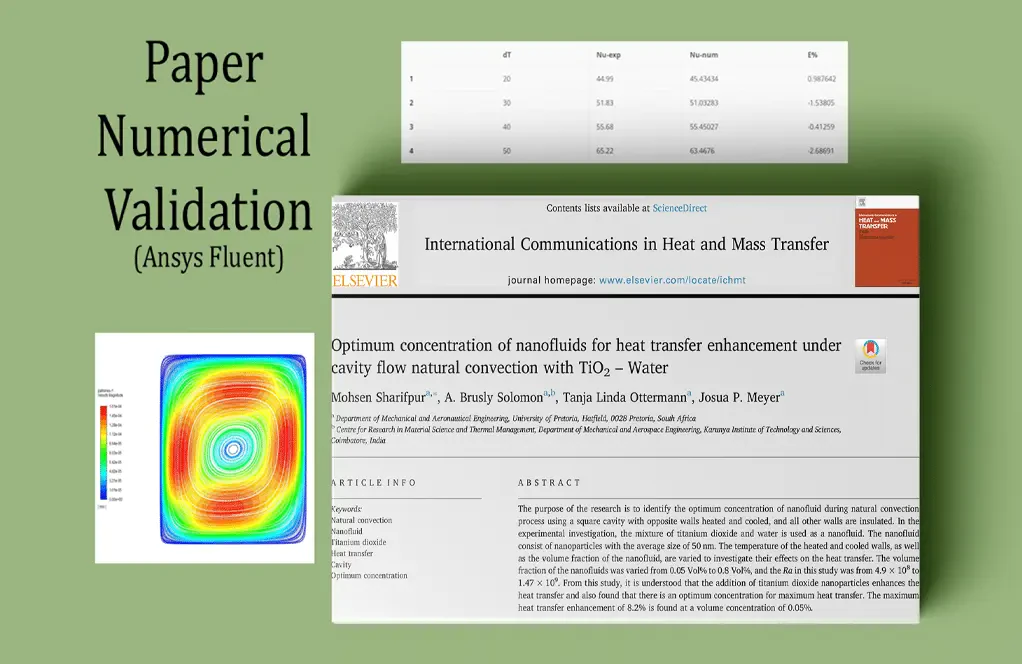
The problem numerically simulates the Nanofluid optimum concentration and Heat Transfer enhancement using ANSYS Fluent software. We design the 3-D model with the Design Modeler software. We mesh the model with ANSYS Meshing software, and the element number equals 40000. This project is validated with a reference article. The Energy Equation is activated to consider heat transfer.

Shell and Tube Heat Exchanger, PCM, Paper Validation
Intermediate
Price: $81
The problem numerically simulates the shell and tube heat exchanger as a PCM thermal storage system using ANSYS Fluent software. We design the 3-D model with the Design Modeler software. We mesh the model with ANSYS Meshing software, and the element number equals 169171. We define the Solidification and Melting model to define phase change material. We use a UDF to define the temperature-dependent viscosity. This simulation is validated with a reference article.
Triplex Tube Heat Exchanger by PCM, Paper Validation
Intermediate
Price: $72
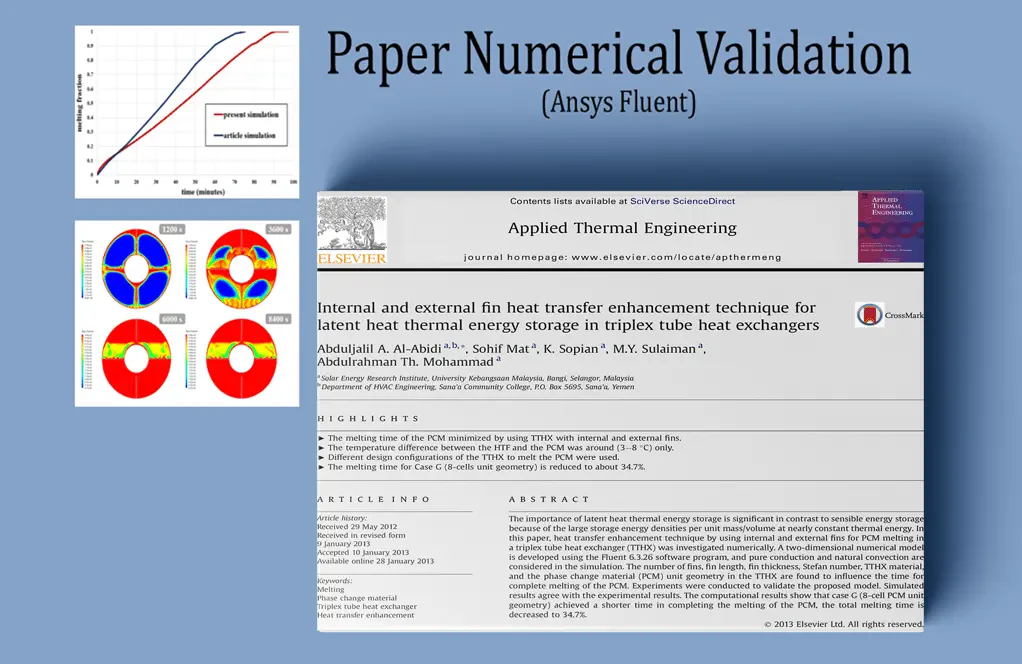
The present problem simulates heat transfer in a triplex tube heat exchanger containing phase change material (PCM) using ANSYS Fluent software. This simulation is based on the information of a reference article "Internal and external fin heat transfer enhancement technique for latent heat thermal energy storage in triplex tube heat exchangers" and its results are compared and validated with the results in the article.

Price: $27
The present problem simulates a two-phase flow within a compound channel using ANSYS Fluent software. This simulation is based on the information from a reference article, "Application of the Shiono and Knight Method in compound channels with non-prismatic floodplains," and its results are compared and validated with the results in the article.
Fluid Separation of Turbulent Flow Over a Step, Paper Numerical Validation by ANSYS Fluent
Intermediate
Price: $12
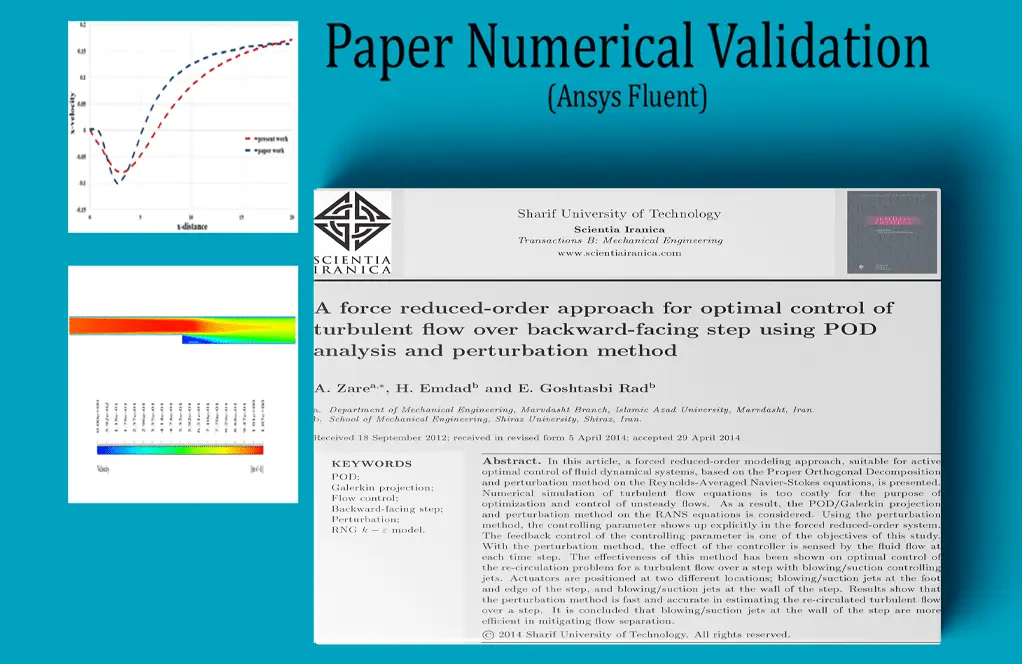
The present problem simulates the separation of fluid flow passing through a step and the effect of suction and blower control jets on controlling the separation of fluid using ANSYS Fluent software. This simulation is based on the information of a reference article "A force reduced-order approach for optimal control of turbulent flow over backward-facing step using POD analysis and perturbation method", and its results are compared and validated with the results in the article.
Wire Mesh Demister (DDPM), Paper Numerical Validation, ANSYS Fluent CFD Training
Intermediate, Advanced
Price: $280
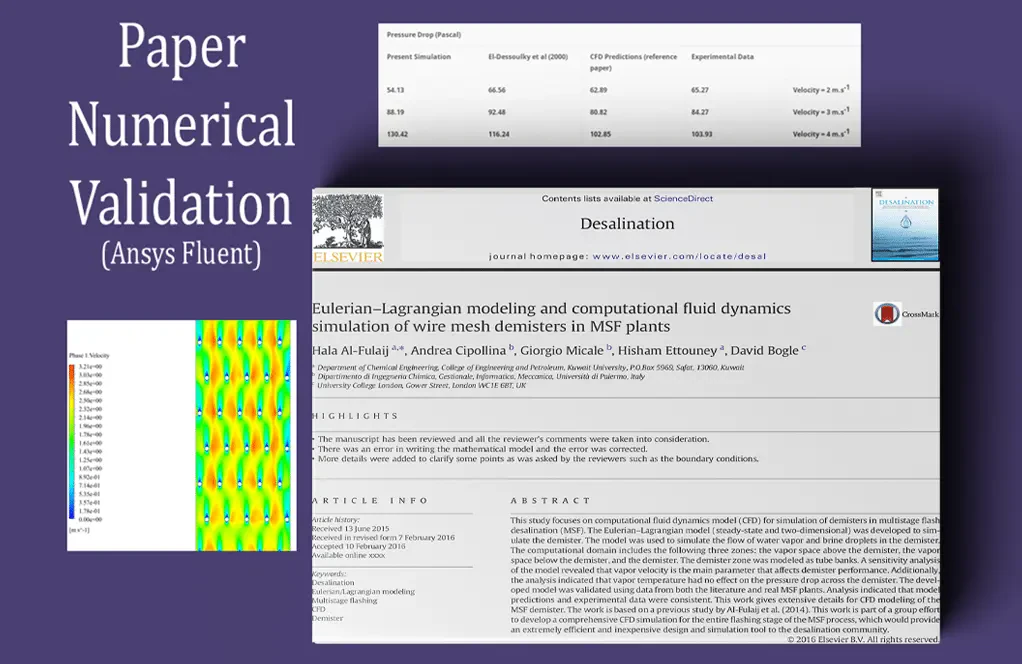
The present problem simulates the flow of water vapor passing through a demister containing saline water droplets using ANSYS Fluent software. This simulation is based on the information of a reference article "Eulerian–Lagrangian modeling and computational fluid dynamics simulation of wire mesh demisters in MSF plants," and its results are compared and validated with the results in the article.
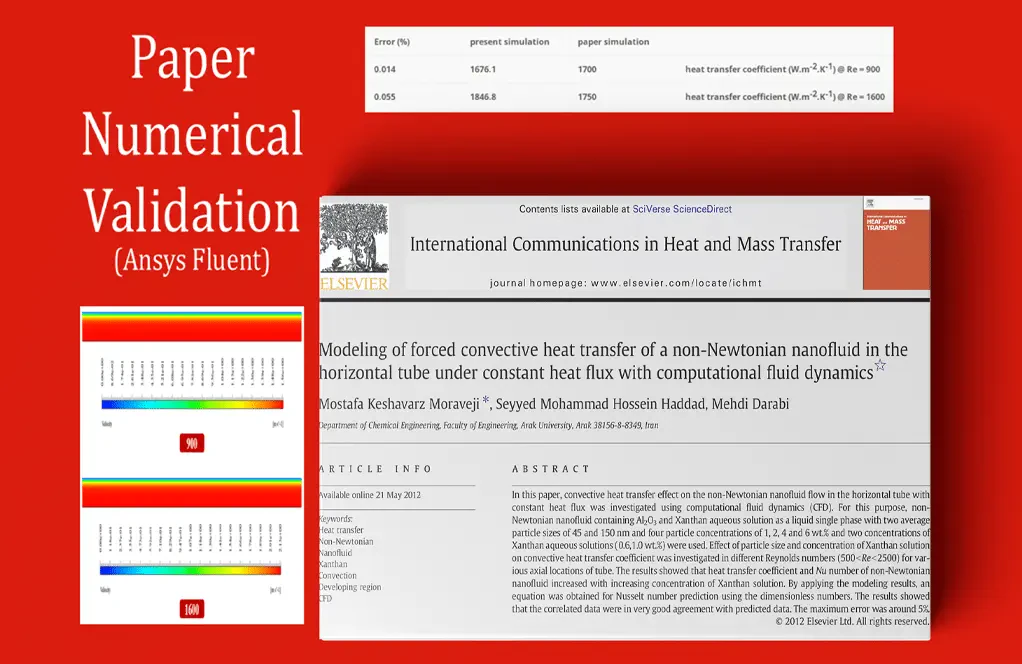
Price: $54
This simulation is based on the information of a reference article "Modeling of forced convective heat transfer of a non-Newtonian nanofluid in the horizontal tube under constant heat flux with computational fluid dynamics" and its results are compared and validated with the results in the article.

Price: $32
The present project's results are compared with the experimental results of the paper “Midspan Flow-Field Measurements for Two Transonic Linear Turbine Cascades at Off-Design Conditions”. Turbulence modeling and Computational procedures (boundary conditions, etc.) are simulated based on the article “Numerical study of the flow field through a transonic linear turbine cascade at design and off-design conditions”.

Vertical Axis Wind Turbine (VAWT): Paper Numerical Validation
Beginner, Intermediate, Advanced
Price: $320
This project uses ANSYS Fluent to numerically simulate a vertical axis wind turbine (VAWT). The project is validated against a reference article. The 3D model is built in SpaceClaim. The model is meshed in ANSYS Meshing, with an element count of 1,650,940. The simulation is run as unsteady (transient). The Mesh Motion method is used to define the rotational motion.